
Last updated September 23, 2026
Whole-system duct and dryer vent check with before-and-after photos - you see exactly what came out of your vents
That "$99 whole-house special" is a bait ad - the real number appears once they are in your hallway, or the "clean" is a shop-vac at the register. We photograph the inside of your ducts before and after instead.
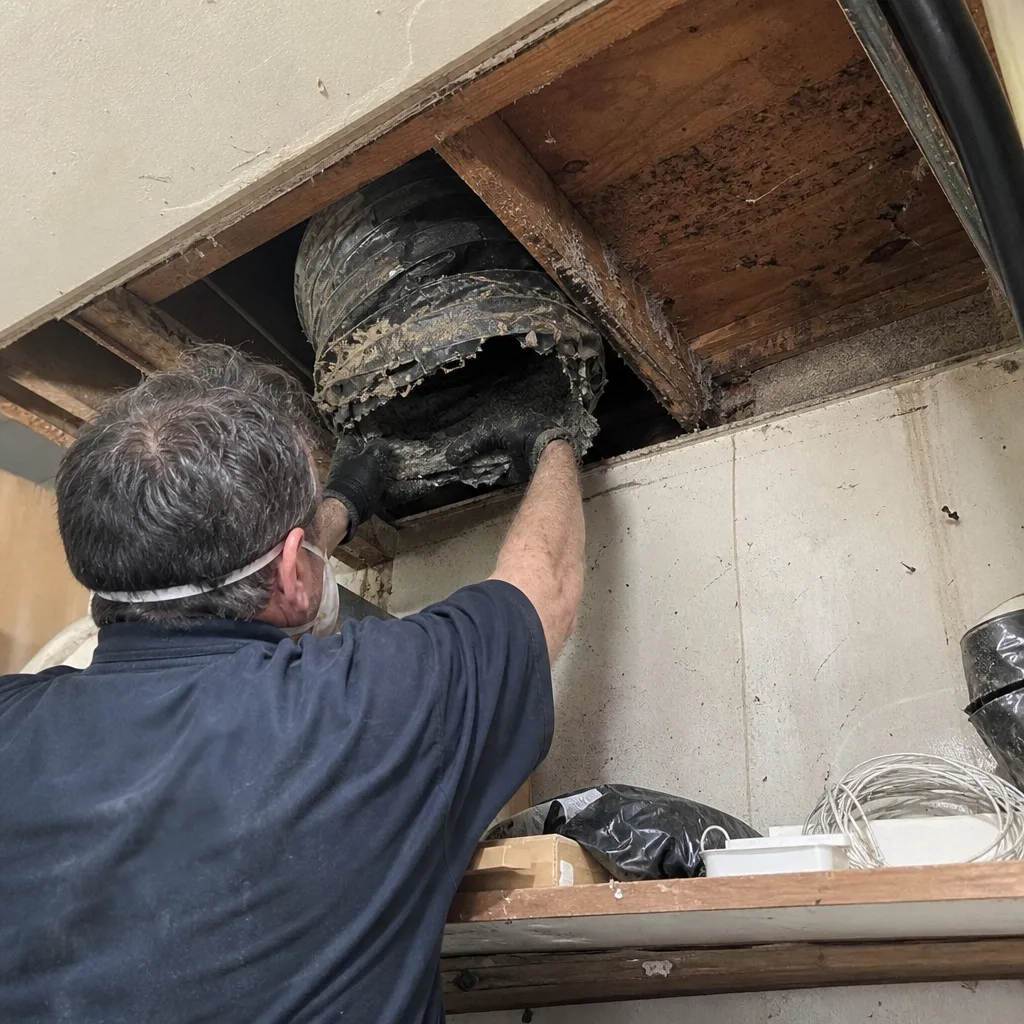 Before
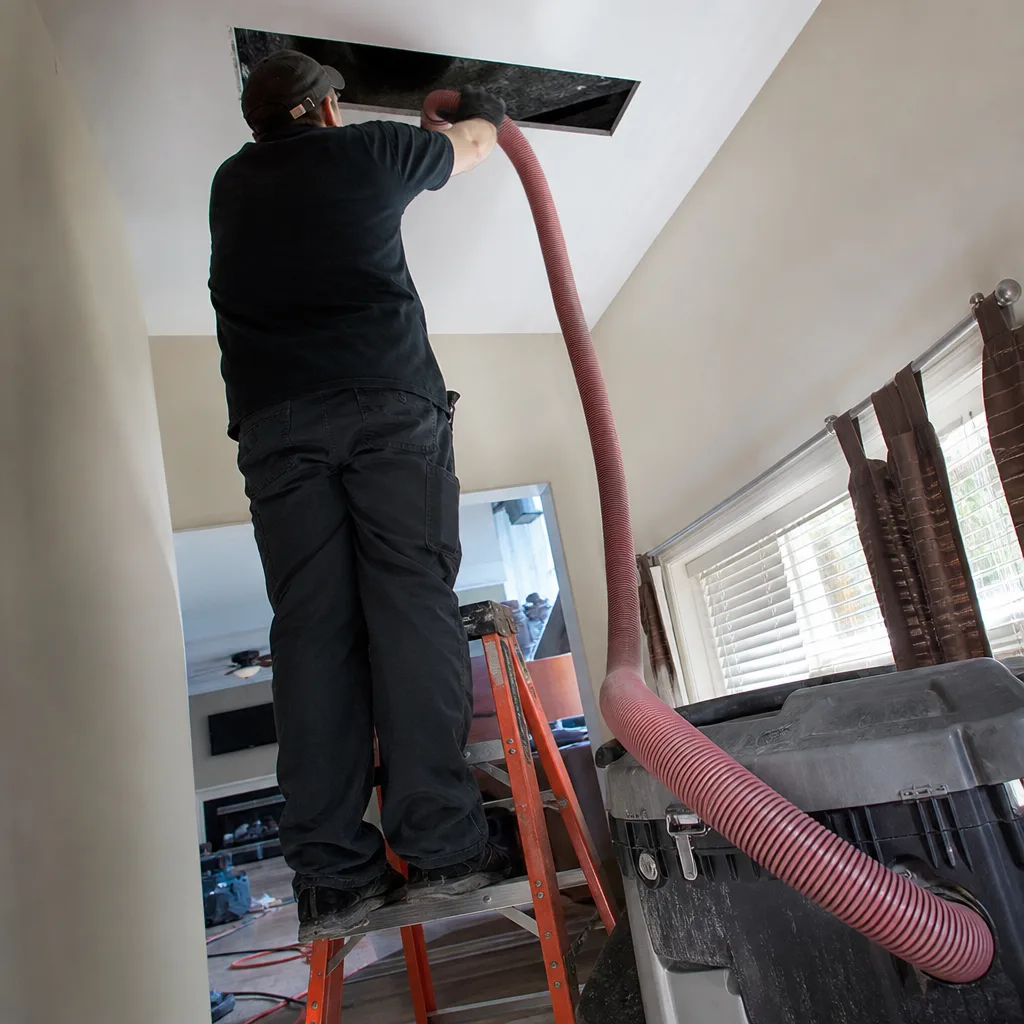 After
After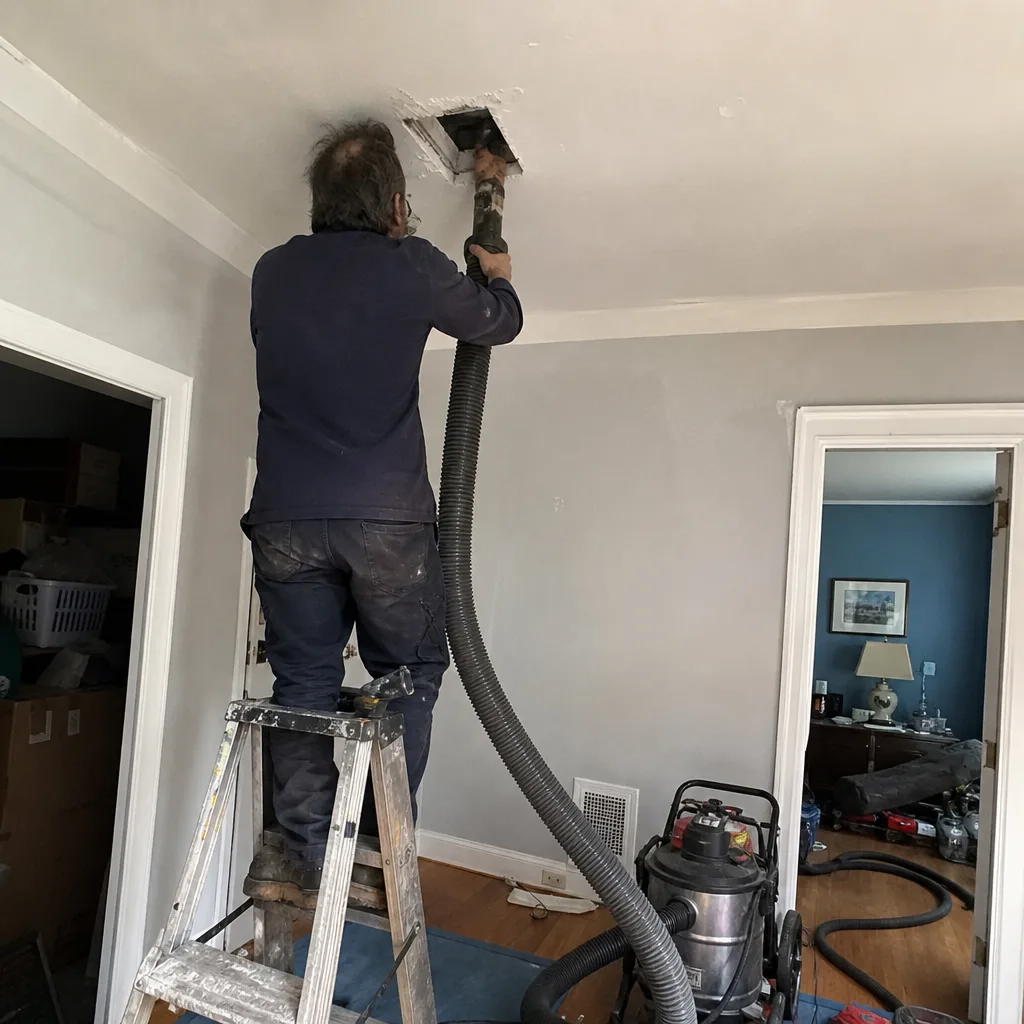 Before
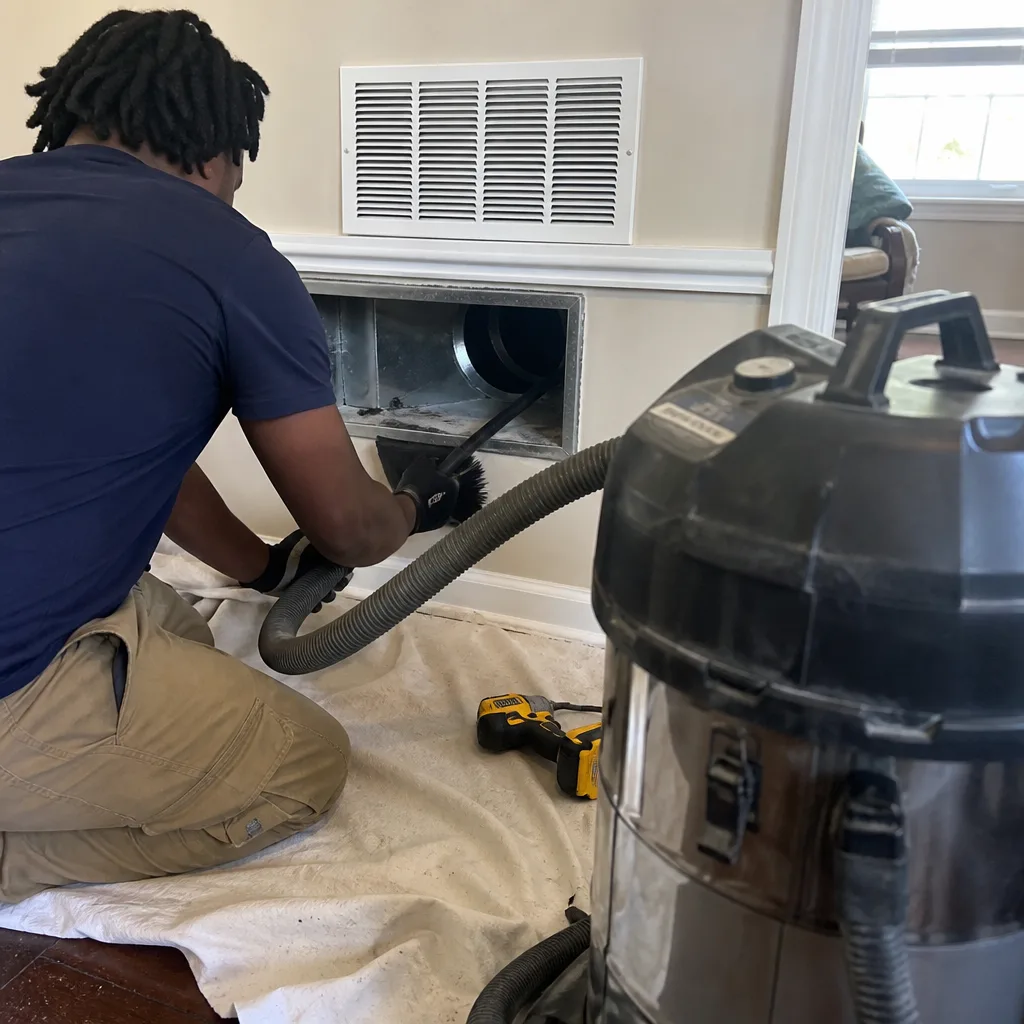 After
After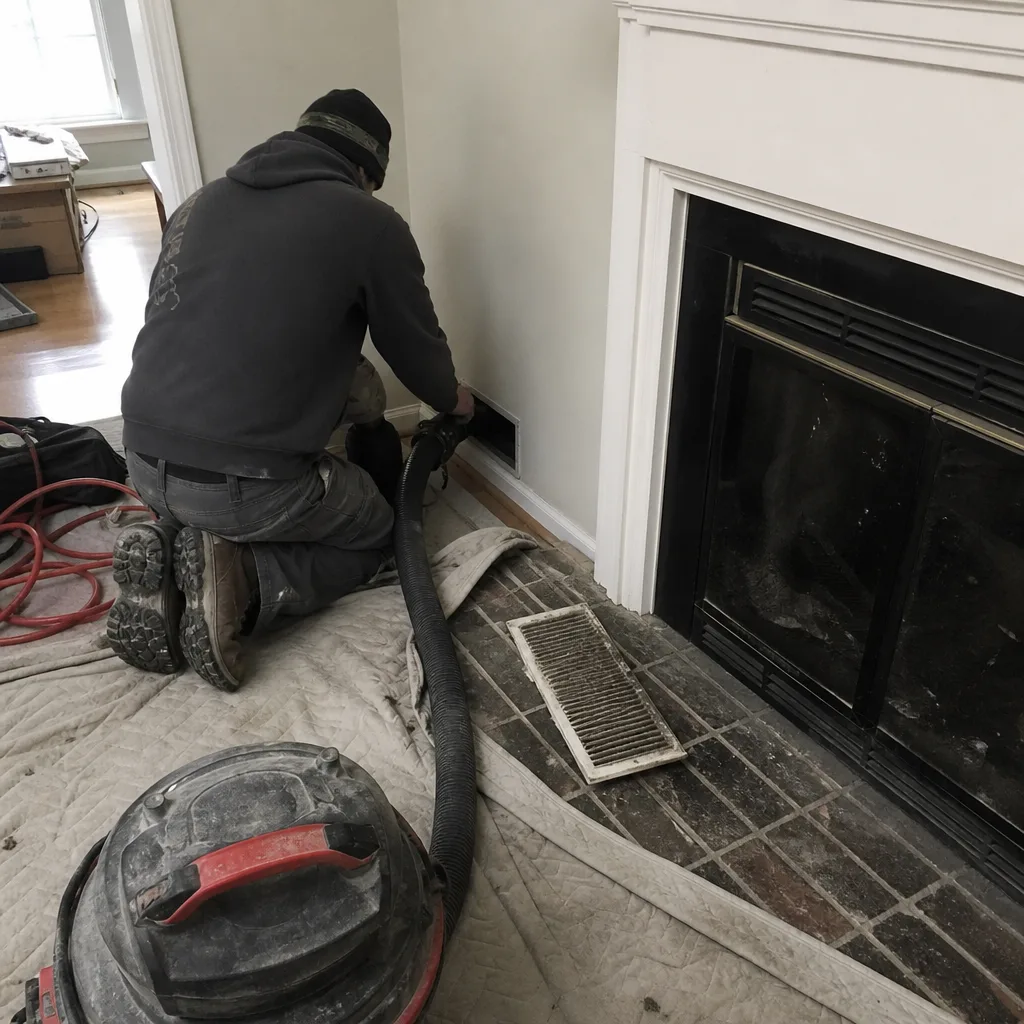 Before
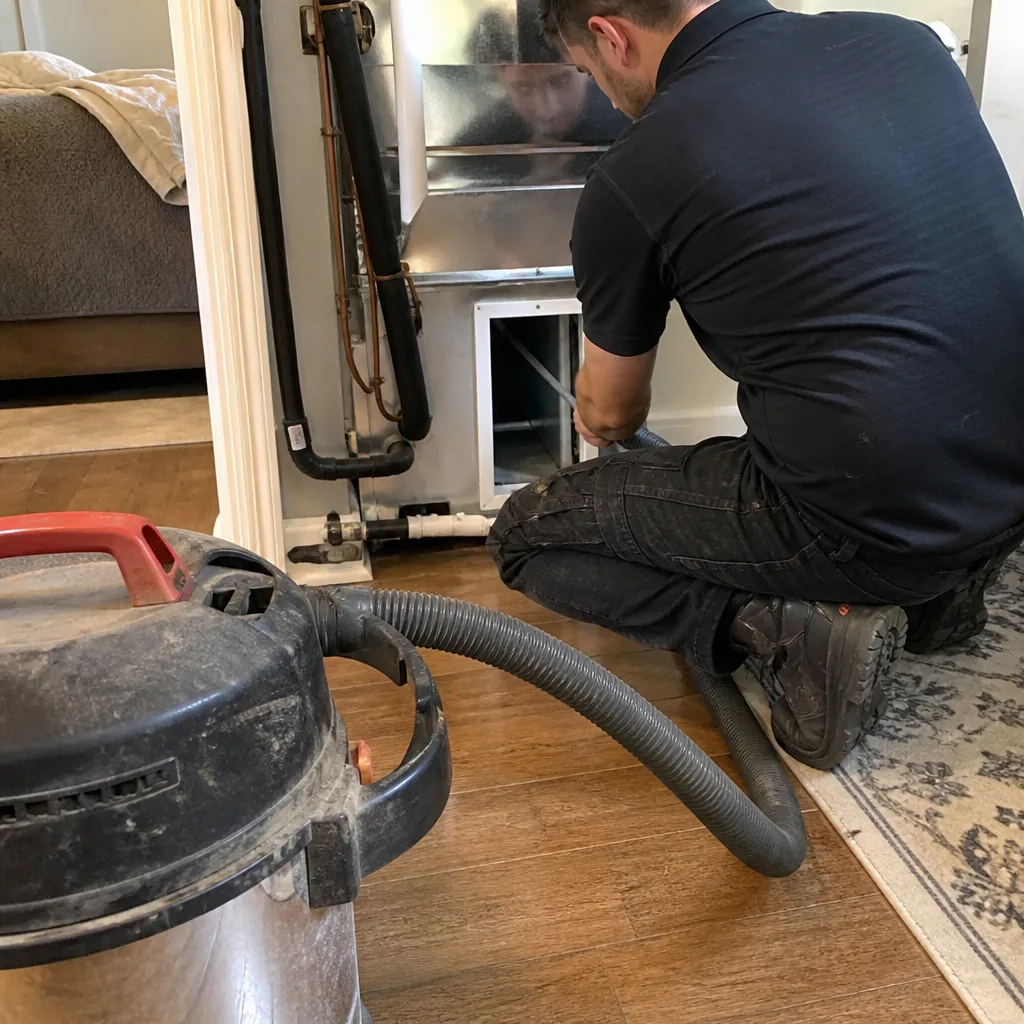 After
AfterAir Duct Cleaning Maintenance Checklist for Fairfax Homeowners
The “clean your ducts every 3-5 years” rule was written for a hypothetical house in a hypothetical climate. In Fairfax, that advice falls apart. Our clay-heavy soils generate fine particulates that infiltrate crawl spaces and basements. Summer humidity routinely pushes above 70% RH, creating conditions inside flex-duct systems that accelerate microbial growth. And the older Fairfax neighborhoods - from Mantua to Mosby Woods - are full of homes built with flex-duct runs that sag, compress, and trap debris in ways rigid metal ductwork never would. This guide replaces the calendar-based myth with an inspection protocol. You’ll learn how to read your own ductwork with a flashlight and phone camera, how to keep a filter log that predicts problems before they start, and which conditions on your checklist mean it’s time to call a professional for Air Duct Cleaning services.
Quick Answer
A proper air duct maintenance checklist for Fairfax homeowners is a room-by-room inspection protocol, not a cleaning schedule. Inspect supply and return registers quarterly for debris buildup, moisture staining, and airflow reduction; maintain a filter log tracking MERV rating, installation date, and pressure drop; and check flex-duct junction points annually for sag or compression. Conditions requiring professional intervention include visible mold growth, debris restricting more than 30% of register opening, or airflow temperature variance exceeding 4°F between rooms.
Table of Contents
- Why Fairfax Homes Need a Different Checklist
- The Room-by-Room Register Inspection
- The Filter Log: Why Calendar Dates Fail
- Flex Duct Sag and Compression Check
- Fairfax-Specific Triggers That Accelerate Fouling
- Thresholds: Homeowner Action vs. Professional Intervention
- Building Your Annual Maintenance Routine
- Common Mistakes to Avoid
- When to Call a Professional
- Frequently Asked Questions
- The Bottom Line
BeforeAfterWhy Fairfax Homes Need a Different Checklist
Generic duct maintenance advice assumes average construction, average climate, average soil. Fairfax meets none of these assumptions reliably.
Start with the building stock. The CleanRun Air Duct Cleaning Fairfax home service area includes neighborhoods developed across six decades, from the post-war ranches of Mantua to the 1990s colonials of Fair Lakes and the infill builds near Fairfax City proper. Flex-duct systems became dominant in residential construction starting in the late 1970s, and they behave differently from the galvanized steel ducts they replaced. Flex duct - a spiral wire helix wrapped in insulation and a vapor barrier - is lightweight and cheap to install. It is also prone to sag between supports, compression at bends, and damage from rodents or maintenance activity in attics and crawl spaces. A compressed flex-duct run can lose 30% of its designed airflow without any debris inside it at all. Cleaning a compressed duct solves nothing; identifying the compression does.
Then there’s the soil. Fairfax County sits on the Piedmont physiographic province, with clay-heavy soils that generate fine particulate matter, especially during dry spells and construction activity. That particulate infiltrates crawl spaces and basements, enters return air pathways, and deposits in ductwork. The effect is measurable: in our work across Fairfax since 2013, we’ve documented heavier debris accumulation in homes within half a mile of active construction or major road corridors than in comparable homes on quieter streets.
Humidity completes the picture. Fairfax summer dew points regularly reach the mid-60s, and indoor relative humidity can climb above 60% RH even with air conditioning running. Above 60% RH, dust mite populations increase, and organic debris in ductwork becomes susceptible to microbial growth. The problem isn’t the humidity itself; it’s the combination of humidity with existing debris that creates a maintenance trigger worth tracking.
These three factors - flex-duct vulnerability, clay-soil particulate load, and sustained summer humidity - mean a Fairfax homeowner needs an inspection protocol that watches for specific conditions, not a calendar reminder to “clean ducts” on a fixed interval.
The Room-by-Room Register Inspection
This is the core of the checklist. You need a flashlight (phone flashlight is fine), your phone camera, and a screwdriver to remove register covers. Plan 15 minutes per floor. Do this quarterly, ideally at season changes.
What You’re Looking For
- Visible debris at the register throat. Shine your flashlight into the duct opening past the register. Look for accumulated dust, hair, or particulate matter on the duct walls or at the first elbow. Photograph anything that obscures more than a quarter of the visible opening.
- Moisture staining or discoloration. Look for dark streaks, rust on metal components, or warping of the register frame itself. These indicate condensation events or water intrusion that may precede mold growth.
- Unusual odor when airflow starts. Note this qualitatively - musty, sour, or “dirty sock” smells suggest microbial activity in the duct run or at the evaporator coil upstream.
- Register frame condition. Loose, damaged, or poorly sealed frames allow unfiltered air infiltration from wall cavities or the attic. This bypasses your filter entirely.
- Airflow strength and temperature. Hold your hand at each supply register when the system is running. Note rooms where airflow feels noticeably weaker or the air temperature differs from the register in the room with the thermostat.
How to Document It
Create a simple note on your phone for each inspection. Date, room, what you found, photo number. This becomes evidence over time. In our experience at Air Duct Cleaning in Fairfax, homeowners who bring six months of register photos to an estimate get more precise scopes and firmer pricing, because the technician can see patterns - recurring moisture in one branch, debris concentration at specific junctions - that a single visit might miss.
Pay special attention to registers on upper floors in summer and lower floors in winter. In Fairfax’s humid summers, attic duct runs experience greater temperature differentials, which increases condensation risk at supply registers. In winter, basement and crawl-space returns pull in colder, potentially damper air. Seasonal patterns in your register notes predict where problems will develop before they become expensive.
The Filter Log: Why Calendar Dates Fail
The most common maintenance mistake we see in Fairfax homes is filter replacement by calendar - “every three months” - without regard for what the filter actually experienced. A 1-inch pleated filter in a home near the I-66 corridor with two shedding pets and a hobby woodshop in the garage is not the same filter as one in a single-occupant condo in Fairfax City with no pets and minimal cooking.
Your filter log is the single best predictor of duct condition. Here’s the template we recommend:
| Field | What to Record | Why It Matters |
|---|---|---|
| MERV rating | The number printed on the filter frame (typically 8-16 for residential) | Higher MERV captures more particulate but increases pressure drop; mismatched MERV strains blower motors and can collapse poorly supported filters |
| Installation date | Exact date, not “early March” | Establishes actual service life, not theoretical |
| Pressure drop at install | If you have a manometer or your HVAC technician provides readings, record initial static pressure across the filter | Baseline for comparing future restriction; a significant increase indicates filter loading or duct leakage pulling in unfiltered air |
| Condition at removal | Photo of the loaded filter; note where loading is heaviest (center, edges, one side) | Uneven loading indicates duct leakage or poor filter fit; heavy edge loading means air is bypassing the filter media |
| Replacement interval | Actual days between install and removal | Builds your home-specific replacement schedule, not generic advice |
A filter that loads heavily in 45 days tells you something important about particulate load in your home and duct system. It may indicate return duct leakage pulling air from a dusty crawl space, or it may simply mean you need more frequent replacement. Either way, the log gives you data to act on.
In Fairfax specifically, watch for accelerated loading during two periods: late March through May, when tree pollen peaks, and late August through October, when ragweed and mold spores from decaying vegetation are highest. We’ve seen filters in homes near Daniels Run Park and the wooded areas of Mantua load 40% faster during these windows than in winter months. The log reveals your home’s actual pattern.
Flex Duct Sag and Compression Check
This is the inspection step most homeowners skip, and it’s the one that most often explains why “cleaning” doesn’t solve an airflow problem.
Flex duct must be supported at intervals that prevent sagging, typically every 4-5 feet per manufacturer specification, with additional support within 18 inches of any connection. In practice, especially in attics, supports fail, installers take shortcuts, or maintenance activity disturbs original placement. A sagging flex duct creates a low point where debris collects and moisture condenses. A compressed flex duct - pinched under insulation, crushed by stored items, or bent too sharply at a junction - reduces airflow independent of any cleanliness issue.
How to Check Without Entering the Attic
You can’t inspect every foot of flex duct without attic access, but you can infer problems from register behavior:
- Measure airflow consistency. With the system running, compare airflow strength at registers on the same duct branch. A significant drop at one register suggests restriction upstream - possibly a sag or compression, possibly a disconnected joint.
- Listen for duct noise. A “whooshing” or whistling sound at a register often indicates high velocity at a restriction point. A “flapping” sound suggests a sagging duct section moving with airflow.
- Check temperature variance. Using an inexpensive infrared thermometer, measure supply air temperature at each register. Variance exceeding 4°F between rooms on the same system suggests airflow imbalance, which may originate in duct restriction rather than system sizing.
- Inspect visible duct sections. In basements, crawl spaces, or utility rooms, look at any exposed flex duct. It should be round, fully expanded, and supported without sharp bends. Flattened sections, kinks, or sections resting directly on joists or insulation need correction.
In Fairfax’s older neighborhoods - particularly the 1960s-1980s builds in areas like Broyhill Crest and the original Fairfax City subdivisions - flex duct has often been disturbed by decades of HVAC service, insulation upgrades, and homeowner storage in attics. We’ve found compression damage in roughly one-third of these homes during initial inspections, and it’s never visible from the register alone.
Fairfax-Specific Triggers That Accelerate Fouling
Certain Fairfax conditions change the math on how quickly ductwork becomes problematic. These aren’t reasons to clean on a schedule; they’re reasons to inspect more frequently and know what you’re looking for. Before scheduling work, review Air Duct Cleaning Permits, Codes & Inspections in VA: What You Need to Know.
Proximity to Major Road Corridors
Homes within a quarter-mile of I-66, Route 29 (Lee Highway), or the Fairfax County Parkway experience elevated particulate load from brake dust, tire wear, and diesel exhaust. These particles are fine enough to infiltrate building envelopes and enter return pathways. If you live in these corridors - neighborhoods like Greenbriar near 66, or the commercial-adjacent sections of Fairfax City near 29 - your filter log will likely show accelerated loading, and your register inspections should look for dark, oily residue distinct from ordinary household dust.
Clay Soil and Construction Activity
Fairfax’s clay soils generate fine silica particulate that becomes airborne during dry periods and construction disturbance. New development in areas like the Mosaic District expansion or infill construction in older neighborhoods increases regional particulate load. Homes with crawl space return pathways or poorly sealed basement rim joists pull this material directly into the duct system. Register inspections in these conditions often show gritty, reddish-brown debris characteristic of Piedmont clay.
Humidity Spikes and Seasonal Transitions
Fairfax’s summer humidity pattern - sustained periods above 60% RH, with spikes above 70% during tropical air mass intrusions - creates condensation risk in attic duct runs and crawl space returns. The critical period is spring transition, when outdoor dew points rise faster than homeowners adjust thermostats or dehumidifier settings. Moisture on duct surfaces activates microbial growth on existing debris. Your register inspection should watch for moisture staining or musty odor specifically in April-June and again in August-September.
Tree Canopy and Pollen Load
Fairfax’s mature tree canopy is one of its residential strengths, but oak, maple, and birch pollen create significant seasonal filter loading. Homes in heavily wooded neighborhoods - Mantua, the older sections of Oakton adjacent to Fairfax, the areas near Accotink Creek - experience pollen counts that can overwhelm standard filtration. The filter log reveals whether your MERV rating and replacement interval are adequate for your actual environment, or whether you’re allowing pollen to bypass loaded filters and deposit in ductwork.
Thresholds: Homeowner Action vs. Professional Intervention
The purpose of this checklist is to distinguish maintenance you can perform from conditions that require professional assessment. Here are specific thresholds, not vague guidance.
Homeowner Action Appropriate
- Light debris at register throat, less than 25% of opening obscured: Remove register, vacuum with brush attachment, wipe duct throat with damp microfiber, replace register.
- Filter loading within expected range for your home’s conditions: Replace filter, verify correct MERV and fit, continue log.
- Minor register frame looseness: Tighten screws, verify seal with foam gasket if present, note any wall cavity air infiltration.
- Airflow variance under 4°F between rooms, no noise: Note for next inspection; may indicate minor balance issue not requiring immediate action.
Professional Intervention Warranted
- Visible mold growth of any size on duct surfaces or register: This requires assessment of the full duct run, moisture source identification, and remediation protocol. Do not disturb or clean visible mold yourself; aerosolized spores distribute throughout the system.
- Debris obscuring more than 30% of register throat, or recurring heavy loading at the same register: Indicates upstream accumulation or duct leakage pulling in unfiltered air. Vacuuming the register solves the symptom, not the cause.
- Airflow temperature variance exceeding 4°F between rooms, or consistent weak airflow at one register: Suggests duct restriction, disconnection, or system imbalance requiring diagnostic equipment to locate.
- Moisture staining or musty odor that persists after filter replacement and register cleaning: Indicates condensation events or water intrusion in the duct run or at the air handler that requires source identification.
- Flex duct compression, sag, or damage visible in accessible areas: Requires physical correction - support installation, section replacement, or rerouting - that is not homeowner maintenance.
- Pressure drop across filter increasing more than 0.3 inches water column between changes: Indicates either accelerated particulate load from duct leakage or filter mismatch with system capacity.
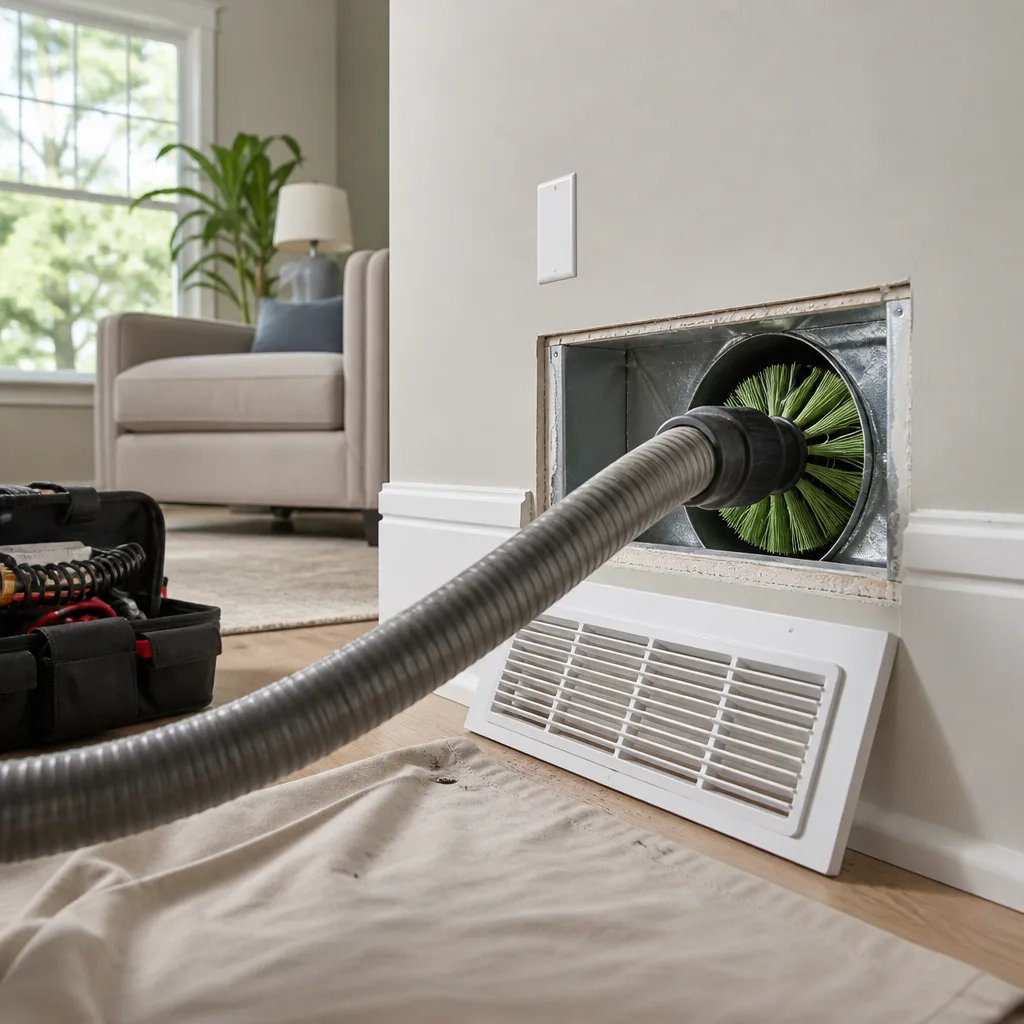
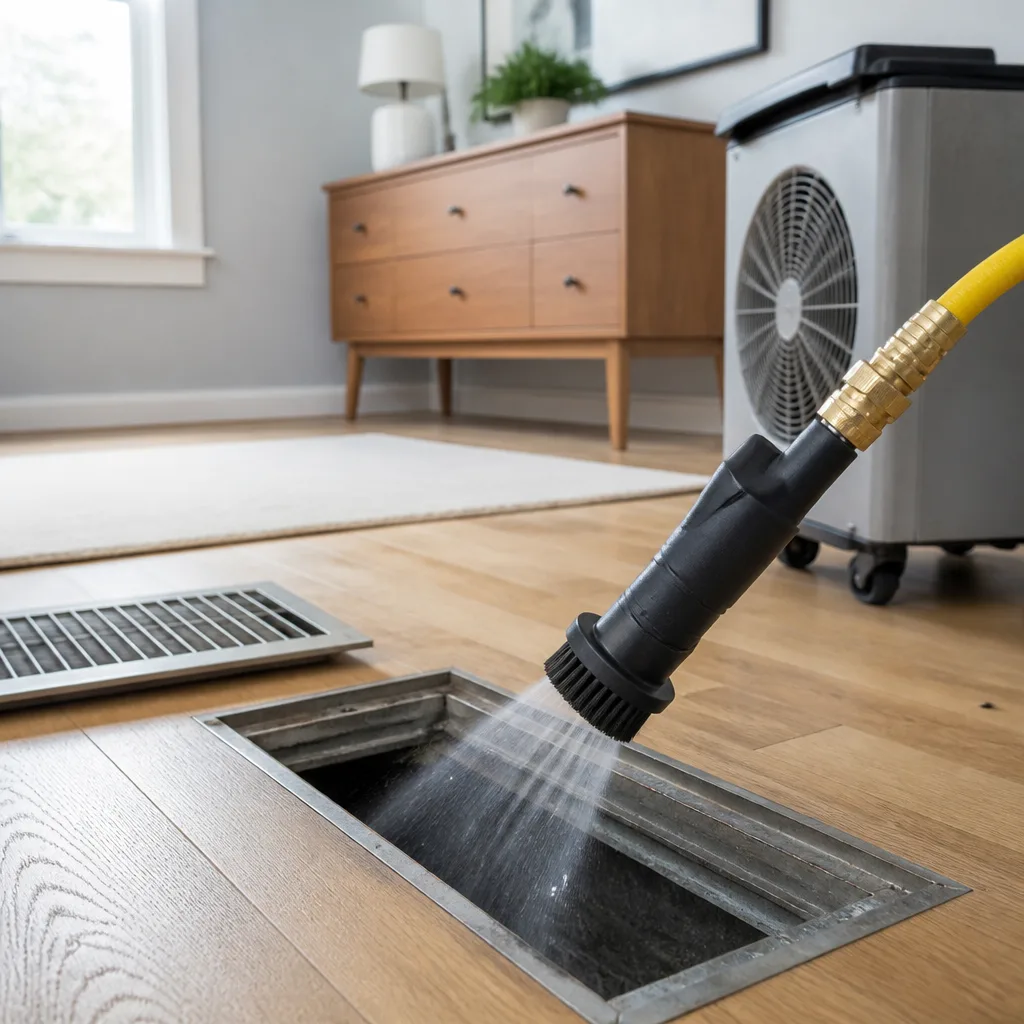
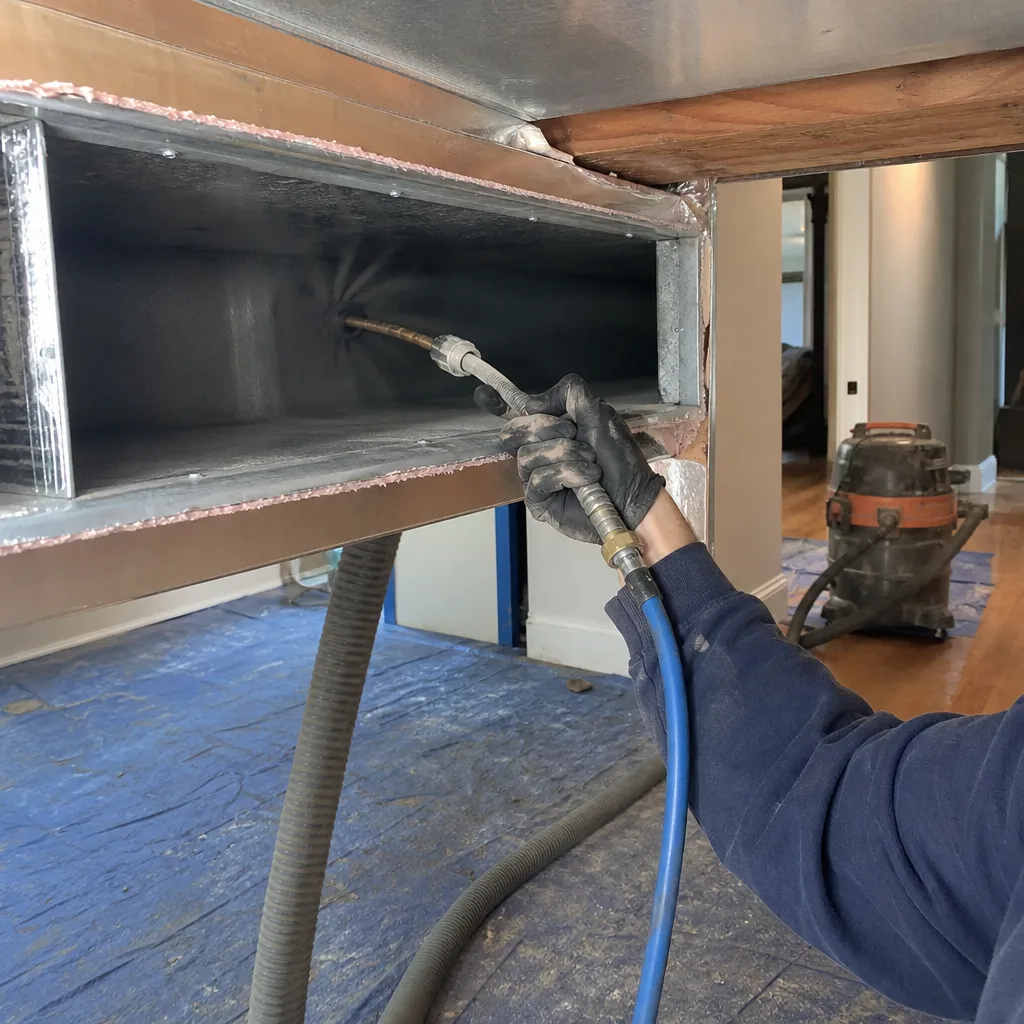
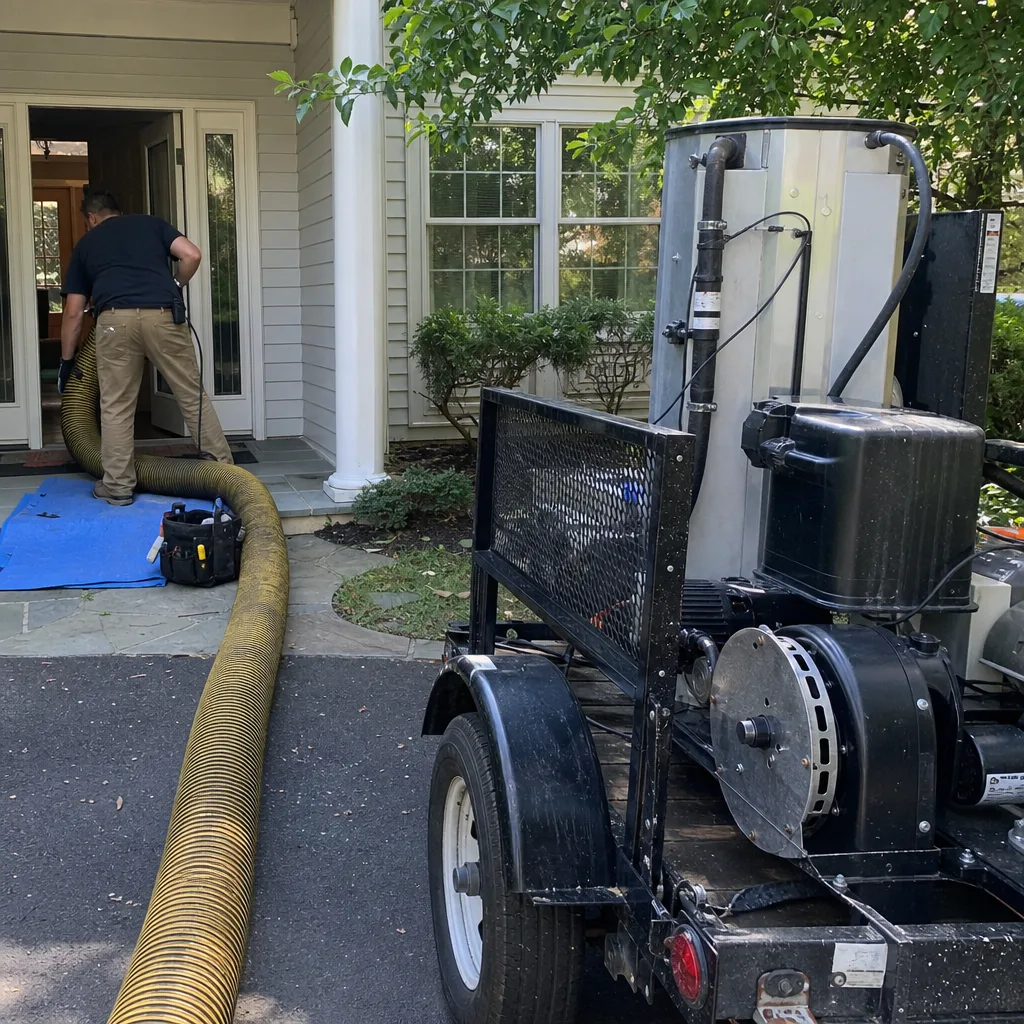
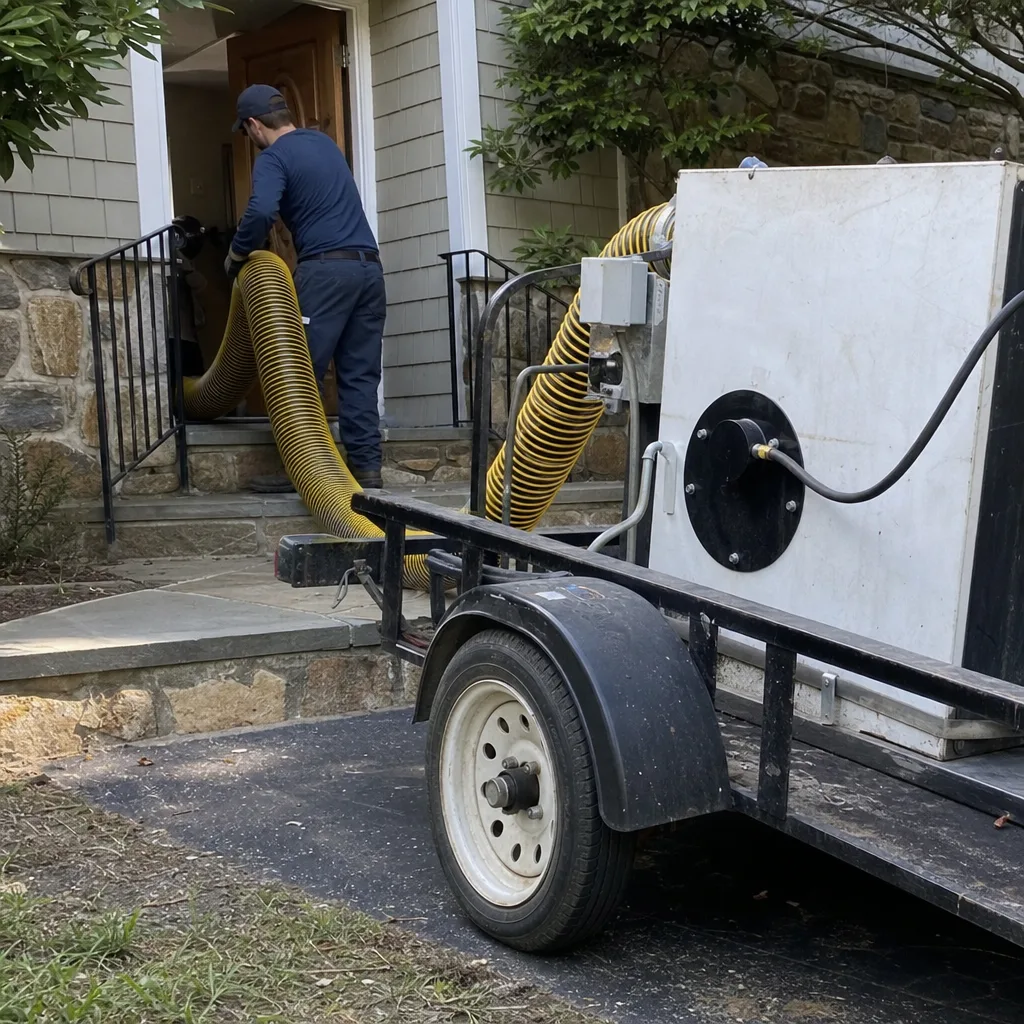
These thresholds are based on what we’ve documented across 52,000+ homes since 2013. The 30% debris threshold, specifically, is where we consistently find that register-level cleaning no longer addresses the upstream condition, and where negative-pressure extraction with professional equipment - the Rotobrush and Nikro systems we use - becomes necessary to restore design airflow.
Building Your Annual Maintenance Routine
Here’s how to assemble the checklist components into a sustainable annual practice.
Quarterly (Season Changes)
Perform the room-by-room register inspection. Replace filter if log indicates interval reached, or if visual inspection shows loading regardless of date. Update filter log with removal photo and condition notes. This takes 30-45 minutes for a typical 2,500-square-foot Fairfax home.
Semi-Annually (Spring and Fall)
Perform the flex-duct inference check: airflow comparison, temperature measurement, noise assessment. Inspect any accessible duct sections in basement, crawl space, or utility room. Review filter log for seasonal loading patterns and adjust replacement interval if data shows consistent acceleration during pollen or construction periods.
Annually
Schedule professional HVAC maintenance that includes static pressure measurement across the filter and evaporator coil inspection. This is distinct from duct cleaning; it’s system diagnostics that reveal whether your ductwork is performing as designed. Request the technician provide actual pressure readings, not a “looks fine” verbal assessment. Add these readings to your filter log for year-over-year comparison.
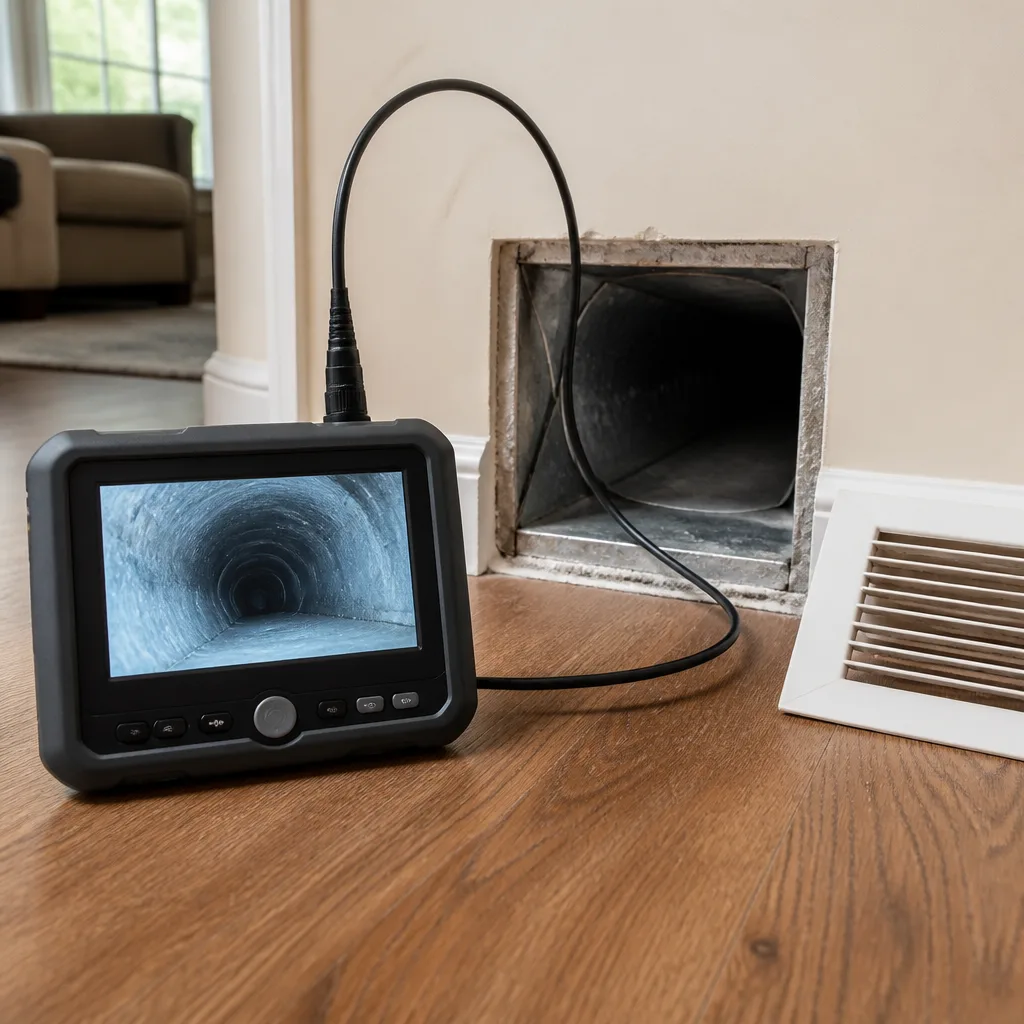
Consider professional duct assessment - not automatically cleaning, but assessment - when your inspection data shows a pattern: recurring moisture at one register, consistent temperature variance, or filter loading that accelerates without explanation. A documented assessment, like the HVAC Cleaning in Fairfax service we provide, includes photo documentation of internal duct conditions, pressure testing for leakage, and a written scope with pricing before any work proceeds.
Common Mistakes to Avoid
- Replacing filters by calendar without logging actual condition. A filter that looks clean at 90 days in January may be loaded at 45 days in April. The log reveals your pattern; the calendar hides it.
- Using the highest MERV rating available without checking system capacity. MERV 16 filters in systems designed for MERV 8 restrict airflow, strain blower motors, and can cause filter collapse that dumps unfiltered debris into the ductwork. Check your HVAC manufacturer’s specification or ask your technician for the maximum recommended MERV.
- Cleaning registers but ignoring return air pathways. Return ducts pull air - and debris - from your living space. A clean supply register with a debris-loaded return duct is polishing the output while contaminating the input.
- Assuming “no smell” means “no problem.” Olfactory adaptation means you stop smelling your own home’s baseline odor. Use the seasonal transition - returning from a weekend away, or the first heating/cooling day of the season - as a reset point for objective odor assessment.
- Storing items in attics or crawl spaces that compress flex duct. The holiday decoration box that “just sits there” may be crushing a duct run and creating a restriction that mimics a debris problem. Mark duct locations before storing anything overhead.
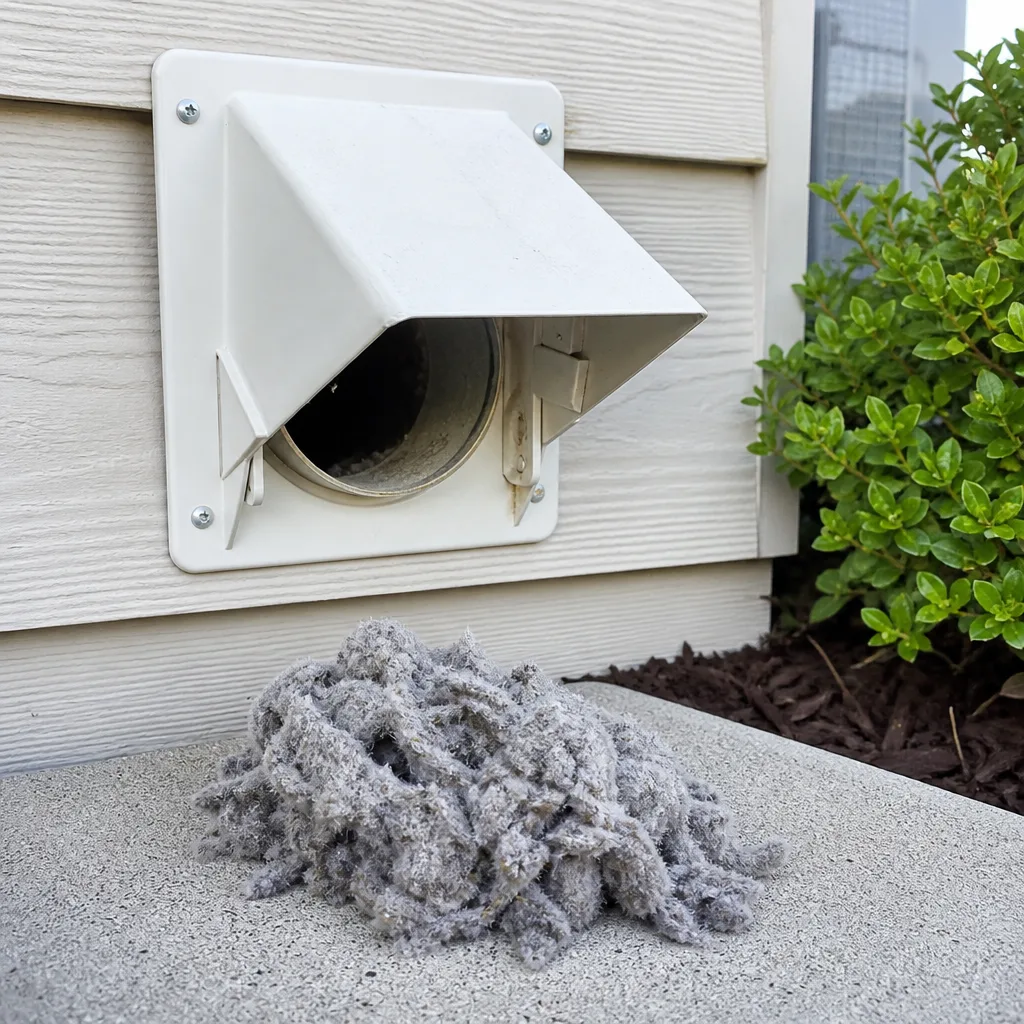
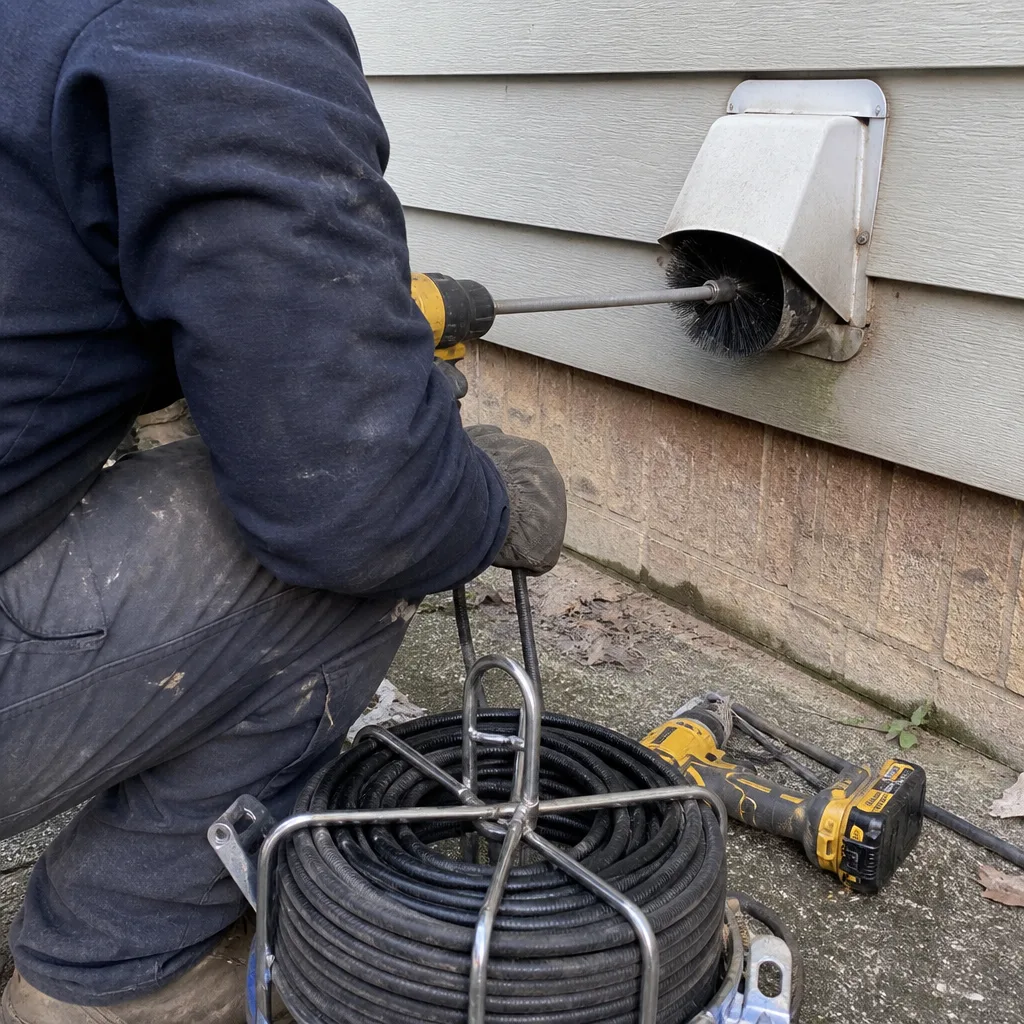
- Ignoring dryer vent condition as part of duct system health. A clogged dryer vent increases humidity load in the laundry area and can backpressure moisture into adjacent ductwork. Dryer Vent Cleaning in Fairfax is part of the same maintenance ecosystem.
- Accepting “duct cleaning” without scope documentation. If a provider cannot tell you how many duct runs will be cleaned, what equipment will be used, and what verification you’ll receive, you are buying a visit, not a service. The Haven Standard Clause 1 requires written pricing before work; it also requires written scope.
When to Call a Professional
Call when your checklist data crosses the thresholds above - visible mold, persistent moisture, airflow variance, or debris accumulation beyond register-level maintenance. Call when your filter log shows unexplained patterns. Call when you’re buying a home and want to know the actual condition of a duct system you’ll inherit, not the seller’s disclosure.
What you should receive: a written scope, a written price before work begins, and documentation of what was found and what was done. At CleanRun Air Duct Cleaning Fairfax, every assessment includes photo documentation of internal duct conditions using camera equipment, and every job that proceeds includes a Documented Photo Record of every duct run before and after cleaning - delivered as part of the standard job record, not as an upsell.
The 365-Day Done Right Promise applies to all work: if it’s not right, we make it right, backed in writing on every job. Free estimates in Fairfax are available by calling (571) 526-0015. Free Second Opinion on any written estimate from another provider - bring their quote; we put our number next to it in writing.
Frequently Asked Questions
Whole-system duct cleaning for a typical Fairfax home ranges from $450 to $850 depending on system size, accessibility, and condition. Homes with multiple HVAC units, extensive flex-duct in crawl spaces, or significant debris accumulation requiring longer extraction time fall at the higher end. CleanRun provides a written price before any work starts - no per-vent add-ons, no post-arrival surprises. Call (571) 526-0015 for a free estimate with exact pricing for your system.
Low quotes typically reflect limited scope - a shop-vac at the register, not negative-pressure extraction through the full duct run - or bait-and-switch pricing where a low initial figure expands with per-vent fees, “sanitizing” upsells, or mandatory additional services once the technician arrives. A legitimate quote specifies the number of duct runs to be cleaned, the equipment to be used, and the verification you’ll receive. At CleanRun, the price we write is the price you pay, covering the full system agreed upon.
Demand documentation. A verbal assurance or a technician’s word is not verification. CleanRun’s Documented Photo Record, included on every visit since 2013, photographs the inside of every duct run before and after cleaning. You receive these photos as part of the standard job record. If a provider cannot or will not show you internal duct photos, you cannot verify what occurred inside a system you cannot see into yourself.
There is no fixed interval that applies to all Fairfax homes. The inspection protocol in this guide replaces calendar-based recommendations with condition-based decisions. Homes near major road corridors, with multiple pets, with recent construction nearby, or with documented duct leakage may need professional attention more frequently. Homes with tight envelopes, excellent filtration, and no aggravating factors may go longer. Your filter log and register inspection data determine your interval, not a generic schedule.
A shop vac with a long hose can remove surface debris at the register throat, which is part of homeowner maintenance. It cannot produce the negative-pressure extraction that dislodges debris from the full duct run, nor can it navigate bends and junctions in flex-duct systems. More importantly, disturbing debris without containment can redistribute it throughout the system. For conditions beyond light register cleaning, professional equipment - the Rotobrush and Nikro negative-pressure systems we use - is required to capture debris at the point of dislodgment.
Antimicrobial treatment is appropriate only when inspection confirms microbial growth, not as routine prevention. In Fairfax’s humid summers, the priority is moisture control - proper dehumidification, duct insulation integrity, and prompt correction of any condensation events. Applying antimicrobial chemicals to clean, dry ductwork is unnecessary expense and, in some cases, introduces compounds into your air stream without benefit. We recommend addressing moisture sources first, then treating only where growth is documented.
The Bottom Line
A maintenance checklist for air ducts is an inspection protocol, not a cleaning calendar. Fairfax’s specific conditions - clay-soil particulate, summer humidity spikes, flex-duct construction in much of the housing stock - mean that register inspections, filter logs, and flex-duct checks give you actionable data that generic “every 3-5 years” advice cannot. Document what you find. Track patterns over time. Act on thresholds, not assumptions. And when professional intervention is warranted, demand written scope, written price, and photographic verification - the standards we’ve operated under since 2013. Explore our more guides & resources for additional home maintenance insights.
Written by Tomas Reyes, Owner at CleanRun Air Duct Cleaning Fairfax, serving Fairfax since 2013.