
Last updated September 23, 2026
Whole-system duct and dryer vent check with before-and-after photos - you see exactly what came out of your vents
That "$99 whole-house special" is a bait ad - the real number appears once they are in your hallway, or the "clean" is a shop-vac at the register. We photograph the inside of your ducts before and after instead.
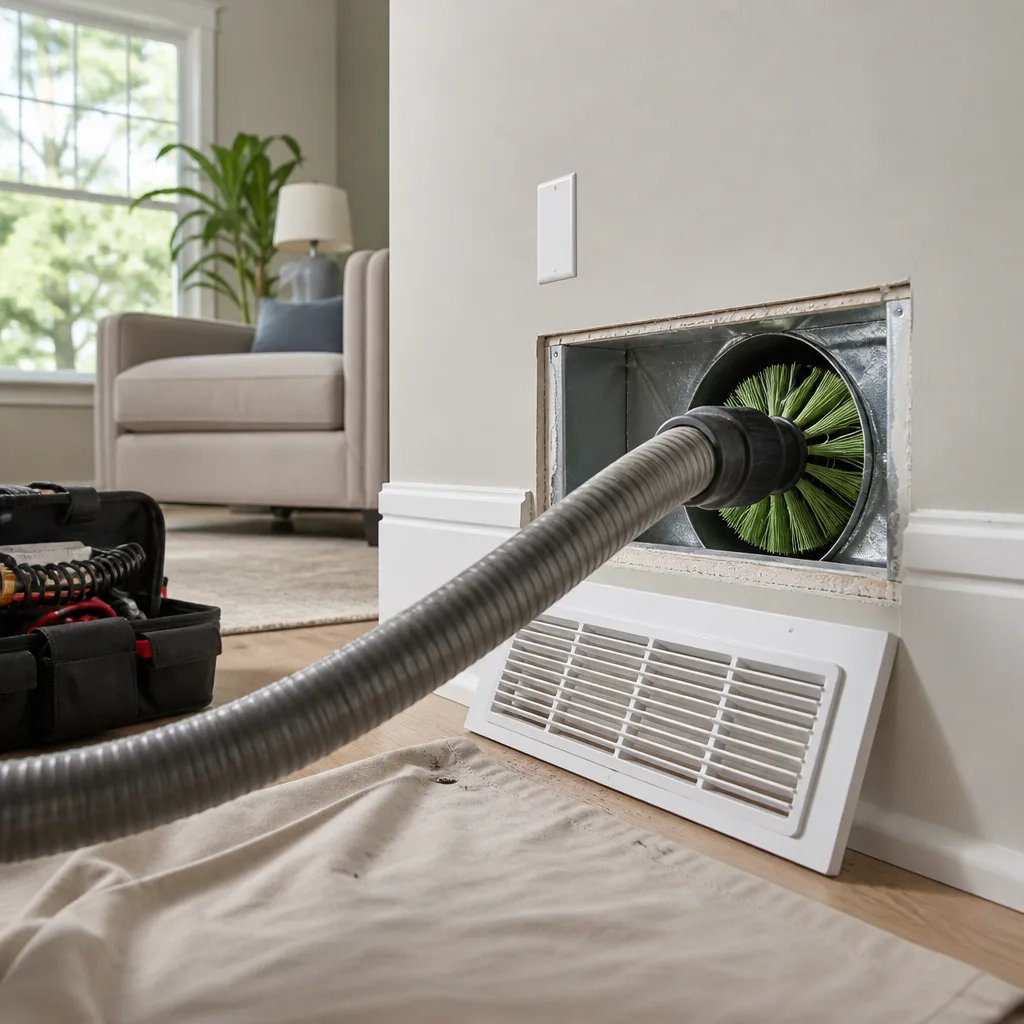
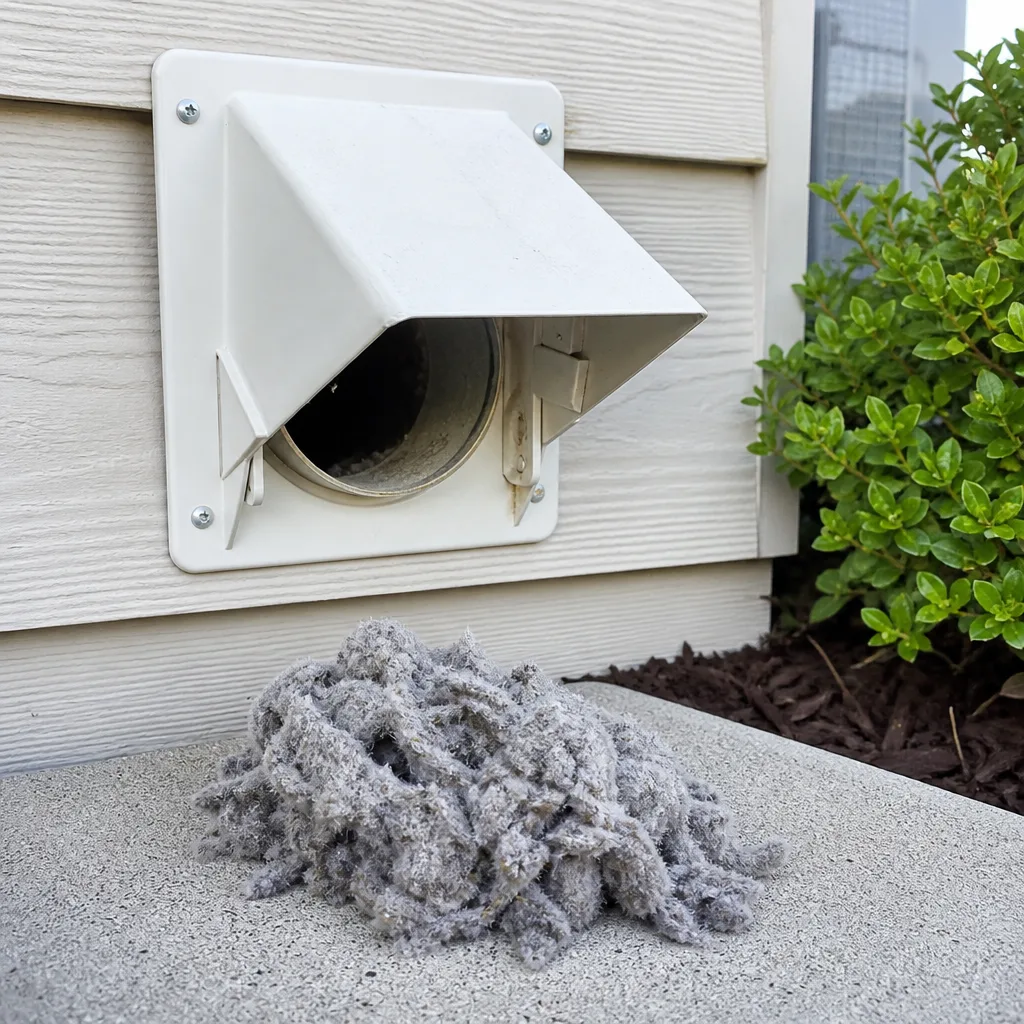
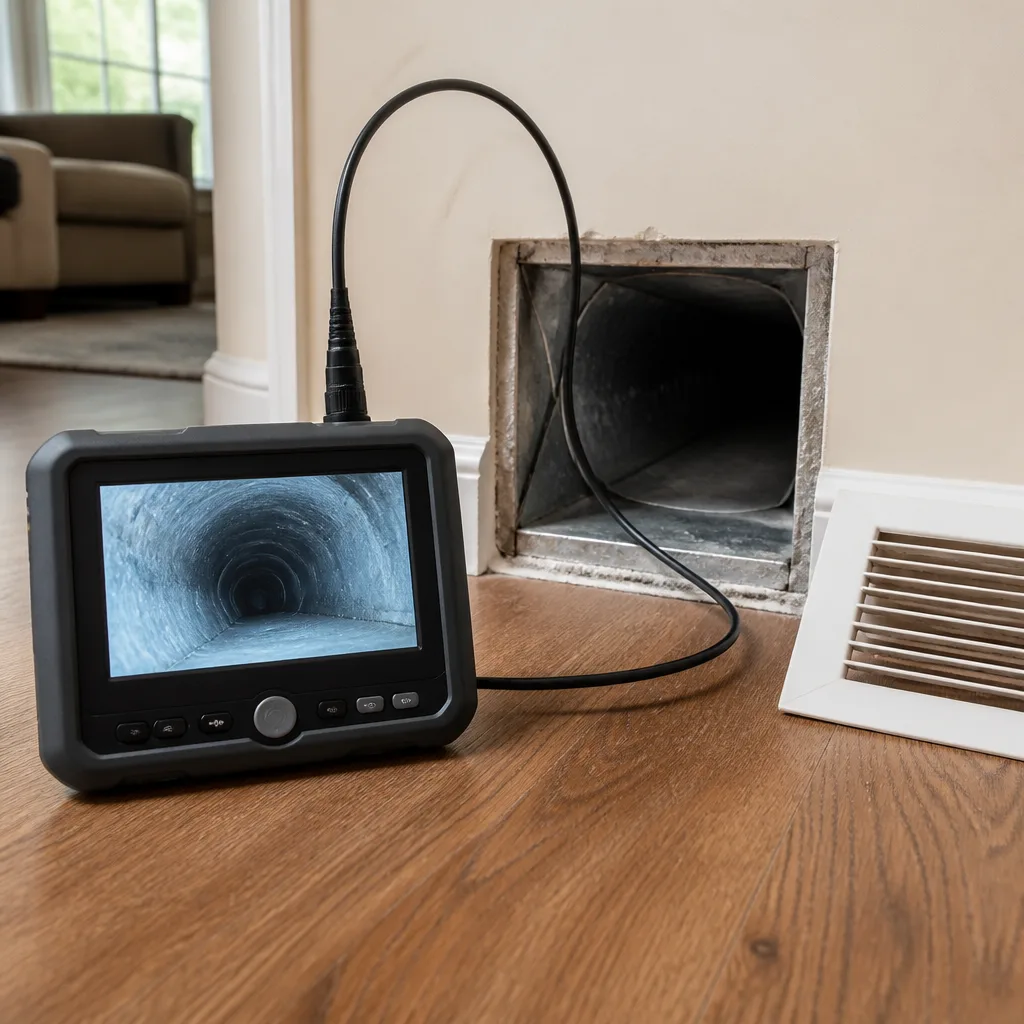
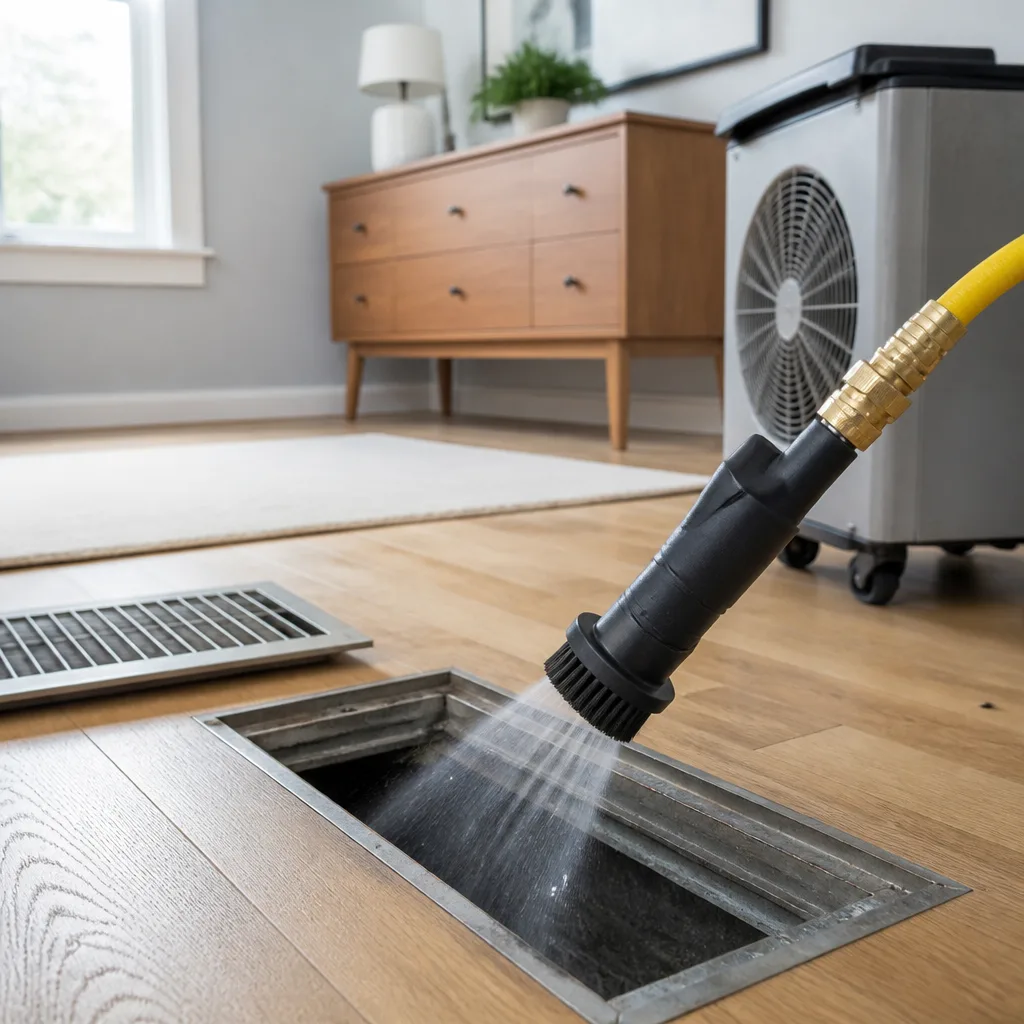
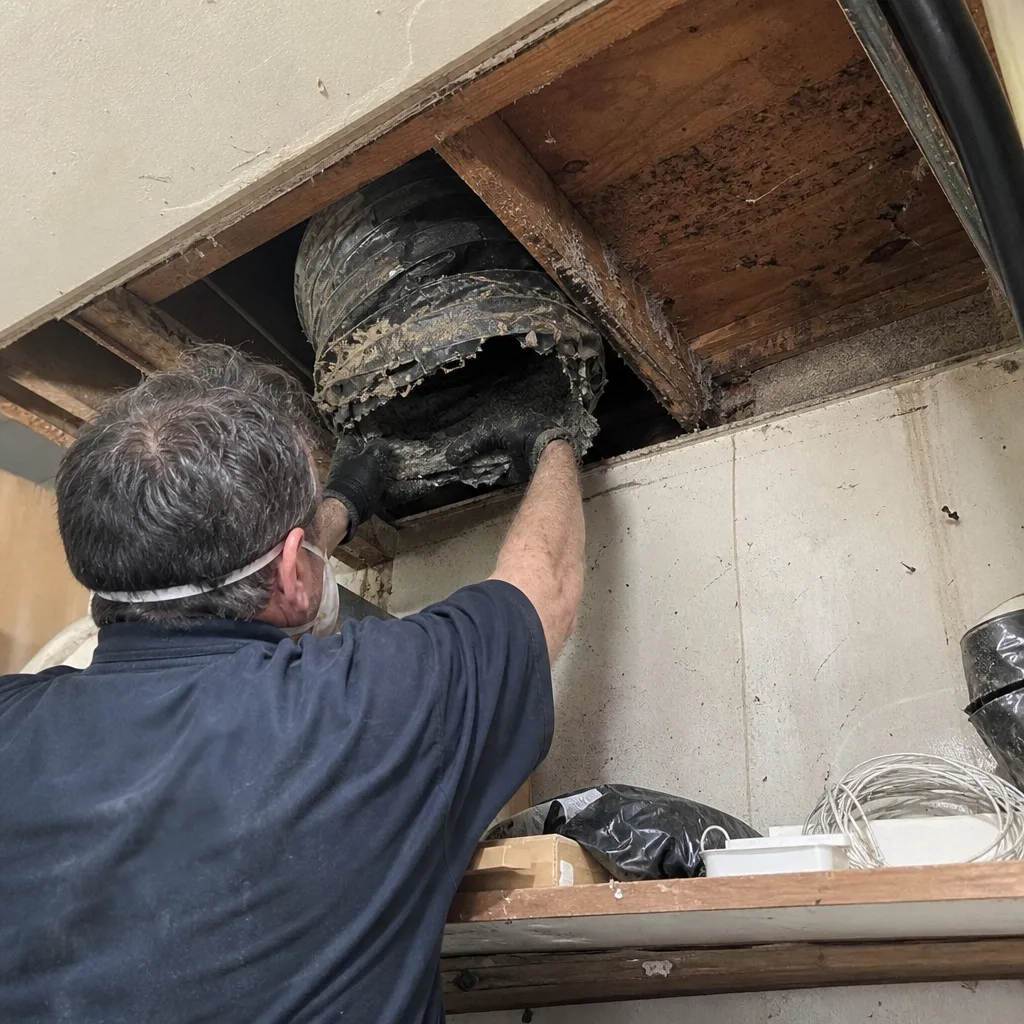 Before
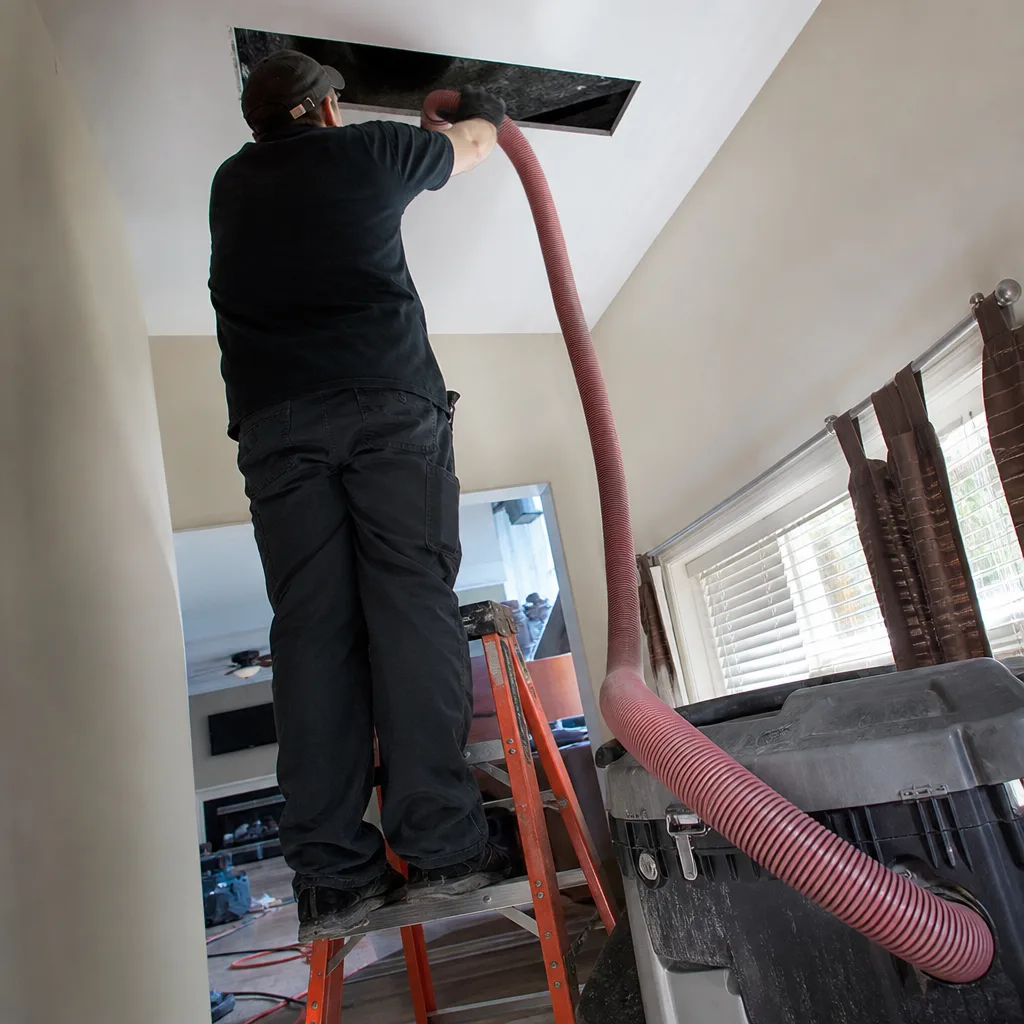 After
After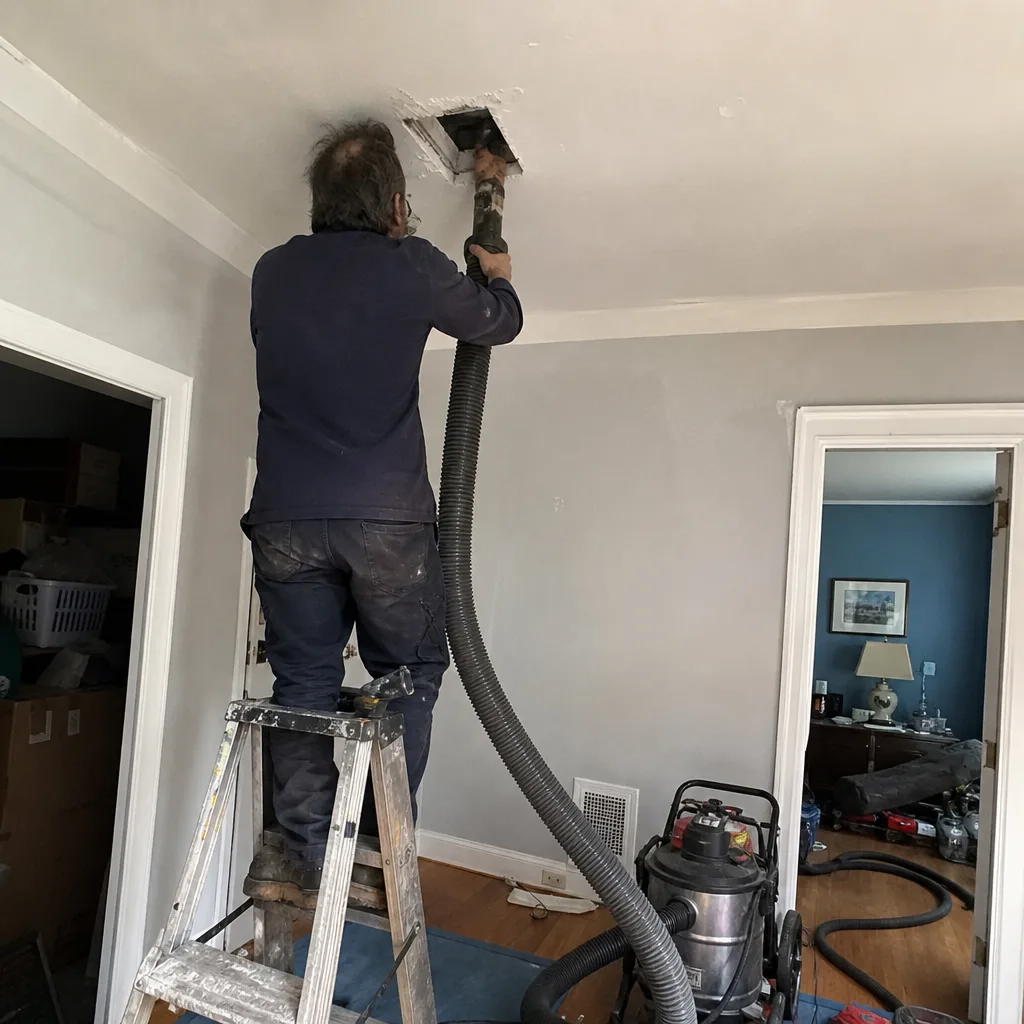 Before
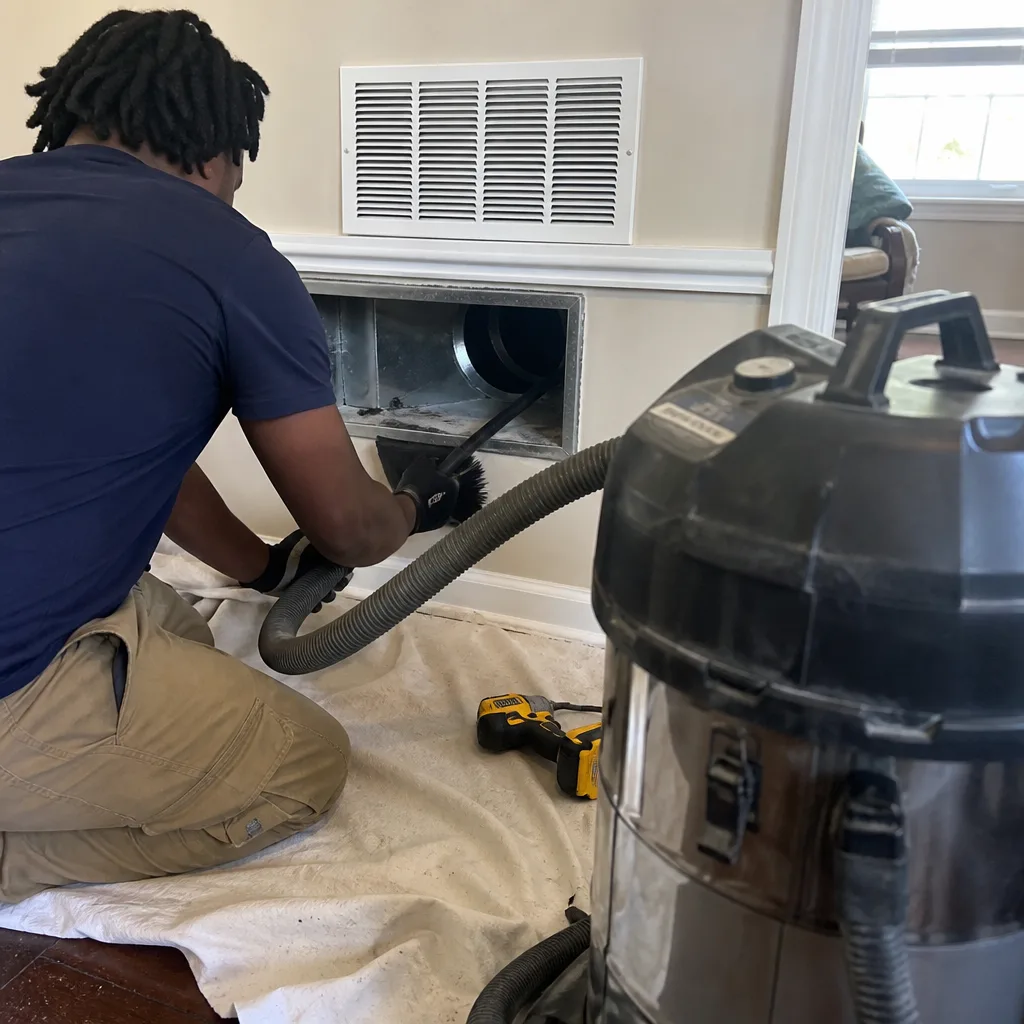 After
After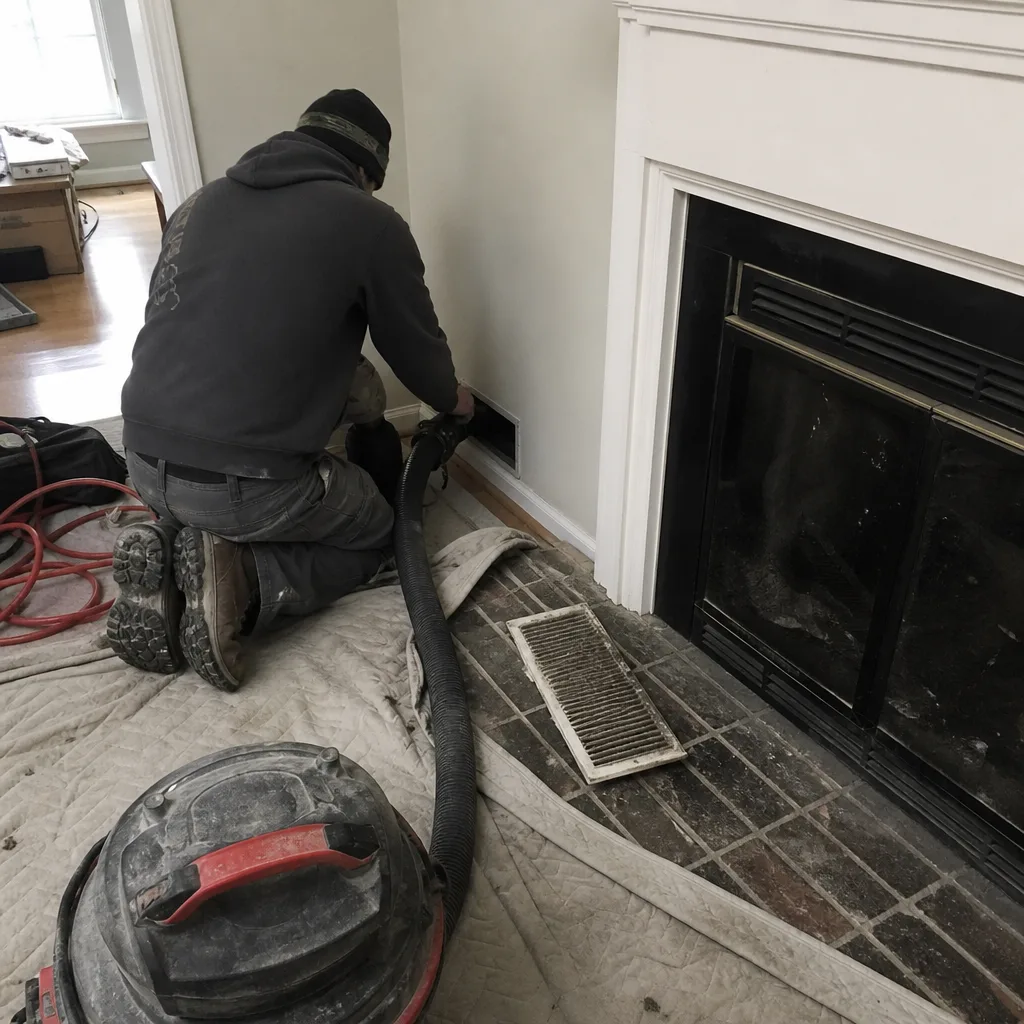 Before
 After
AfterAir Duct Cleaning Cost Breakdown: The Fairfax Homeowner’s Reference for 2026
In Fairfax, the average legitimate air duct cleaning job for a 2,000-square-foot home with one system runs $350-$550 in 2026. The $79 coupon gets a technician in your door with a shop vac and a list of add-ons that will push the final invoice past $800. This guide breaks down what each component of a proper duct cleaning actually costs, what equipment difference explains the gap, and how to read any quote line by line before you sign.
Quick Answer
A complete air duct cleaning in Fairfax for a typical single-system home costs $350-$550 in 2026. The work takes 3-5 hours and includes inspection, negative-pressure extraction at every register, main trunk cleaning, and documented before-and-after photography. Prices below $300 generally indicate a limited scope or insufficient equipment; prices above $700 usually reflect multiple HVAC systems, extensive duct repair, or legitimate add-ons like coil cleaning and dryer vent routing.
Table of Contents
- What Legitimate Duct Cleaning Actually Includes
- Cost by Component: Line-Item Pricing for Fairfax Homes
- The Equipment Difference: $79 Crew vs. $450 Crew
- How Your Home’s Characteristics Affect Price
- Add-On Services: What’s Warranted and What’s Upsold
- What to Demand in Writing Before Work Starts
- The Fairfax Market: Climate, Codes, and Neighborhood Patterns
- Common Mistakes to Avoid
- When to Call a Professional
- Frequently Asked Questions
- The Bottom Line
BeforeAfterWhat Legitimate Duct Cleaning Actually Includes
A proper duct cleaning is not a vacuum pushed into a register for twenty minutes. It is a systematic extraction of accumulated debris from the entire forced-air pathway, performed under controlled negative pressure so dislodged material is captured rather than redistributed through your home.
The scope breaks into five sequential stages, each with its own labor and equipment requirements:
- Inspection and documentation. A technician accesses the air handler, photographs the interior of representative duct runs with a borescope camera, and notes construction type (sheet metal, fiberglass duct board, or flex duct). This establishes baseline conditions and identifies damage that would make cleaning counterproductive until sealed. In Fairfax, we regularly find flex duct collapsed at elbows in homes built during the 1985-2005 construction boom, particularly in neighborhoods like Mantua and Kings Park West where that material was standard.
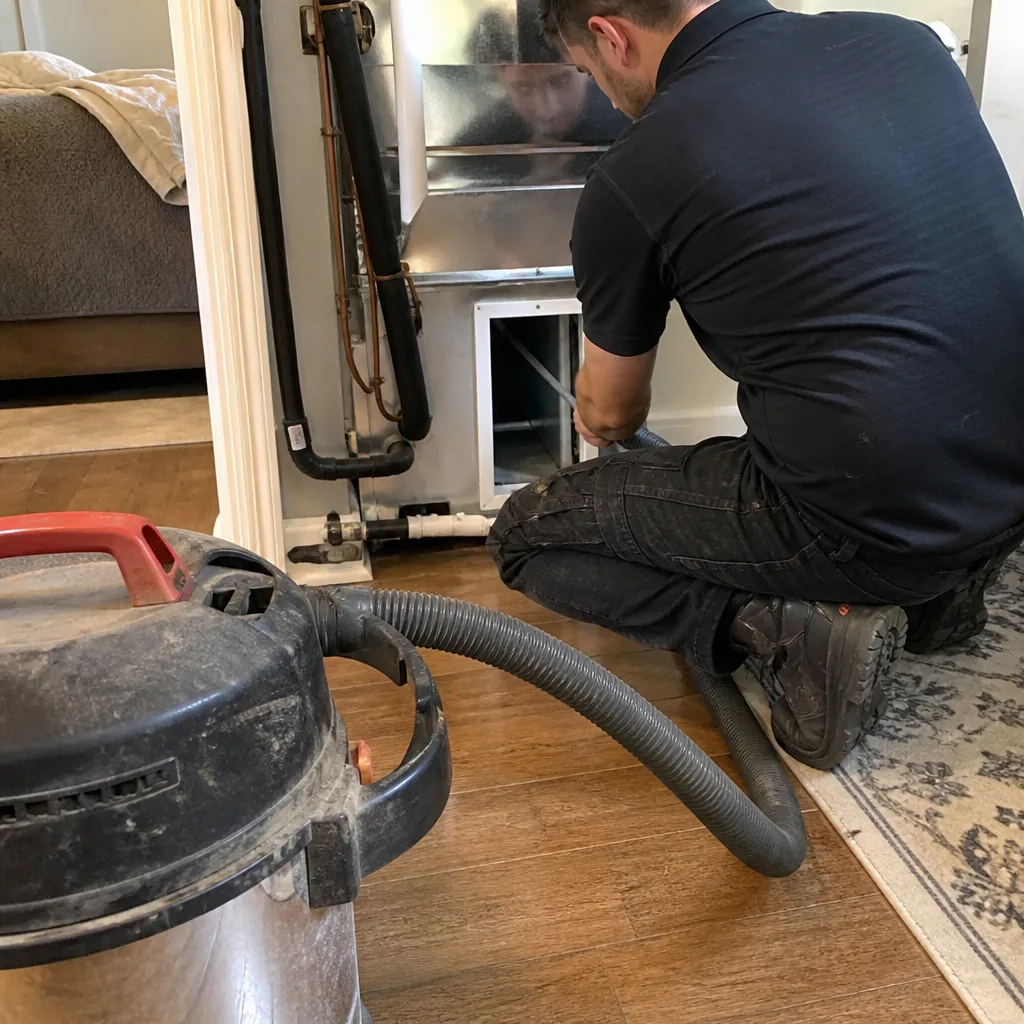
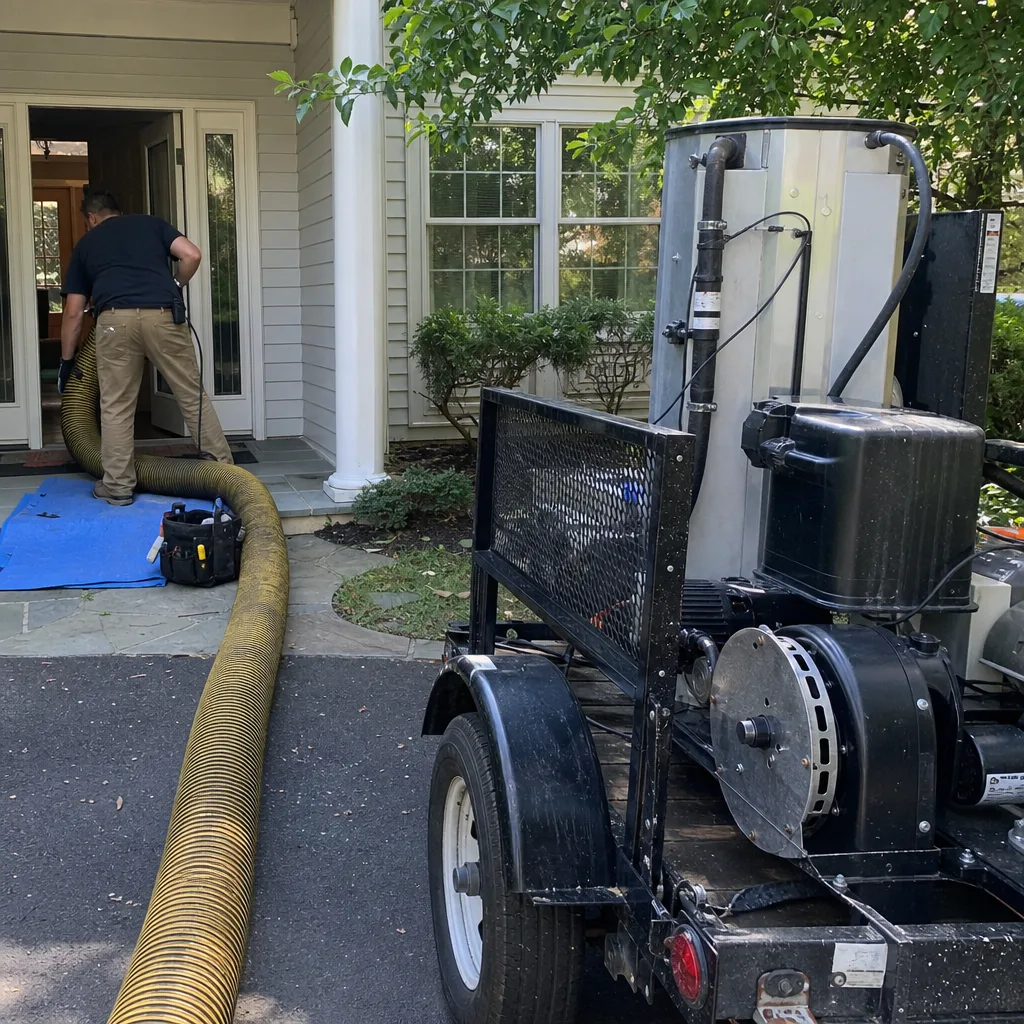
- Negative air machine setup. A HEPA-filtered negative air machine, typically from Abatement Technologies or Nikro, is connected to the main trunk line near the air handler. This creates suction throughout the system, typically achieving 2,000-3,500 CFM of negative pressure depending on home size and duct configuration.
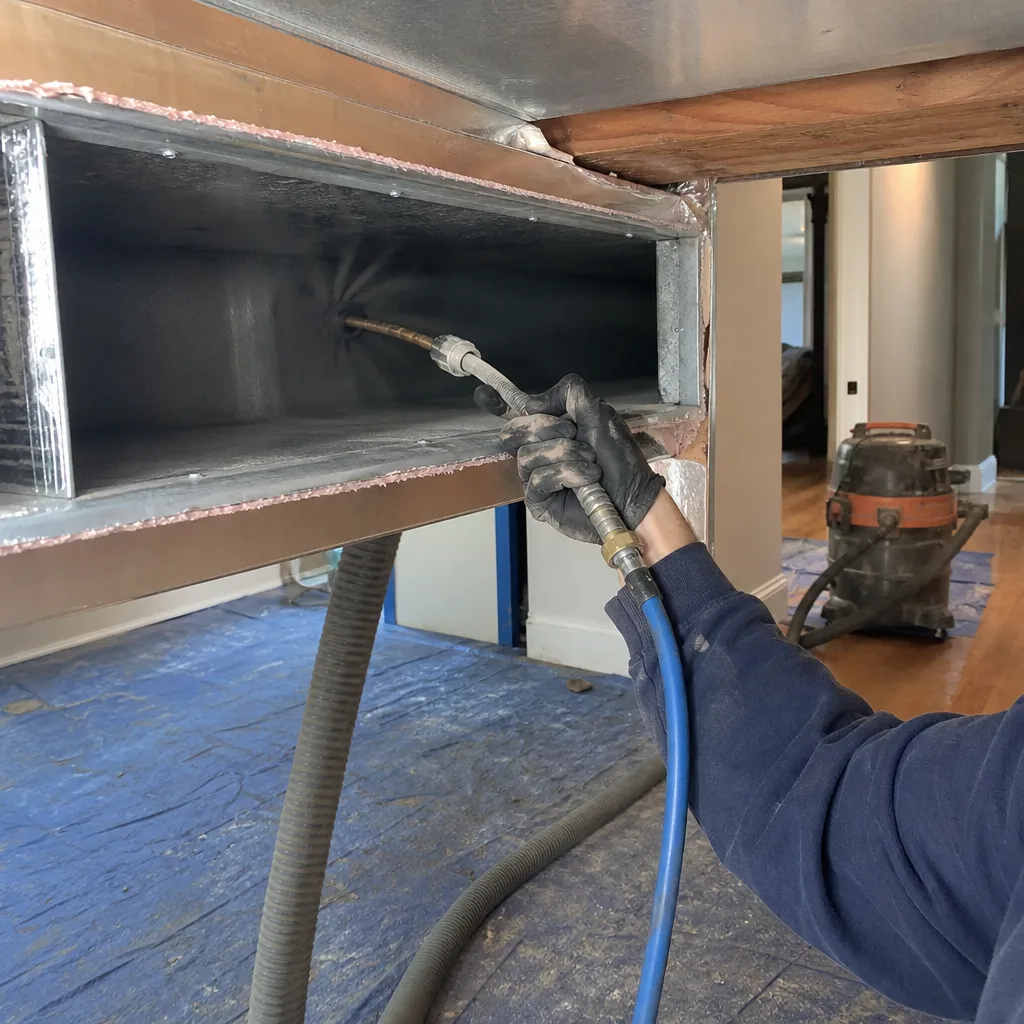
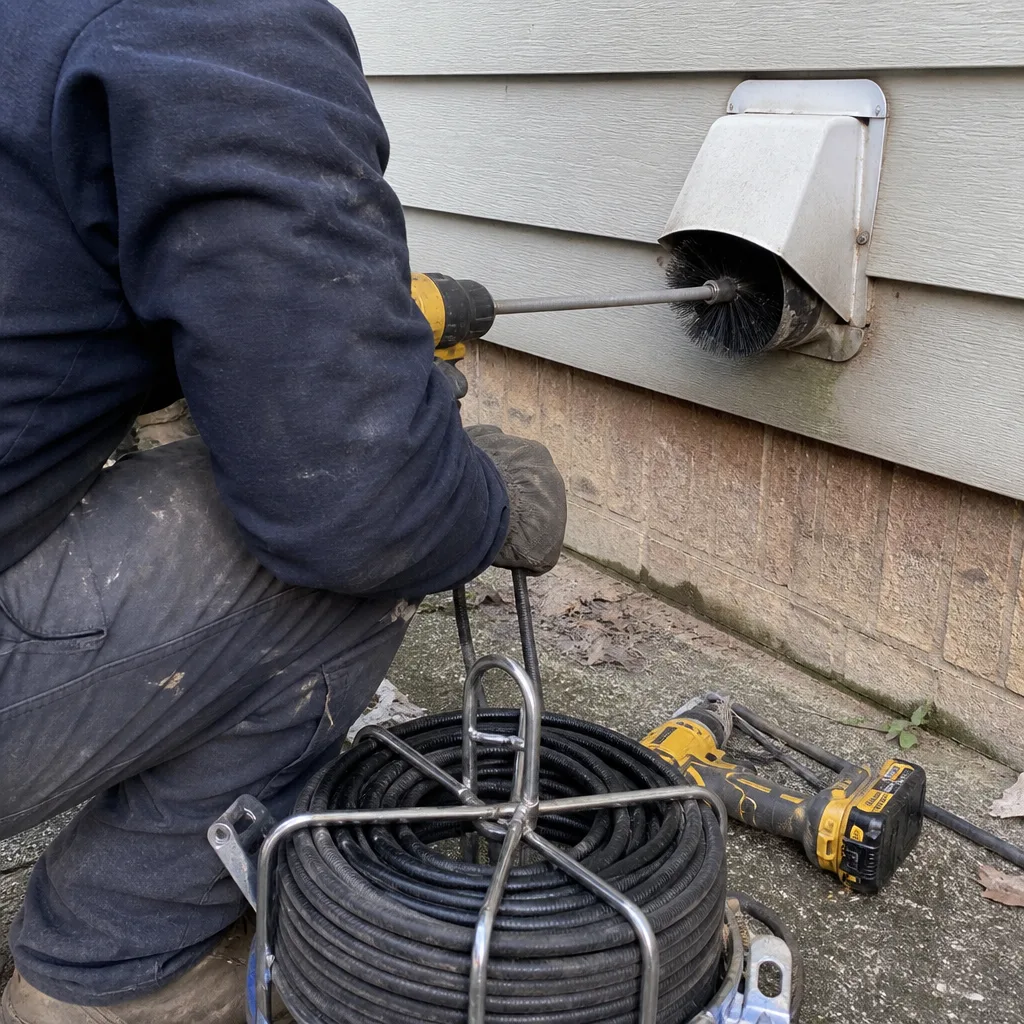
- Per-register agitation and extraction. Each supply and return register is addressed individually. A powered brush or whip system, often a Rotobrush unit or pneumatic agitation tools, dislodges debris from the duct walls while the negative air machine draws it out. A typical Fairfax home has 10-18 registers. Each requires 10-20 minutes of proper attention.
- Main trunk cleaning. The larger rectangular or round trunk lines that feed the branch ducts are accessed through strategically cut service openings, agitated, and extracted. These collect the heaviest debris loads, particularly at turns and where branch lines connect.
- System reassembly and final documentation. Service openings are sealed with code-compliant patches, the air handler compartment is cleaned and photographed, and after photos of each duct run are captured. The homeowner receives the documented photo record as a standard deliverable.
At CleanRun Air Duct Cleaning in Fairfax, this full sequence is performed on every job. The written scope specifies which stages apply to your home before any panel comes off.
Cost by Component: Line-Item Pricing for Fairfax Homes
Understanding what each stage costs allows you to evaluate any quote against actual labor and equipment requirements. The figures below reflect 2026 pricing for the Fairfax market, where technician wages, fuel costs, and disposal fees track slightly above the national median.
| Component | Time Required | Price Range | What Drives Variation |
|---|---|---|---|
| Inspection and documentation | 30-45 min | $75-$125 | Number of systems, accessibility of air handler, extent of photo documentation |
| Negative air machine setup and testing | 20-30 min | $50-$85 | Machine size (Nikro 2200 vs. Abatement Technologies HEPA-AIRE), duct configuration complexity |
| Per-register agitation and extraction | 10-20 min each | $15-$25 per register | Register count, duct material (flex takes longer), debris density |
| Main trunk cleaning | 45-90 min | $100-$175 | Trunk linear footage, number of access cuts needed, sheet metal vs. duct board |
| System reassembly and final documentation | 30-45 min | $60-$100 | Number of access patches, photo compilation and delivery method |
For a typical Fairfax home with one system, 12-14 registers, and standard sheet metal construction, the component total lands at $350-$550. Homes in Fairfax Station or Clifton with two systems, or older properties in Fairfax City with original 1960s ductwork and 20+ registers, often run $600-$850.
The $79 coupon operation skips or compresses multiple stages. Inspection is visual only, no borescope. Negative air machine is absent or undersized. Per-register work is reduced to a vacuum hose inserted a few feet. Main trunk cleaning is omitted entirely. The technician’s real job is to find problems to upsell.
The Equipment Difference: $79 Crew vs. $450 Crew
The equipment on the truck determines what can actually be extracted from your ducts. This is not a detail for enthusiasts; it is the physical constraint that separates a documented cleaning from a cosmetic visit.
| Equipment Category | $79 Coupon Crew | $450 Legitimate Crew |
|---|---|---|
| Negative air machine | None, or a shop vac with HEPA bag | Nikro 2200 or Abatement Technologies HEPA-AIRE, 2,000+ CFM |
| Agitation tools | Manual brushes, 10-15 ft extension | Rotobrush mechanical brush systems, pneumatic whips, skipper balls |
| Camera system | None, or phone flashlight | Borescope with image capture, before/after photo protocol |
| Access tools | None; work through existing registers only | Sheet metal patches, code-compliant sealing materials |
| Negative pressure achieved | Minimal or positive pressure (blows debris into home) | 2,000-3,500 CFM sustained negative pressure |
| Typical debris removal | Surface dust near register openings | Substantial debris from full duct run length, including trunk lines |
The negative pressure figure matters most. Proper negative-pressure extraction, the method specified by NADCA (National Air Duct Cleaners Association), requires sufficient airflow to ensure that dislodged debris is captured at the collection point rather than escaping into living spaces. A shop vac cannot achieve this in a duct system. In our work across Fairfax, particularly in townhome communities like Random Hills and Penderbrook where multiple units share wall cavities, inadequate containment has resulted in debris migration into adjacent units - a complaint we have been called to remediate more than once.
CleanRun’s equipment roster includes Rotobrush, Nikro, Abatement Technologies, Honeywell, Aprilaire, and Guardsman systems. Customers can verify manufacturer specifications independently; we do not make performance claims beyond what those manufacturers publish.
How Your Home’s Characteristics Affect Price
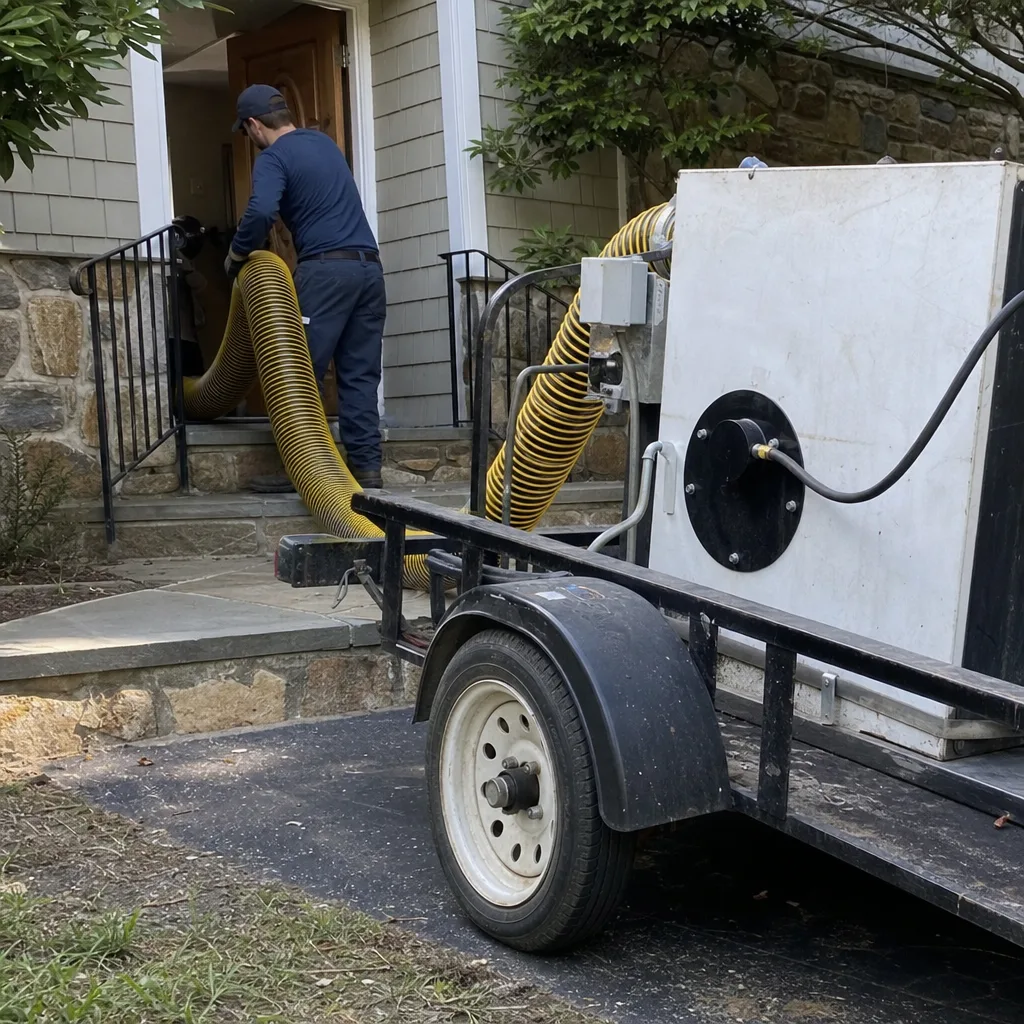
Four characteristics of your specific home drive the final price more than any other factor. A legitimate quote addresses each explicitly.
Number of HVAC systems. Each system requires its own negative air machine setup, its own register-by-register extraction, and its own documentation. A two-system home is not double the price of a single-system home - some inspection time is shared - but expect $200-$350 additional per system. In Fairfax’s newer construction, particularly homes built after 2010 in neighborhoods like Fair Lakes and Franklin Farm, dual-zone systems are standard above 3,000 square feet.
Linear feet of ductwork and register count. The per-register pricing model exists because labor scales directly with count. A 1,800-square-foot rambler with 10 registers and short branch lines is a different job than a 2,400-square-foot colonial with 18 registers and lengthy duct runs to second-floor bedrooms. We have cleaned homes in Vienna-adjacent Fairfax with 22 registers where the ductwork was original to a 1972 build and had never been accessed.
Flex duct versus sheet metal construction. Flex duct, the insulated flexible tubing common in homes built 1985-2005, requires gentler agitation and more time. Aggressive mechanical brushing can tear the inner liner or detach connections. Sheet metal ductwork tolerates more vigorous cleaning but may have internal fiberglass lining that requires specialized handling. The inspection stage identifies which applies; the written scope adjusts accordingly.
Accessibility of the air handler. Air handlers in cramped attics, crawl spaces, or closet installations require additional setup time and sometimes temporary platform construction for safe technician access. In Fairfax’s older neighborhoods like Mosby Woods and Blevinstown, we encounter air handlers in original 1950s closets with 24-inch clearances that complicate both inspection and negative air machine connection.
Add-On Services: What’s Warranted and What’s Upsold
Legitimate add-ons exist. The problem is distinguishing them from items invented at your kitchen table to inflate a low initial quote. Here are the common offerings with honest assessments of when each is warranted.
Evaporator coil cleaning ($125-$225). The coil, located in the air handler above the furnace, is where refrigerant absorbs heat from circulated air. When coated with debris, efficiency drops and airflow is restricted. Warranted when visual inspection shows substantial buildup, or when system pressure readings indicate restriction. Often upsold unnecessarily when the coil is only lightly dusted. At CleanRun, coil condition is photographed and shown before any recommendation is made.
Sanitizer or antimicrobial application ($75-$150). EPA-registered products applied to duct interiors after cleaning. Warranted in specific circumstances: visible mold growth confirmed by laboratory analysis, or following water intrusion events. Not warranted as routine “freshening.” The EPA does not register any product for routine preventive application in residential ductwork. We apply Guardsman-sourced treatments only when mold or bacterial contamination is documented, not as a standard upsell.
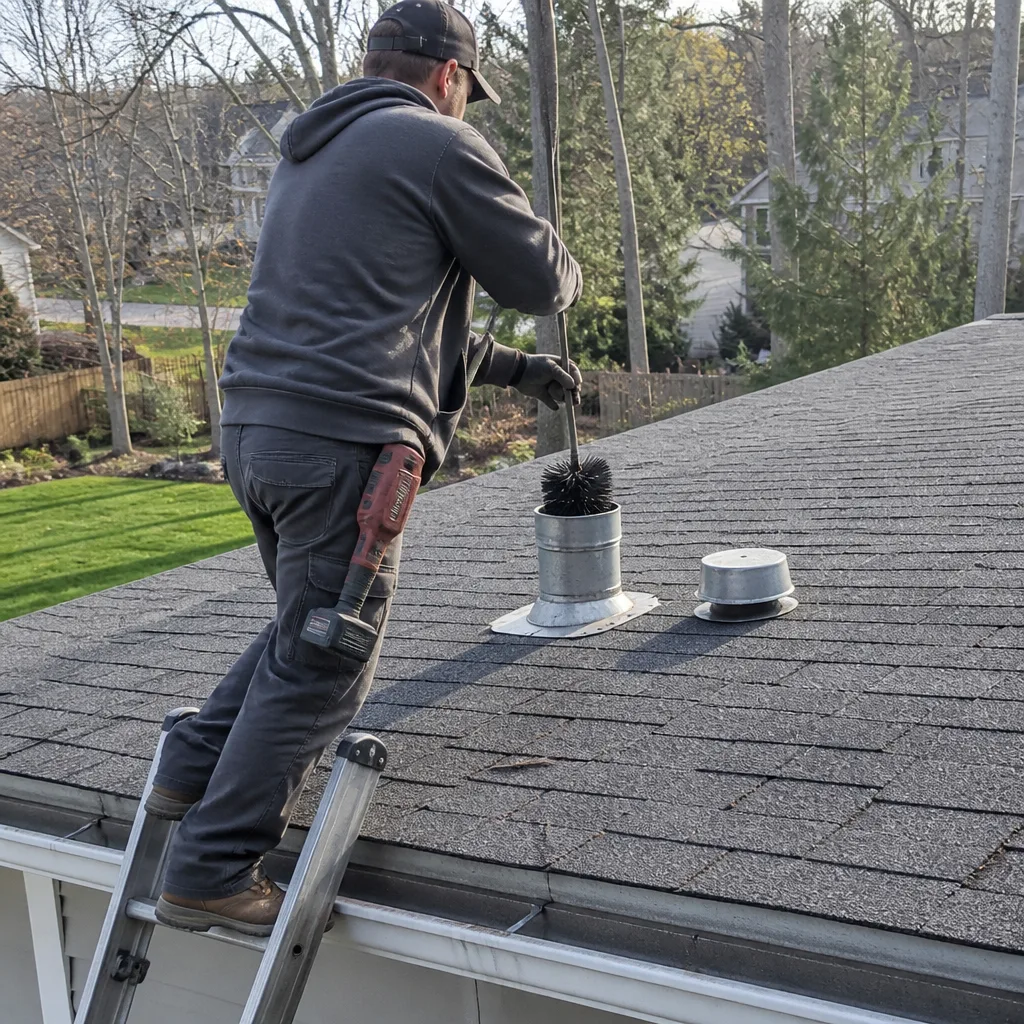
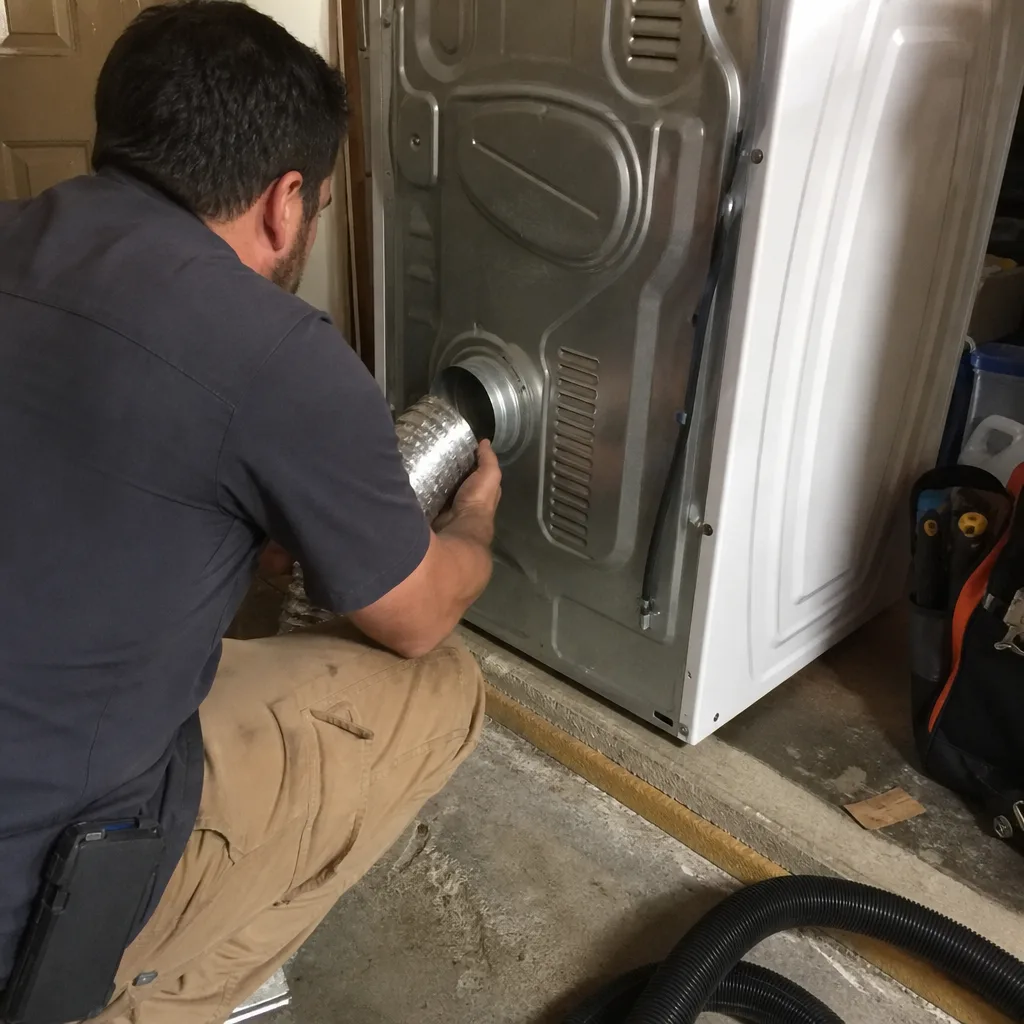
Dryer vent cleaning ($85-$175, or bundled with duct cleaning). A separate service with distinct safety implications. Dryer lint accumulation is a leading cause of residential fires; the vent should be cleaned annually regardless of duct cleaning schedule. Warranted when the vent run is lengthy, has multiple bends, or when the homeowner reports extended drying times. CleanRun’s dryer vent cleaning in Fairfax includes airflow testing before and after. Homes in Fairfax with roof-terminating vents, common in townhome construction, require ladder access and take longer than wall-terminated runs.
Duct sealing or repair ($150-$400+). Warranted when inspection reveals disconnected joints, collapsed flex duct, or significant leakage at plenum connections. In Fairfax’s climate, with humid summers and heating-dominant winters, duct leakage in unconditioned attics or crawl spaces imposes real energy costs. We use Aeroseal or manual sealing methods depending on access and leakage pattern. This is not an upsell; it is a separate trade that should be quoted independently with its own scope and photo documentation.
UV-C air purifier installation ($300-$600). Not a cleaning service. A permanent fixture installed in the air handler to inhibit microbial growth on the coil and in the drain pan. Warranted for homeowners with documented mold sensitivity or recurrent coil contamination. Not a substitute for physical cleaning.
The pattern: legitimate add-ons are specific, condition-dependent, and quoted with their own written scopes. Upsells are presented after work has begun, with urgency pressure, and without photographic evidence of need.
What to Demand in Writing Before Work Starts
Haven Standard Clause 1 requires a written price before any work begins. This is not a marketing preference; it is the mechanism that prevents the bait-and-switch pattern endemic to this industry. Here is what the written document should contain, and why each element matters.
- Itemized scope, not a flat “whole house” price. “Clean all ducts” is meaningless. The scope should specify: number of systems, register count, stages to be performed (inspection, negative air setup, per-register extraction, trunk cleaning, reassembly), and equipment to be used. This allows comparison between quotes and verification that work was performed as specified.
- Equipment specification. The negative air machine model, agitation method, and camera system should be named. This enables independent verification and establishes the physical capability to perform the work described.
- Photo documentation protocol. Before-and-after photography of every duct run should be specified as a standard deliverable, not an optional add-on. The photos are your proof of work performed and your reference if problems emerge later.
- Price guarantee terms. A legitimate guarantee specifies what happens if the work is incomplete or ineffective. CleanRun’s 365-Day Done Right Promise, backed in writing on every job, states that if the work is not right, we make it right - not subject to manager discretion, not a credit toward future service. Compare this to the typical coupon operator’s “satisfaction guarantee,” which is often an unenforceable statement with no defined remedy.
- Exclusions and assumptions. The written scope should state what is not included (coil cleaning, duct repair, sanitizer) and under what conditions additional work would be recommended. This prevents the mid-job “we found a problem” escalation.
- Technician identification. Haven Standard Clause 3: Verified Crews requires background-checked, uniformed technicians identified by name before arrival. The written scope should confirm this protocol.
CleanRun provides all six elements on every job. The CleanRun Air Duct Cleaning Fairfax home page describes how to request a written scope without committing to an appointment.
The Fairfax Market: Climate, Codes, and Neighborhood Patterns
Fairfax’s specific conditions affect both duct contamination patterns and cleaning requirements. Generic national pricing fails here because it does not account for local factors.
Climate and seasonal loading. Fairfax’s humid subtropical summers, with July averages above 85°F and frequent humidity above 70%, create conditions for microbial growth in duct systems with poor drainage or insulation failures. We see elevated mold spore counts in homes with attic air handlers where condensate drainage is compromised, particularly in neighborhoods like Burke Centre and Longfellow where 1980s construction used duct board prone to moisture absorption. Winter heating loads, with sustained furnace operation from November through March, drive accumulation of combustion particulates and dust in return ductwork.
Construction era patterns. Fairfax’s housing stock spans seven decades with distinct duct characteristics:
- Pre-1970: Sheet metal trunk with short sheet metal branches, often uninsulated in crawl spaces. Durable but leaky. Common in Fairfax City and Mantua.
- 1970-1990: Transition to flex duct, sometimes poorly supported with sagging runs. Insulation degradation common. Typical in Kings Park West and Greenbriar.
- 1990-2010: Mixed construction, flex duct standard, tighter building envelopes with less natural ventilation. Higher indoor pollutant concentration. Dominant in Fair Lakes, Franklin Farm, and Random Hills.
- 2010-present: Improved flex duct with better support, more dual-zone systems, tighter ducts but often complex routing. Common in Fairfax Station and new infill near Vienna.
Local code considerations. Fairfax County requires mechanical permits for duct modifications and repairs, with inspections for work affecting system airflow or fuel-burning appliance venting. Cleaning alone does not require permitting, but duct sealing that involves access cuts or material replacement may. CleanRun holds appropriate licensing and coordinates permits when repair work crosses that threshold.
Market pricing context. The Fairfax-Arlington-Alexandria metro area ranks in the top 15% nationally for service labor costs. Technician wages, commercial rent for operations facilities, and fuel costs all exceed national medians. The $350-$550 range for legitimate single-system cleaning reflects this cost structure; prices significantly below suggest corner-cutting, while prices significantly above should be justified by specific home characteristics or add-on services.
Common Mistakes to Avoid
- Evaluating on price per vent. Per-vent pricing encourages technicians to rush each register and skip trunk work. A whole-system scope with defined stages is the only meaningful comparison. CleanRun’s written pricing specifies total scope, not a per-vent rate that obscures what’s actually included.
- Accepting a phone quote without inspection. No technician can determine register count, duct material, air handler accessibility, or contamination level without visiting the home. Any quote given over the phone is a guess designed to secure an appointment, not a binding price. Our free estimates include on-site inspection and written scope delivery.
- Ignoring the photo record. Without before-and-after documentation, you have no proof of work performed and no reference if problems emerge. The documented photo record is standard on every CleanRun job, delivered as part of the job record, not an optional extra.
- Scheduling during peak HVAC season without lead time. Fairfax’s spring and fall shoulder seasons offer better technician availability and more flexible scheduling. Summer and winter demand peaks can stretch lead times to 2-3 weeks for quality operators. We answer calls with live personnel 24/7, but scheduling flexibility favors advance planning.
- Assuming all “certifications” are equivalent. NADCA membership and technician certification indicate training in proper methods. Generic “certified” claims without specifying organization are often meaningless. CleanRun technicians operate under the H.A.V.E.N. Standard with documented training protocols.
- Neglecting dryer vent cleaning. A clean duct system connected to a clogged dryer vent is a fire hazard. The services are distinct but complementary. Our Fairfax dryer vent cleaning can be bundled with duct cleaning or scheduled independently.
- Falling for “whole house sanitizer” as routine. EPA-registered antimicrobials have specific application protocols and are not approved for preventive use. Routine application is unnecessary, potentially harmful to indoor air quality, and a reliable upsell indicator.
When to Call a Professional
Call for inspection and written scope when you observe visible dust emission from registers, inconsistent airflow between rooms, musty odors when the system cycles, or after any renovation that generated substantial dust. In Fairfax’s older neighborhoods, schedule inspection if your home has never had duct cleaning and was built before 2000.
Do not attempt to access or clean the air handler, evaporator coil, or main trunk lines yourself. These components involve electrical connections, sharp metal edges, and in the case of gas furnaces, combustion safety considerations. The documented photo record exists precisely so homeowners can see conditions without exposure to these hazards.
CleanRun Air Duct Cleaning Fairfax offers free estimates in Fairfax - call (571) 526-0015. Every estimate includes on-site inspection, written scope with itemized pricing, and no obligation to schedule. The written price delivered before work starts is Haven Standard Clause 1; it applies to every home we serve.
Frequently Asked Questions
A legitimate single-system duct cleaning in Fairfax costs $350-$550 in 2026, with two-system homes running $550-$850 depending on register count and accessibility. Prices below $300 indicate limited scope or insufficient equipment; prices should always be provided in writing before work begins. Call (571) 526-0015 for a free estimate with itemized scope.
The $79-$149 quotes use minimal equipment, typically a shop vac with no negative air containment, and omit trunk line cleaning and documentation. The technician’s compensation depends on upselling additional services once inside your home. The final invoice after “recommended” add-ons typically exceeds $600. A legitimate $450 quote includes proper equipment, full scope, and written guarantee with no pressure for additional purchases.
Demand a documented photo record showing the interior of every duct run before and after cleaning, with timestamps or sequential documentation. At CleanRun, this is standard on every job, delivered as part of the job record. Without photographic evidence, you have only the technician’s word, which is insufficient given the inaccessible nature of ductwork.
For most Fairfax homes, every 3-5 years under normal conditions. Homes with pets that shed heavily, residents with allergies or respiratory conditions, or recent major renovations may benefit from more frequent service. The inspection and documentation process establishes actual condition rather than relying on arbitrary calendar intervals.
Moderately, when ductwork is substantially obstructed. The primary benefit is indoor air quality and system longevity, not dramatic energy savings. Claims of 20-30% efficiency improvement are unsupported. In Fairfax’s climate, sealing duct leaks typically yields greater efficiency impact than cleaning alone, and we quote these as separate services with distinct scopes.
Duct cleaning addresses the distribution pathway (trunk lines, branches, registers). HVAC cleaning includes the air handler components: blower assembly, evaporator coil, and drain pan. HVAC cleaning in Fairfax is warranted when these components show contamination, but it is a separate scope with additional cost. A technician should show you coil and blower conditions before recommending this add-on.
The Bottom Line
The gap between a $79 Fairfax duct cleaning coupon and a $600 legitimate job is not markup - it is a different scope of work performed by differently equipped crews with different accountability standards. The legitimate job includes inspection with borescope documentation, negative-pressure extraction using professional equipment from manufacturers like Nikro and Abatement Technologies, register-by-register agitation, main trunk cleaning, and a written photo record delivered to you. The coupon job gets a technician in your door with a shop vac and a sales script.
Evaluate every quote against the component breakdown in this guide. Demand itemized scope, equipment specification, and photo documentation protocol in writing before any work starts. Verify that price guarantees are backed in writing with defined remedies, not vague satisfaction claims. And recognize that in Fairfax’s specific climate and construction context, proper duct cleaning is a periodic maintenance service with measurable deliverables, not a commodity to be purchased on price alone.
CleanRun has held these standards since 2013: written price before work starts, documented photo record on every visit, and the 365-Day Done Right Promise backed in writing. For a free estimate with itemized scope, call (571) 526-0015.
Written by Tomas Reyes, Owner at CleanRun Air Duct Cleaning Fairfax, serving Fairfax since 2013.