
Last updated September 23, 2026
Whole-system duct and dryer vent check with before-and-after photos - you see exactly what came out of your vents
That "$99 whole-house special" is a bait ad - the real number appears once they are in your hallway, or the "clean" is a shop-vac at the register. We photograph the inside of your ducts before and after instead.
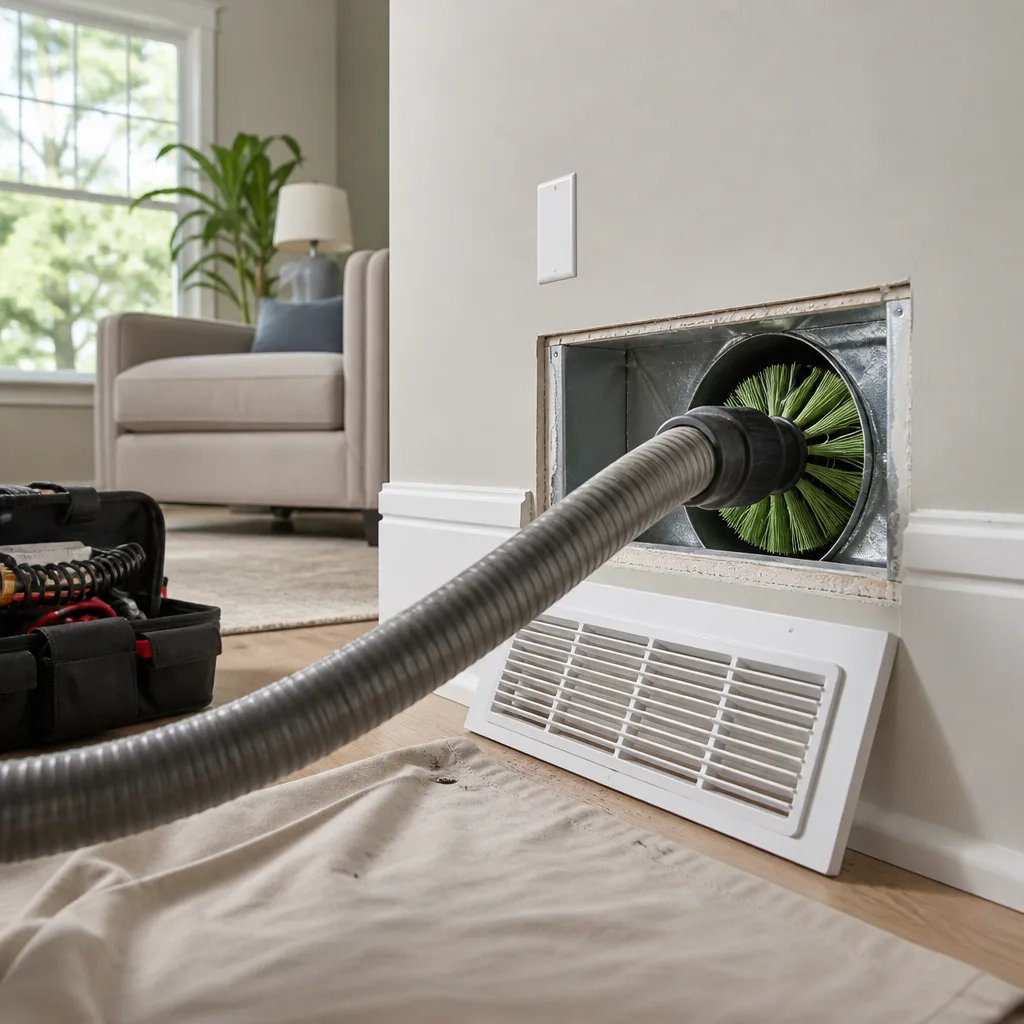
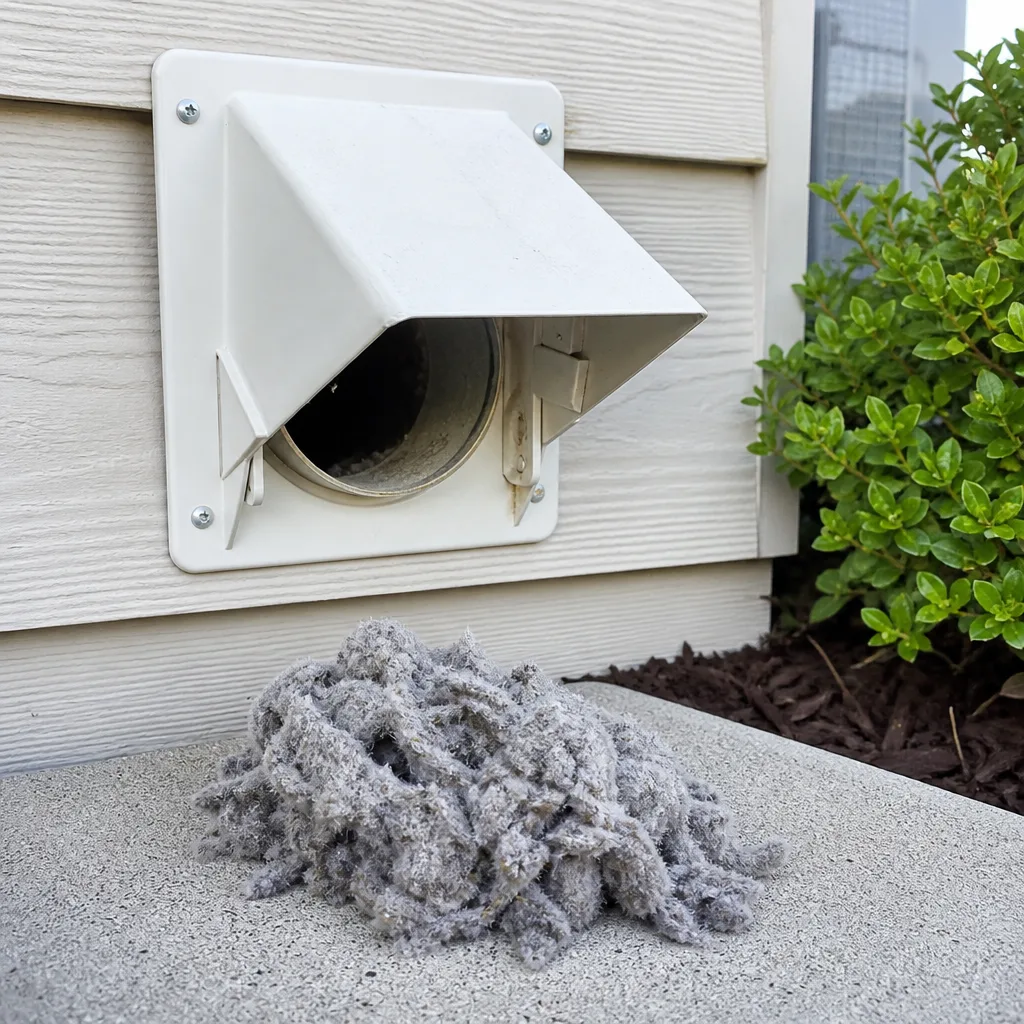
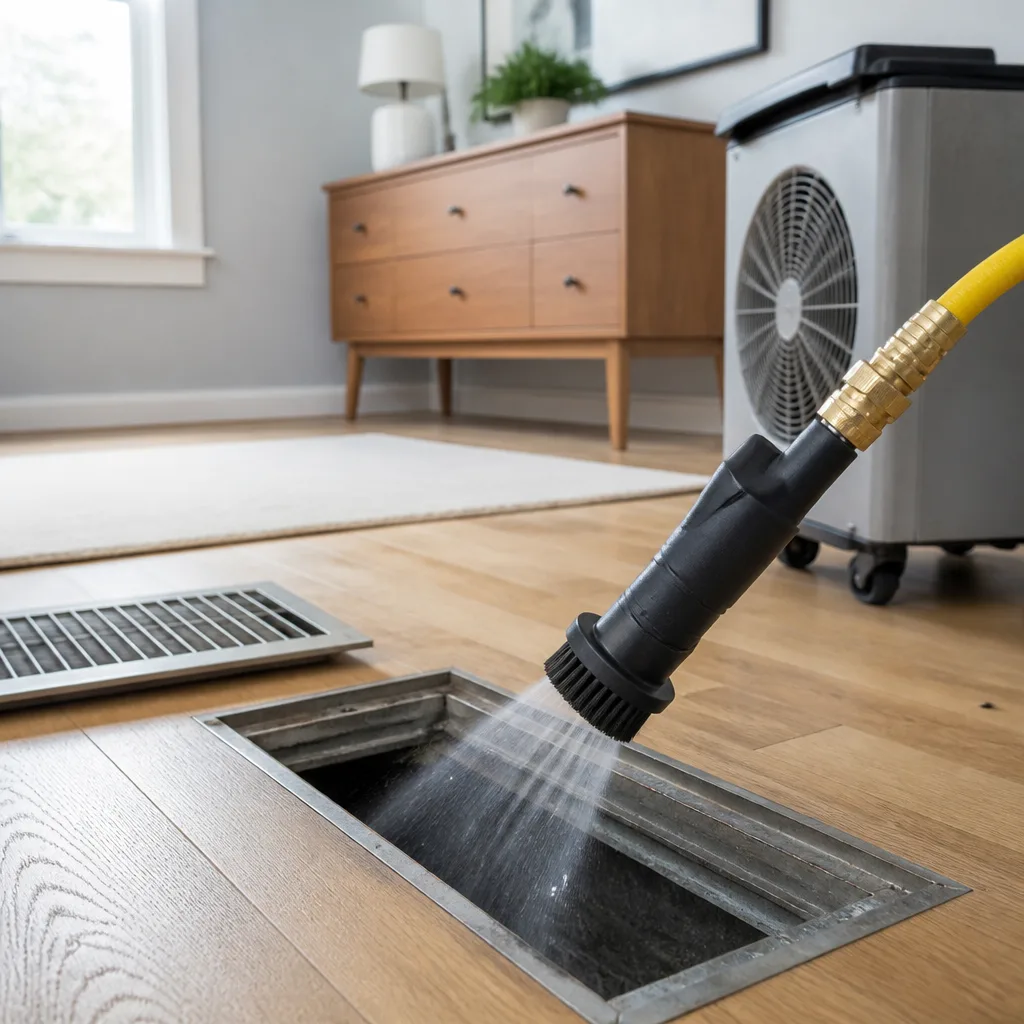
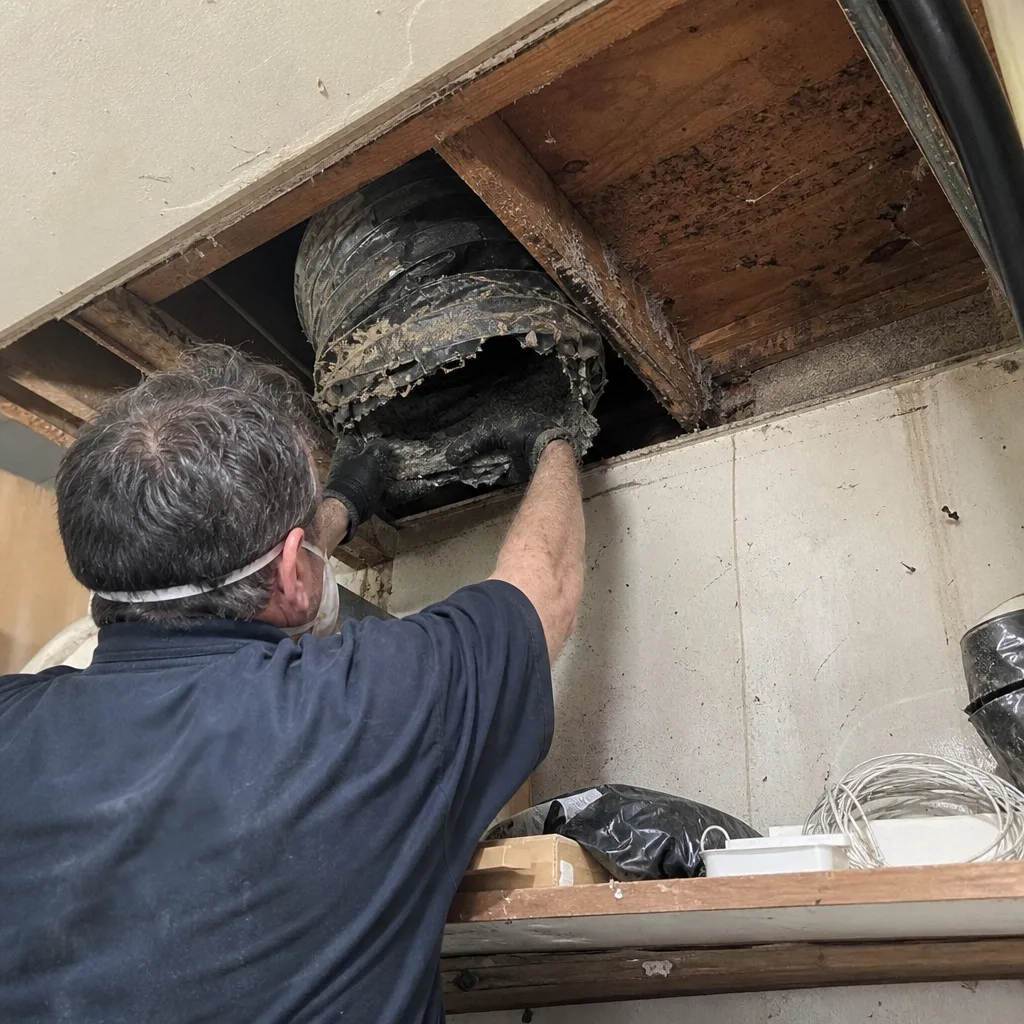 Before
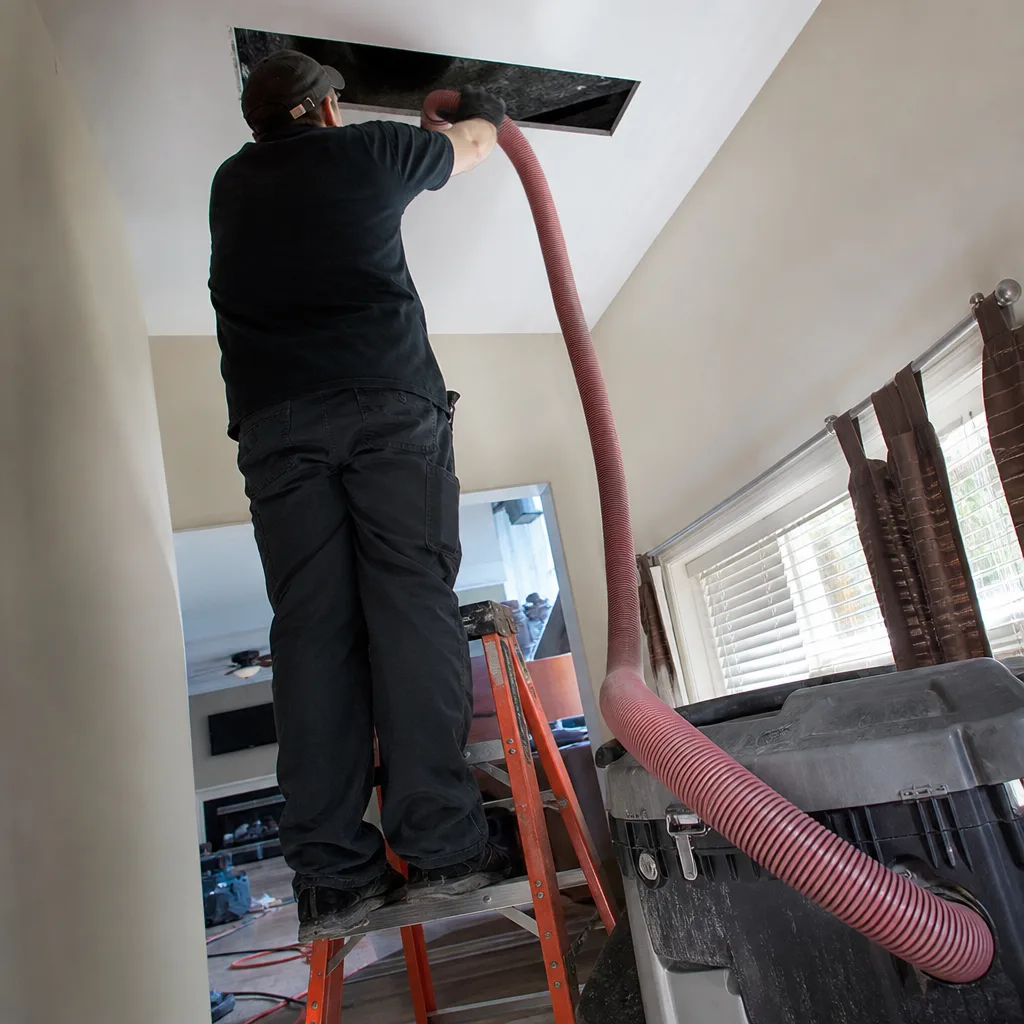 After
After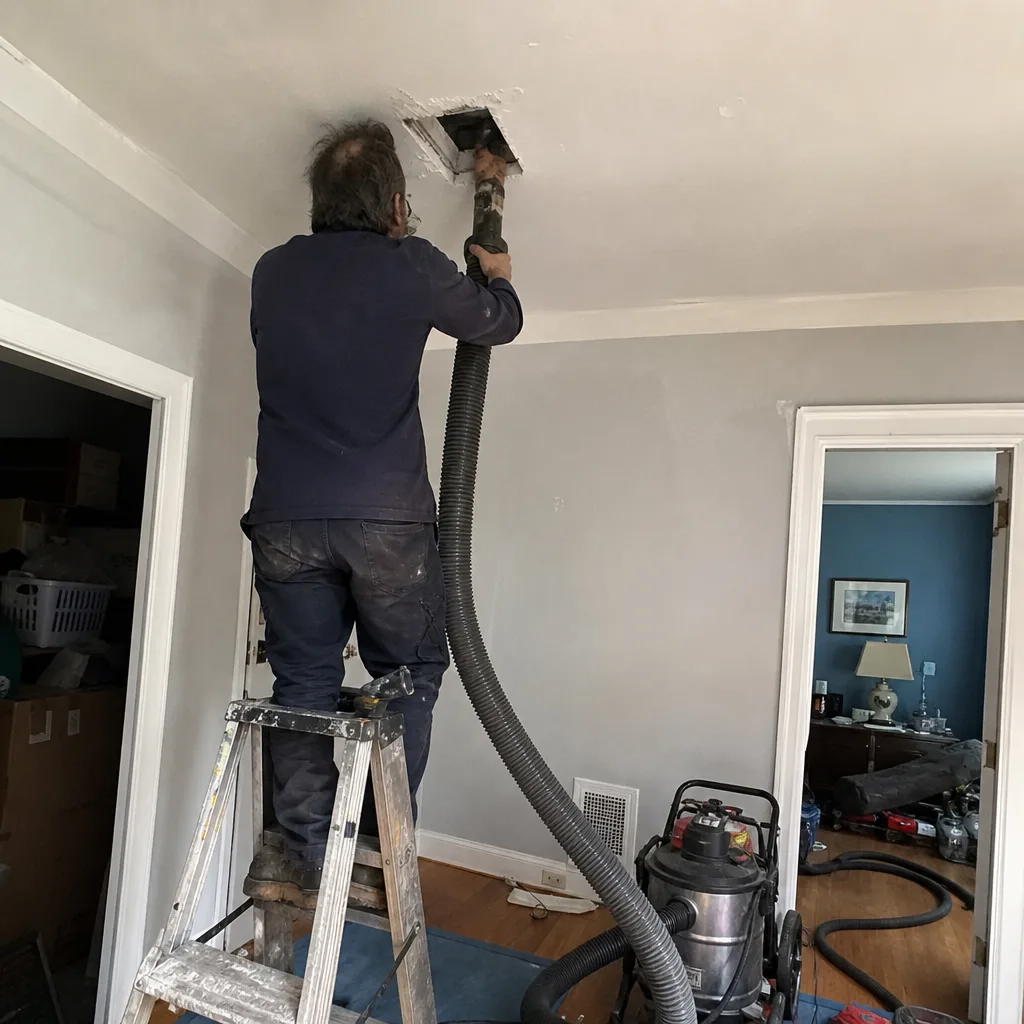 Before
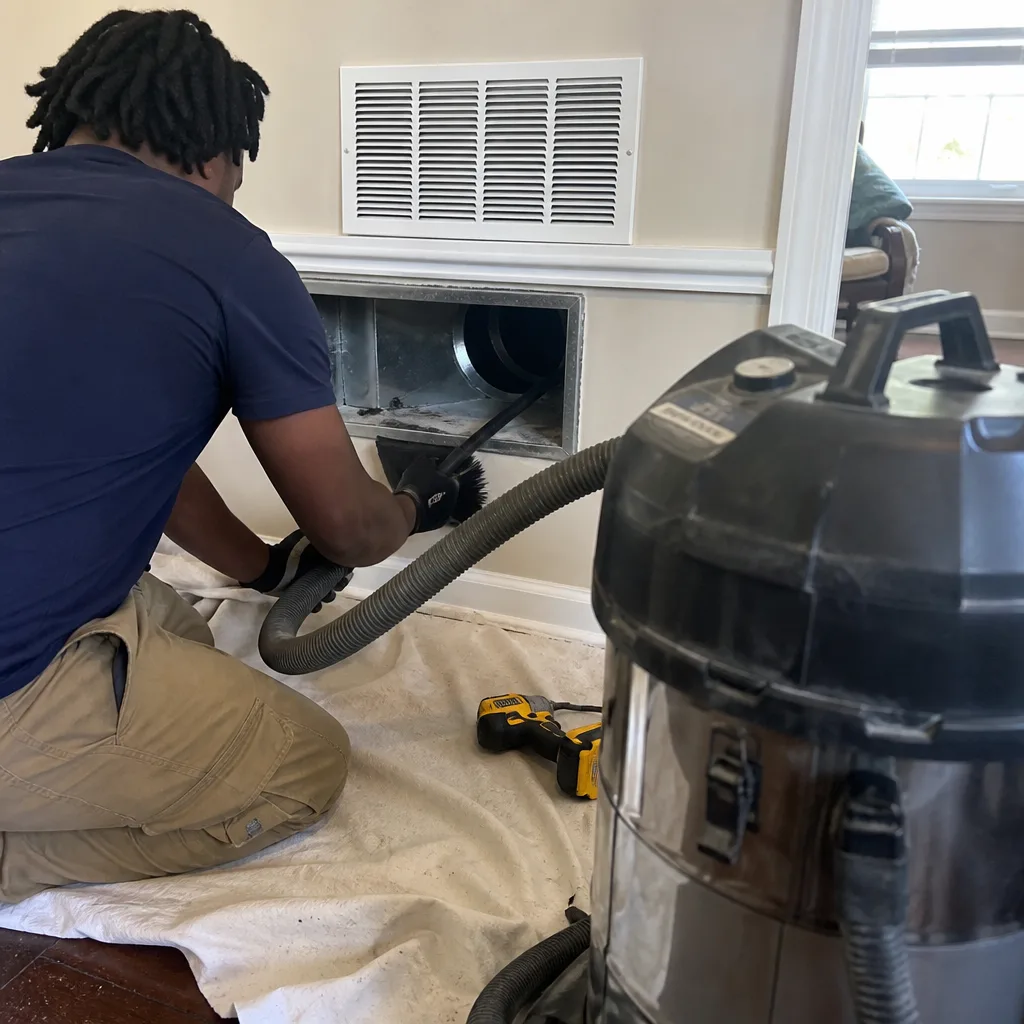 After
After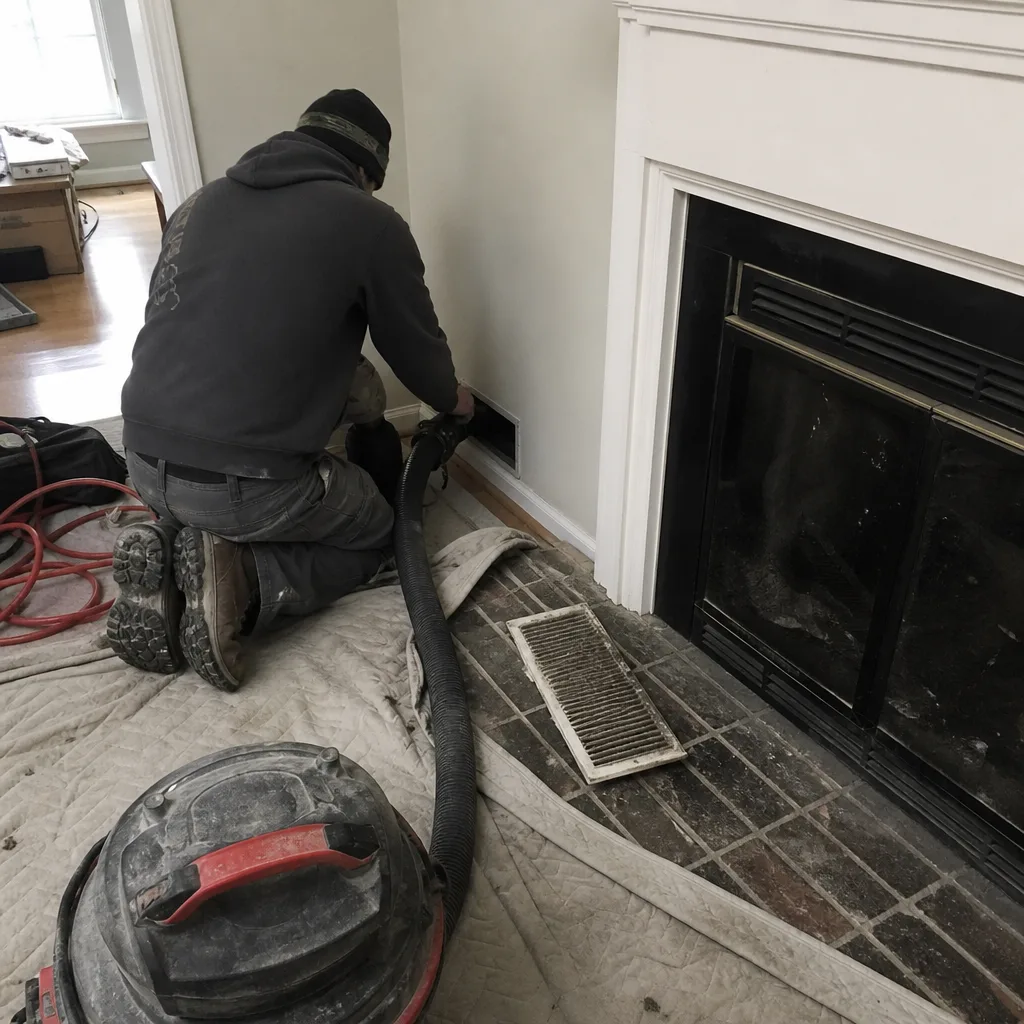 Before
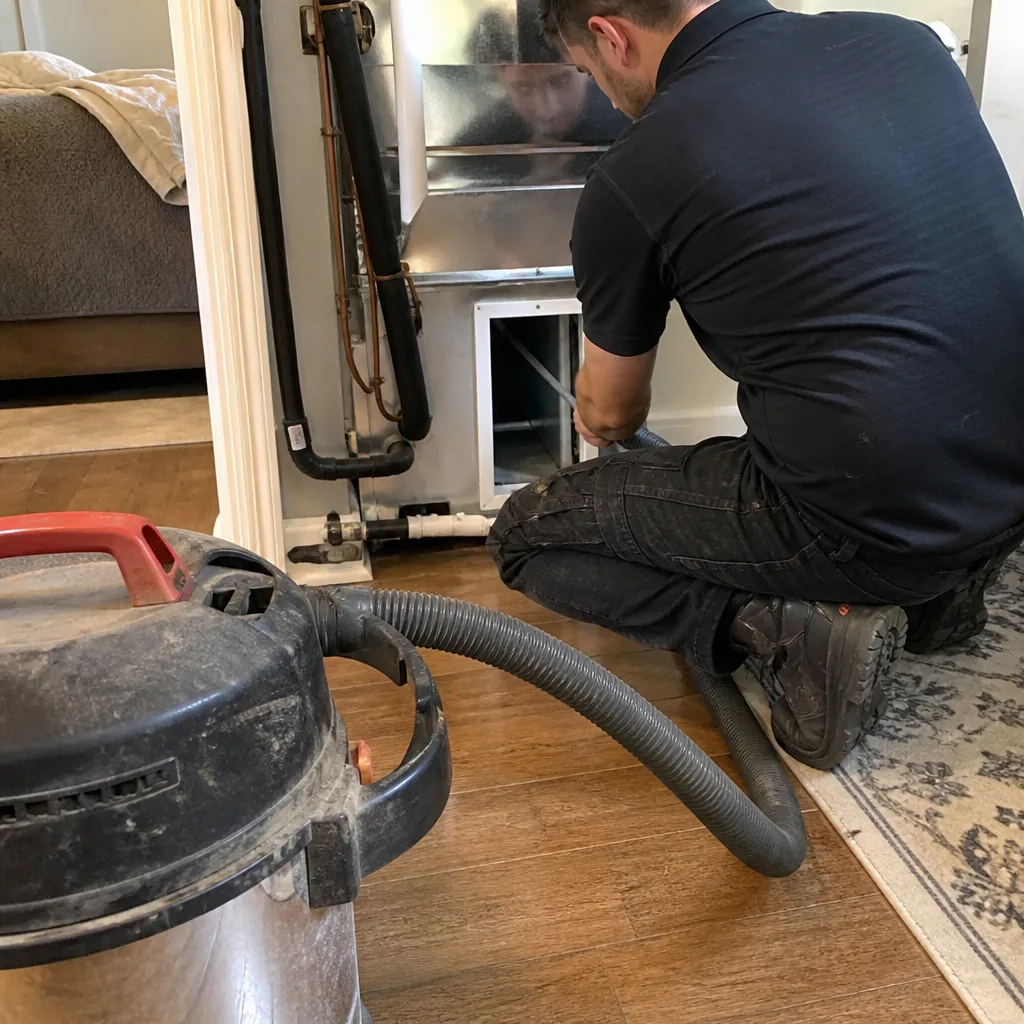 After
AfterDIY vs Professional Air Duct Cleaning: The Fairfax Homeowner’s Decision Guide
A homeowner with a vacuum, a brush kit from Amazon, and two hours can meaningfully clean the first 18 inches of accessible duct behind each register. That accounts for roughly 8% of the total duct surface area in a typical Fairfax split-level. The other 92% sits beyond elbows, dampers, and the plenum - the central distribution box where heated or cooled air mixes before heading to your rooms - and requires equipment no consumer owns. In this guide, we’ll show you exactly what DIY duct cleaning can accomplish in a Fairfax home, where it stops being useful, and how to decide whether your situation warrants professional Air Duct Cleaning with negative-pressure extraction or a Saturday morning with a shop vac.
Quick Answer
DIY duct cleaning in Fairfax is sufficient for register-level dust removal and basic return grille maintenance in newer, low-use homes. Professional cleaning becomes the better investment when your home has undergone renovation, shows debris beyond the first duct section, or contains flex duct with sag points where accumulation occurs. For the median Fairfax homeowner with a 2,000 square foot home built between 1980 and 2010, professional cleaning typically runs $400-$700 and addresses the full system; DIY supplies plus a realistic time valuation tip toward professional service once labor is counted at even modest rates.
Table of Contents
- What DIY Duct Cleaning Can Actually Accomplish
- Tools, Time, and Realistic Estimates for a Fairfax Home
- What Professional Negative-Pressure Equipment Actually Does
- Three Scenarios Where DIY Is Genuinely Sufficient
- Four Scenarios Where DIY Is Counterproductive or Harmful
- A Cost-Honest Comparison: DIY vs. Professional in Fairfax
- Fairfax-Specific Factors: Climate, Codes, and Home Styles
- Common Mistakes to Avoid
- When to Call a Professional
- Frequently Asked Questions
- The Bottom Line
BeforeAfterWhat DIY Duct Cleaning Can Actually Accomplish
Let’s be precise about what “DIY duct cleaning” means. It does not mean cleaning your ducts. It means cleaning the parts of your system you can reach without cutting into sheet metal or attaching equipment to your HVAC unit.
Specifically, DIY cleaning covers three tasks:
- Register face and surrounding trim cleaning. The stamped metal or plastic grille that covers each duct opening collects dust, pet hair, and cooking grease that settles from the room side. A vacuum with a brush attachment, warm water, and mild detergent restore these effectively.
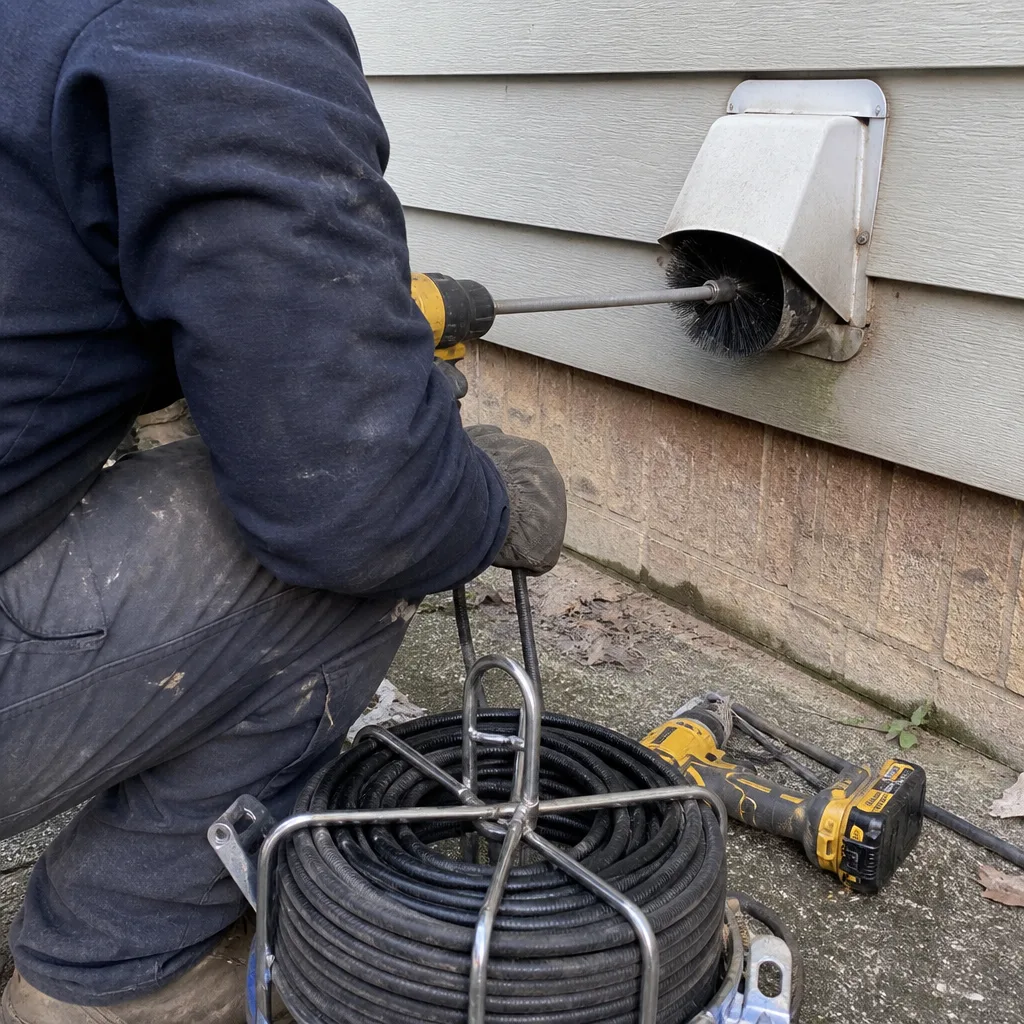
- Boot cleaning. The boot is the sheet metal transition piece between your floor or wall and the actual duct run. In most Fairfax homes, the boot extends 6 to 18 inches inward before the first elbow or damper. A flexible dryer vent brush or a dedicated duct cleaning kit can reach this section and dislodge surface debris.
- Return grille and return duct debris removal. Return grilles are typically larger and more accessible. The short section of return duct behind them - often a simple straight run - can sometimes be reached with a vacuum hose extension and a brush.
What DIY cannot reach: the horizontal duct runs between floors, the vertical stacks in wall cavities, the plenum where all ducts converge, the evaporator coil housing, and the blower compartment. In a typical Fairfax colonial or split-level, these represent roughly 92% of total duct surface area. The 8% you can reach is visible and satisfying to clean. It is not negligible - register dust does recirculate - but it is not system cleaning.
We have photographed thousands of Fairfax duct systems since 2013. The debris pattern is consistent: the first 18 inches behind a register show loose, recent accumulation. Beyond that point, debris compacts, adheres to duct walls, and requires mechanical agitation plus sustained airflow to remove. A brush kit from a hardware store agitates. It does not extract under controlled pressure. The debris you loosen often falls deeper into the system or gets pushed past the next elbow, where it settles in a low-velocity zone.
Tools, Time, and Realistic Estimates for a Fairfax Home
For a 2,000 square foot Fairfax home with approximately 12 supply registers and 3 return grilles, here is what DIY cleaning actually requires:
Essential Tools
- Shop vacuum with HEPA filtration ($80-$150 for a consumer model; $0 if you already own one)
- Flexible duct cleaning brush kit, 12-20 feet ($25-$45 online)
- Microfiber cloths and mild detergent for register faces ($10)
- Drop cloths or old towels to protect flooring ($0-$20)
- Screwdriver or drill with appropriate bits for register removal ($0 if owned)
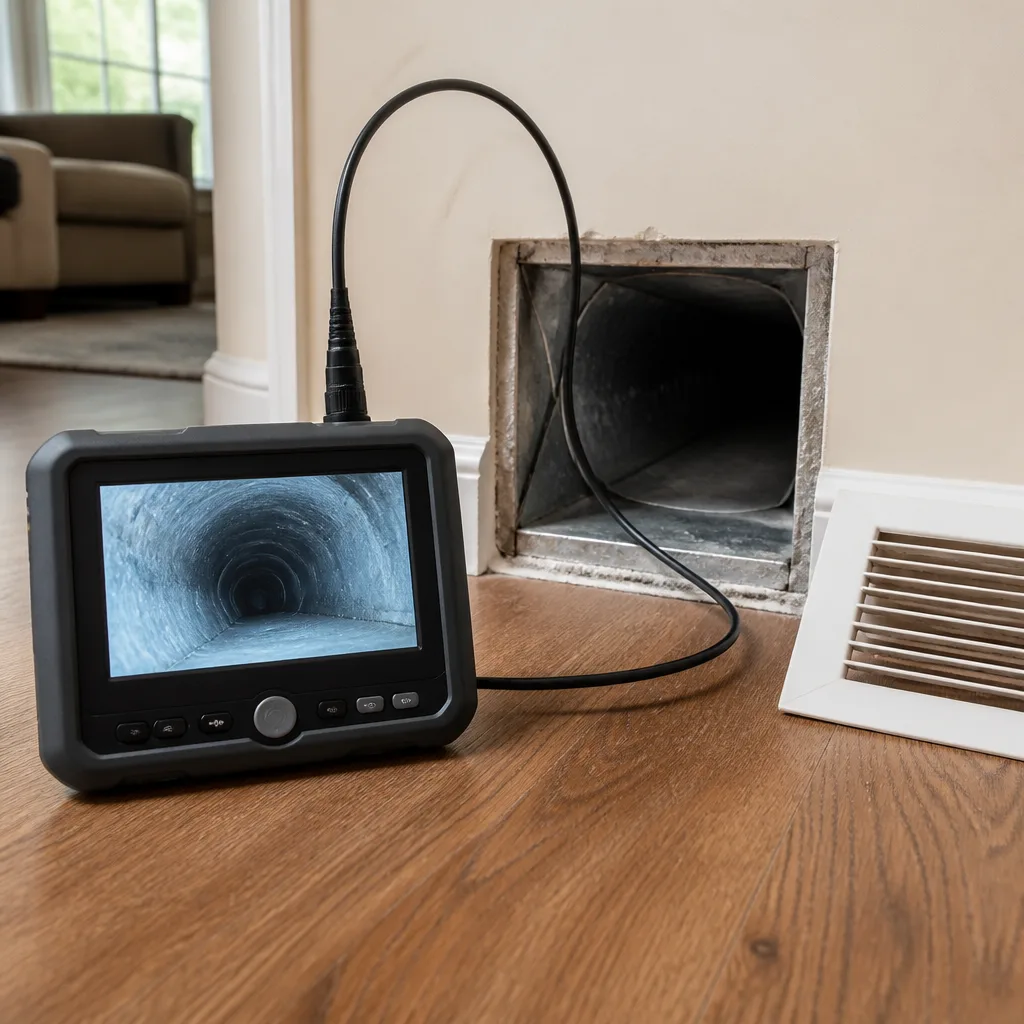
- Flashlight or borescope camera for visual inspection ($15-$40 for a basic USB model)
Time Investment
| Task | Time per Register/Grille | Total for 15 Openings |
|---|---|---|
| Remove and clean register face | 10 minutes | 2.5 hours |
| Vacuum accessible boot section | 15 minutes | 3.75 hours |
| Brush and vacuum reachable duct | 20 minutes | 5 hours |
| Reinstall and inspect | 5 minutes | 1.25 hours |
| Total realistic time | 12.5 hours |
This assumes no complications: no stripped screws, no register painted shut by a previous owner, no discoveries of mold or construction debris that halt the process. In Fairfax’s older neighborhoods like Mosby Woods or the homes near George Mason University built in the 1960s and 1970s, painted-shut registers and corroged fasteners add 30-50% to time estimates.
The borescope camera is worth mentioning separately. Without it, you are cleaning blind. A $25 USB camera that connects to your phone lets you see the first elbow or damper - the point where DIY capability typically ends. We recommend every Fairfax homeowner buy one before attempting DIY cleaning. The photo you take at the elbow becomes your decision point: if the duct beyond shows clean metal, you may be done. If it shows a debris line, compacted dust, or discoloration, you have reached the boundary of DIY usefulness.
What Professional Negative-Pressure Equipment Actually Does
Consumer tools and professional equipment share some functions. Both agitate debris. Both move air. The difference is control, containment, and verification - three concepts that define professional duct cleaning under NADCA (National Air Duct Cleaners Association) guidelines and the H.A.V.E.N. Standard we operate under.
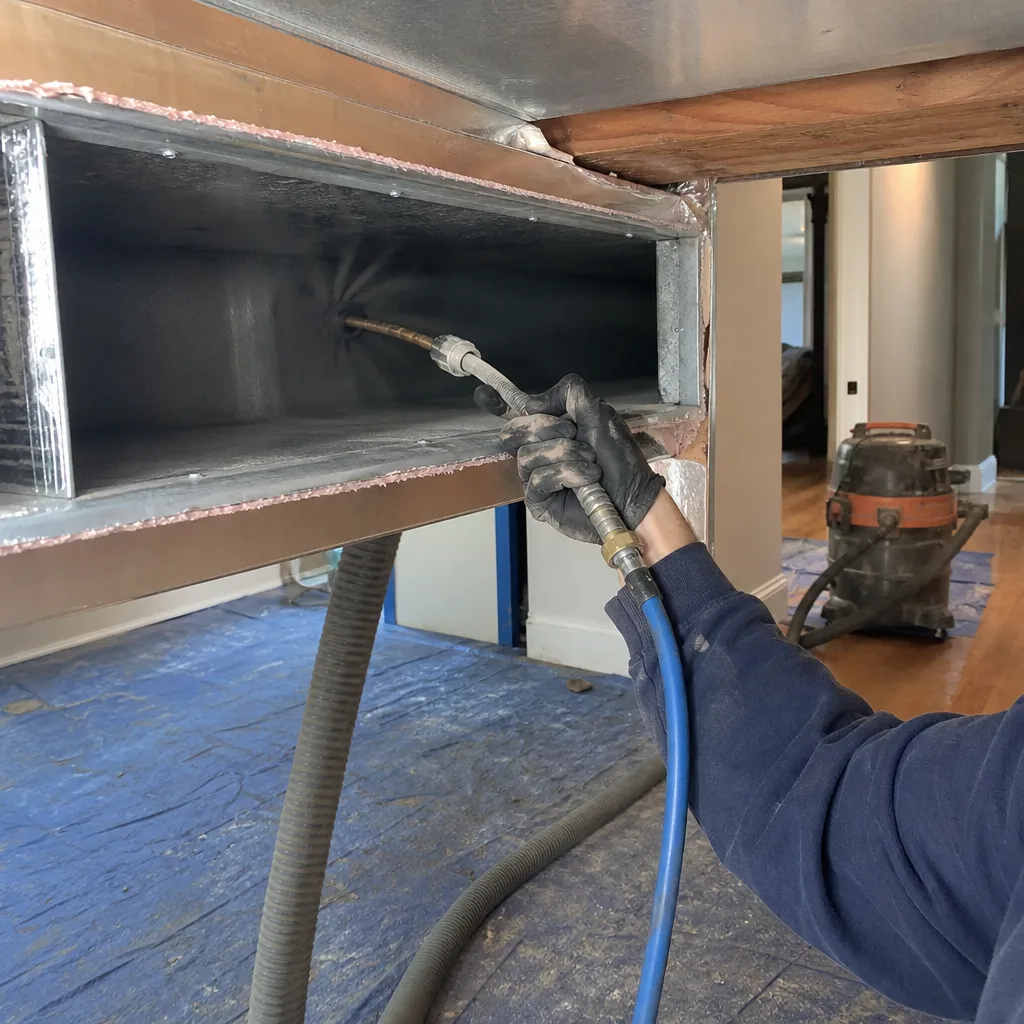
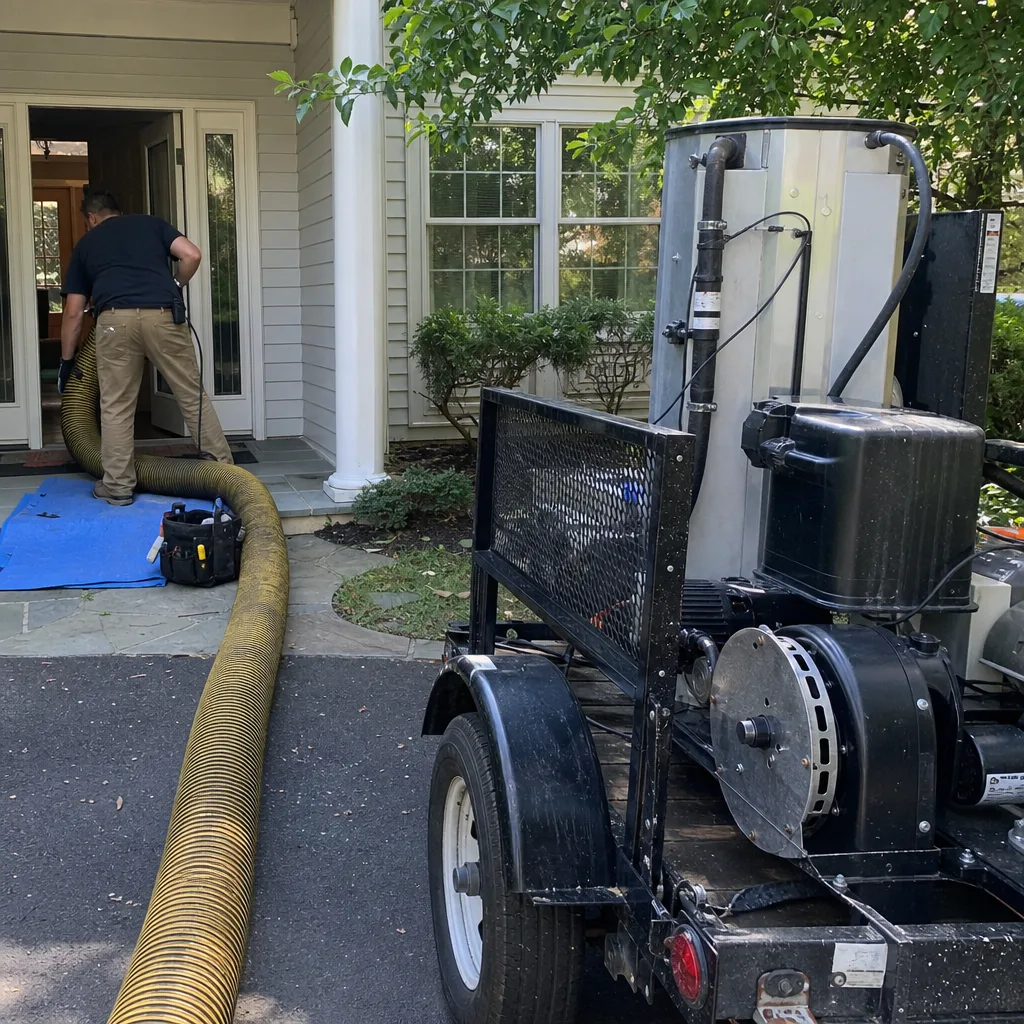
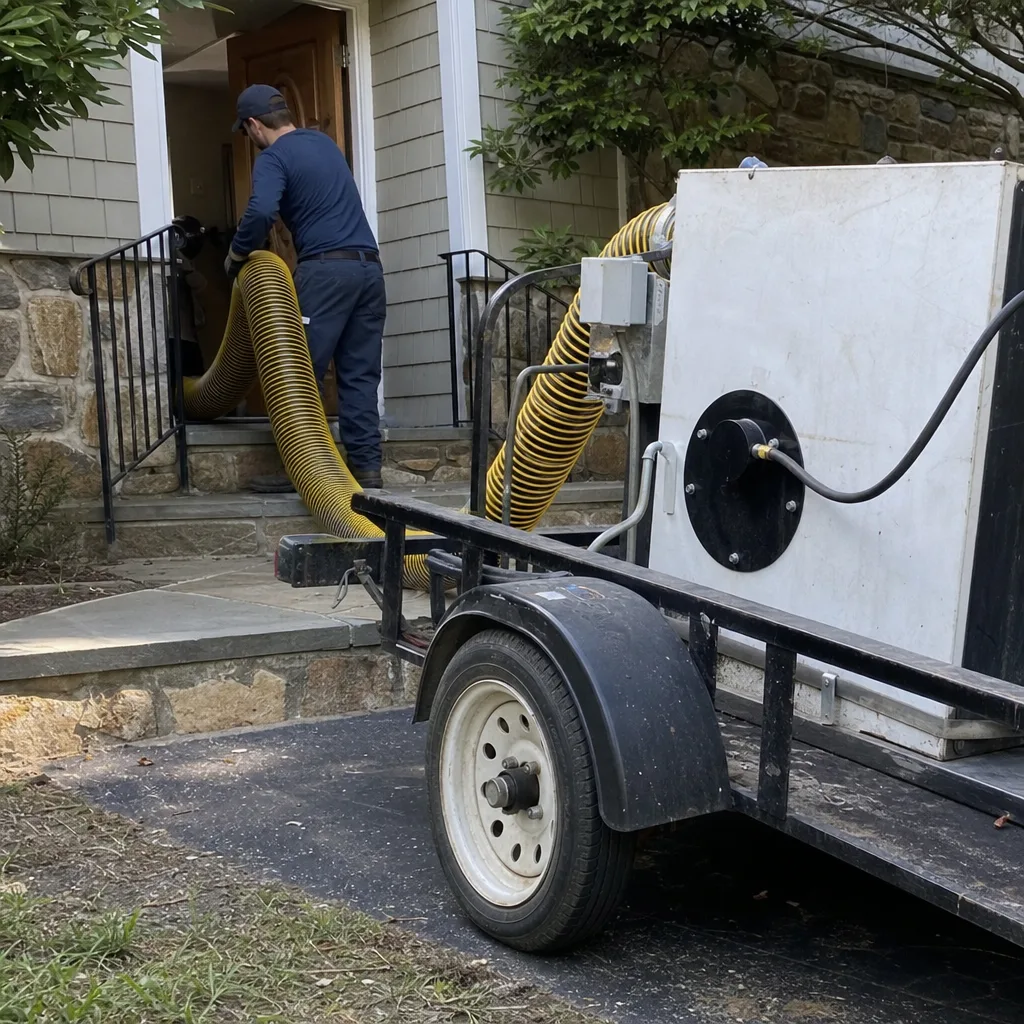
Negative-pressure extraction means the entire duct system is placed under vacuum while cleaning occurs. A large portable collector - typically a Nikro or Abatement Technologies unit - attaches to your ductwork near the air handler. This machine draws 2,000-5,000 cubic feet per minute through the system, creating suction at every register simultaneously. While this vacuum holds, technicians insert mechanical brushes, compressed air whips, or skipper balls into each duct run to dislodge debris.
The critical function: dislodged debris moves toward the collection point, not into your living space. Without negative pressure, the brush that knocks debris off a duct wall simply pushes it airborne. Some resettles. Some passes through the register into the room you just cleaned. Some travels to another duct run through the plenum. Negative pressure makes the system a closed loop during cleaning.
Professional equipment also addresses components no DIY approach reaches:
- The plenum. This central distribution box, usually above your furnace or air handler, collects debris where all ducts converge. It requires hand cleaning with HEPA vacuums and often contains the heaviest accumulation in the entire system.
- The evaporator coil. In Fairfax’s humid summers, this coil stays wet for months. Dust that passes through filters adheres to wet fins, forming a mat that reduces airflow and grows microbial contamination. Coil cleaning requires foaming cleaners, low-pressure rinse equipment, and protective measures for electrical components.
- The blower compartment and motor. The fan that moves air through your system builds debris on its blades and housing. Unbalancing a blower wheel with uneven debris loading causes vibration, bearing wear, and premature failure. Access and cleaning require partial disassembly.
- Flex duct with sag points. Flexible duct, common in Fairfax additions and finished basements, develops low spots where debris accumulates. Professional equipment includes directional air tools that push debris uphill through these sections toward the collection point. A consumer brush simply packs debris tighter into the sag.
Verification completes the professional difference. At CleanRun Air Duct Cleaning Fairfax home, every duct run is photographed before and after cleaning with a borescope camera. The customer receives these images as part of the standard job record. This documented photo record, which we have delivered on every job since 2013, lets you verify that the work addressed the full system, not just the accessible portions.
Three Scenarios Where DIY Is Genuinely Sufficient
Professional cleaning is not always necessary. Based on our inspections across Fairfax, Vienna, and Oakton, DIY maintenance is adequate in three specific situations we detail in our Seasonal Air Duct Cleaning Care for Fairfax: Year-Round Homeowner’s Guide:
1. Recently Built Homes Under Five Years Old With No Renovations
New construction ductwork in Fairfax, particularly in developments like Fair Lakes or the newer sections of Burke, typically arrives clean from the fabricator and sees minimal accumulation in early years. If you have not renovated - no drywall work, no flooring replacement, no significant painting - the primary debris source is ordinary household dust. Register cleaning and filter changes maintain adequate airflow. We recommend a professional inspection with borescope photography at year five to establish a baseline, but annual DIY register maintenance suffices until then.
2. Single-Occupant Homes With No Pets
Debris load correlates directly with occupancy and pet dander. A single occupant generates roughly one-third the skin cell and activity debris of a family of four. Without pets, hair and dander loading drops dramatically. In these homes, DIY register cleaning every 12-18 months, combined with high-quality filtration (MERV 11 or higher), keeps systems acceptably clean. The key variable is filter discipline. A single occupant who changes filters on schedule faces minimal duct loading.
3. Homes Where Inspection Shows Only Surface Register Dust
This is the decisive scenario. If your borescope inspection shows clean metal at the first elbow beyond each register, your ducts are not accumulating significant debris. Continue DIY register maintenance and re-inspect in two years. The $40 you spent on a borescope camera just saved you a professional service call. We encourage this approach. At CleanRun, we offer free second opinions on any written estimate - including our own - and we have told homeowners their ducts did not need cleaning when inspection supported that conclusion.
Four Scenarios Where DIY Is Counterproductive or Harmful
Some situations actively worsen with amateur intervention. We have documented the aftermath of DIY attempts in Fairfax homes where the homeowner’s intent was correct but the method caused damage or contamination spread.
1. Post-Renovation Debris
Construction dust is not ordinary household dust. Drywall compound, sawdust, and insulation fragments are abrasive and hygroscopic - they attract moisture. When a homeowner brushes these materials loose without negative-pressure containment, they migrate through the system and resettle in evaporator coils and blower compartments. The correct approach: sealed-system professional cleaning with HEPA filtration, performed after final construction cleanup but before occupancy. In Fairfax’s active renovation market, particularly in neighborhoods like Mantua and Kings Park West, this is a frequent call for us.
2. Suspected Mold or Moisture
Disturbing microbial growth without containment spreads spores. Fairfax’s summer humidity - July averages above 70% relative humidity - creates conditions for condensation in ductwork, particularly in unconditioned attic runs. If you see discoloration, smell mustiness, or find moisture in your borescope inspection, stop. Do not brush. Do not vacuum. The mechanical action aerosolizes spores. Professional assessment with laboratory sampling, followed by remediation protocols if confirmed, is the only safe path. The H.A.V.E.N. Standard requires our technicians to flag potential microbial growth for customer decision before proceeding with any mechanical cleaning.
3. Flex Duct With Accumulated Debris in Sag Points
Flex duct, the ribbed plastic-and-wire tubing common in Fairfax basement finishes and attic retrofits, has a designed minimum bend radius. When installed with sag points or tight turns, debris collects in low-velocity zones. A consumer brush pushed into flex duct packs debris tighter, potentially collapsing the duct wall or creating a complete blockage. Professional cleaning uses reverse-skipper air tools that travel through the duct on compressed air, expanding to contact walls and directing debris back toward the vacuum collection point. The tool choice matters: Rotobrush mechanical systems for metal duct, air-driven tools for flex. Using the wrong method damages the duct.
4. Systems With UV Lights or Electronic Air Cleaners
These components require specific reassembly sequences and safety protocols. UV lamps operate at germicidal wavelengths harmful to eyes and skin - they must be disabled and cooled before duct access. Electronic air cleaners carry high voltage. Disassembly for duct access, if performed incorrectly, creates electrical hazard and voids manufacturer warranties. Honeywell and Aprilaire, two brands we install and service, both specify technician-only access for certain configurations. DIY cleaning near these components without manufacturer documentation risks injury and equipment damage.
A Cost-Honest Comparison: DIY vs. Professional in Fairfax
The honest cost comparison must include time valuation. Homeowners who compare only out-of-pocket expenses mislead themselves.
DIY Costs
| Item | Cost |
|---|---|
| Tools and supplies (amortized over 5 years) | $30-$50 per cleaning |
| Time investment (12.5 hours at $25/hour opportunity cost) | $312 |
| Time investment (12.5 hours at $50/hour opportunity cost) | $625 |
| Total DIY cost at $25/hour | $342-$362 |
| Total DIY cost at $50/hour | $655-$675 |
The opportunity cost assumption matters. If your Saturday hours have no alternative value, DIY is cheaper. If you could bill those hours, work overtime, or complete higher-priority home maintenance, the calculation shifts.
Professional Costs in Fairfax
Based on our written estimates and competitor quotes we have reviewed through our free second opinion service, professional air duct cleaning in Fairfax for a 2,000 square foot home typically ranges. For help evaluating contractors, see our How to Hire a Air Duct Cleaning Contractor in Fairfax: A Step-by-Step Guide:
- Basic cleaning (supply and return ducts only): $350-$500
- Full system cleaning including plenum, coil, and blower: $500-$750
- Systems with flex duct, multiple zones, or accessibility complications: $700-$950
These are whole-system prices, agreed in writing before work starts under Haven Standard Clause 1. We do not quote per-vent or offer teaser rates that expand on arrival. The price you approve is the price you pay.
The trade-off point: for a homeowner who values their time above $35-$40 per hour, professional service costs less than DIY while delivering documented results across 100% of the system rather than 8%. For homeowners with available time and simple systems in the three sufficient scenarios above, DIY remains rational.
Fairfax-Specific Factors: Climate, Codes, and Home Styles
Fairfax County’s building environment creates conditions that affect duct cleaning decisions in ways generic national advice misses.
Climate-driven humidity. Fairfax’s four-season climate with humid summers means ducts operate as condensation surfaces for 4-5 months annually. The evaporator coil removes moisture from air, but poorly insulated duct runs in unconditioned spaces - attics in summer, crawl spaces in winter - develop surface condensation that traps debris. This moisture-debris combination accelerates accumulation beyond what dry-climate models predict. DIY register cleaning does not address this pattern.
Home age and duct materials. Fairfax’s housing stock spans decades. Homes built 1950-1980 often have unlined sheet metal duct with transverse joints that trap debris. Homes built 1980-2000 may have fiberglass-lined duct where liner degradation is the concern, not surface debris. Post-2000 construction increasingly uses flex duct. Each material requires different cleaning methods. A homeowner with a single brush kit cannot adapt to all three. Our equipment roster includes Rotobrush systems for metal duct, contact-vacuum methods for degraded liner, and air-driven tools for flex - matched to what we find during pre-cleaning inspection.
Local permit and code context. Fairfax County requires permits for HVAC modifications but not for cleaning. However, if cleaning reveals duct damage requiring repair or sealing, those repairs fall under Virginia Mechanical Code and require licensed work. CleanRun holds state licensure and carries this license number on every written estimate. DIY cleaning that discovers damaged ductwork creates a handoff point: the homeowner who finds a disconnected joint or corroded section needs a licensed professional to repair it properly.
Neighborhood-specific patterns. In our experience, homes in Fairfax’s mature neighborhoods - Mantua, Kings Park, Camelot - built with original metal duct and later retrofitted with central air, show characteristic accumulation at the original gravity-furnace plenum connections. Newer neighborhoods like Fair Lakes and Fairfax Station, with flex duct from original construction, show sag-point debris and insulation particulate from duct wall degradation. These patterns inform our inspection approach and should inform homeowner expectations about what they might find.
Common Mistakes to Avoid
- Cleaning without inspecting first. The borescope photo at the first elbow is your decision point. Skipping inspection means cleaning blindly or paying for professional service that may not be needed. The $25 camera purchase prevents both errors.
- Using a standard vacuum without HEPA filtration. Non-HEPA vacuums exhaust fine particulate through their exhaust port. You remove debris from the duct and deposit it in your breathing zone. This is particularly problematic in Fairfax’s tighter modern construction where air exchange rates are low.
- Brushing flex duct with rigid tools. The wire ribs in flex duct are not structural. A rigid brush catches, kinks, or tears the duct wall. Once torn, flex duct leaks conditioned air into unconditioned spaces until repaired. The repair requires duct replacement, not cleaning.
- Ignoring the return side. Supply ducts push conditioned air to rooms. Return ducts pull air back to the air handler. Return ducts are typically larger, run through dustier spaces, and load faster than supplies. Homeowners often clean visible supply registers and ignore the return grille in a hallway or basement that handles three times the airflow volume.
- Cleaning around a clogged filter. A dirty filter is the primary debris source for duct loading. Cleaning ducts without replacing the filter first, and committing to a replacement schedule, is like mopping with a dirty bucket. The problem regenerates immediately.
- Assuming all ducts are metal. Fairfax homes with basement finishes or attic HVAC retrofits often contain flex duct the homeowner never realized was there. The access panel you open may reveal ribbed plastic, not sheet metal. Treating flex as metal causes damage.
- Neglecting to document condition. Whether DIY or professional, before-and-after documentation matters for warranty claims, home sale disclosures, and maintenance records. Take photos. Store them with your home records. Our documented photo record on every professional visit exists because we have seen too many disputes resolved instantly by timestamped imagery.
When to Call a Professional
Call a professional when your borescope shows debris beyond the first elbow, when your home matches any of the four counterproductive scenarios above, or when your time valuation exceeds the professional service cost. Call when you need documentation for a home sale, warranty claim, or landlord requirement. Call when you smell mustiness, see vermin evidence, or find debris that appears construction-related rather than household dust.
Air Duct Cleaning in Fairfax from CleanRun includes a written price before work starts, documented photo record of every duct run, and the 365-Day Done Right Promise backed in writing. We also offer Dryer Vent Cleaning in Fairfax and HVAC Cleaning in Fairfax as integrated services. Free estimates are available at (571) 526-0015, and we provide free second opinions on any competitor’s written estimate.
Frequently Asked Questions
Whole-system air duct cleaning in Fairfax typically costs $400-$700 for a 2,000 square foot home, with full service including plenum, evaporator coil, and blower compartment at the higher end of that range. Systems with flex duct, multiple zones, or accessibility complications may reach $800-$950. CleanRun provides a written price before any work starts under Haven Standard Clause 1 - no exceptions. Call (571) 526-0015 for a specific estimate based on your home’s layout and duct configuration.
Low quotes typically reflect partial service or bait-and-switch pricing. A $79-$149 offer usually covers register vacuuming only, or quotes per-vent with substantial add-ons for “required” services once the technician arrives. The actual invoice often exceeds professional whole-system pricing. CleanRun does not quote per-vent or offer teaser rates. Our written price covers the full scope we inspect and document. If a competitor’s written quote seems too low, bring it to us for a free second opinion - we will put our comparable scope in writing beside it.
Demand a documented photo record showing the inside of each duct run before and after cleaning. Timestamped borescope images are the only verification method that cannot be fabricated. CleanRun has delivered this documentation on every job since 2013 as a standard deliverable, not an optional add-on. If a company cannot or will not provide interior duct photography, you are paying for unverified claims.
For typical Fairfax homes with standard occupancy and no pets, every 5-7 years with high-quality filtration and regular filter changes. Homes with pets, smokers, recent renovations, or occupants with respiratory sensitivities benefit from 3-5 year intervals. New construction homes can wait 5 years for a baseline inspection. The correct interval for your home depends on inspection findings, not calendar time. A borescope inspection every 2-3 years establishes whether accumulation warrants service.
You can clean the first 18 inches behind each register and the accessible boot section - approximately 8% of total duct surface area in a typical Fairfax home. You cannot reach horizontal runs, vertical stacks, the plenum, or mechanical components without professional equipment. A shop vacuum without negative-pressure attachment to the duct system also risks pushing dislodged debris into living spaces rather than containing it. DIY register maintenance is useful; DIY system cleaning is not achievable with consumer tools.
Fairfax’s summer humidity increases condensation on duct surfaces in unconditioned spaces, which traps debris and can support microbial growth. This climate factor means duct systems here accumulate differently than in arid regions, and evaporator coil cleaning becomes particularly important. However, humidity does not change the fundamental decision framework: inspect first, clean based on findings, and address moisture sources (insulation, sealing, dehumidification) as part of long-term maintenance. Professional assessment identifies whether humidity has created conditions beyond routine debris accumulation.
The Bottom Line
DIY duct cleaning in Fairfax has a defined, useful scope: register faces, accessible boots, and return grilles in homes where inspection confirms clean conditions beyond the first elbow. It requires modest tools, significant time, and honest self-assessment of whether your situation matches the three sufficient scenarios. For everything beyond that boundary - the 92% of duct surface you cannot reach, the four scenarios where amateur methods cause harm, and any home where time has real value - professional service with documented results is the rational choice.
The decisive practice for any homeowner is inspection before action. A $25 borescope camera and two hours of careful photography replace guesswork with evidence. Whether that evidence sends you to the hardware store for brushes or to the phone to schedule professional service, you have made an informed decision. Explore more guides & resources to keep your system running efficiently. That is the standard we apply in our own work: documented evidence before recommendation, written price before work, verified results before invoicing.
Written by Tomas Reyes, Owner at CleanRun Air Duct Cleaning Fairfax, serving Fairfax since 2013.