
Last updated September 23, 2026
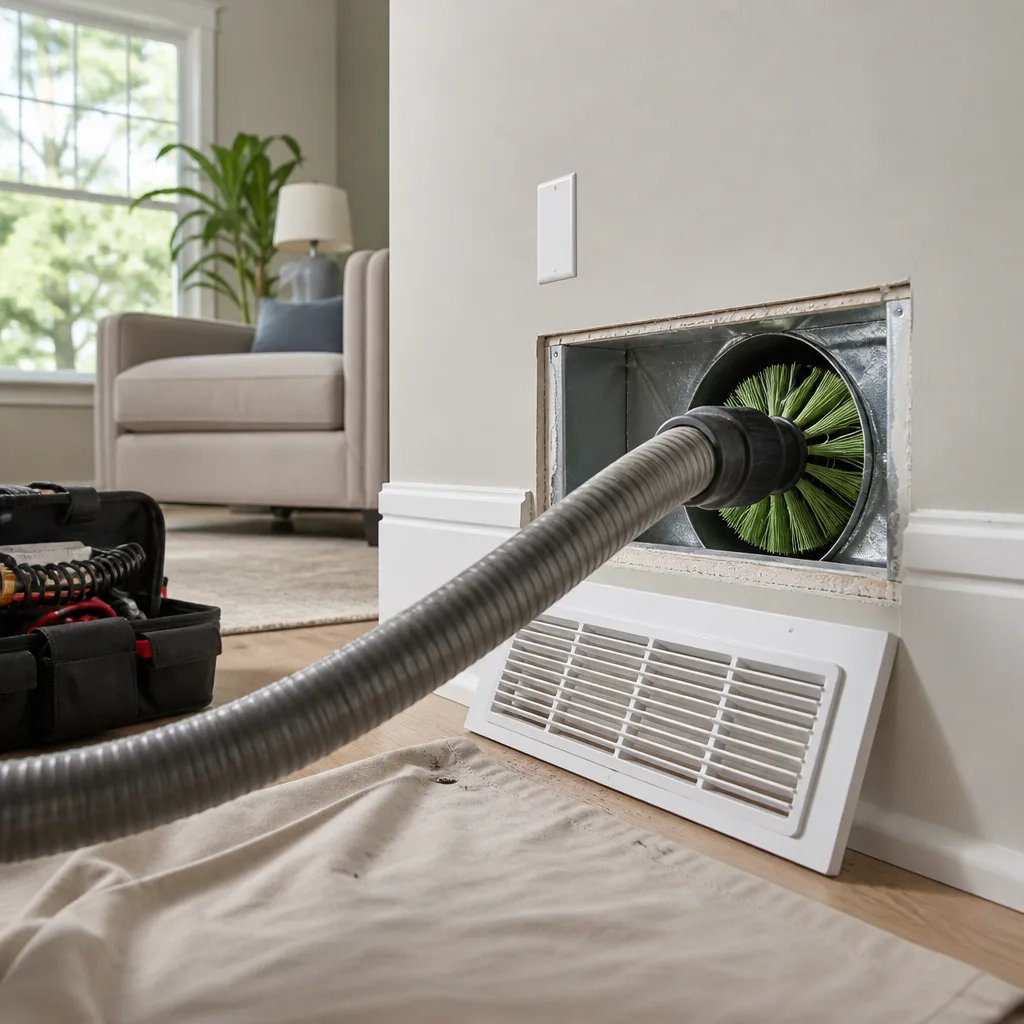
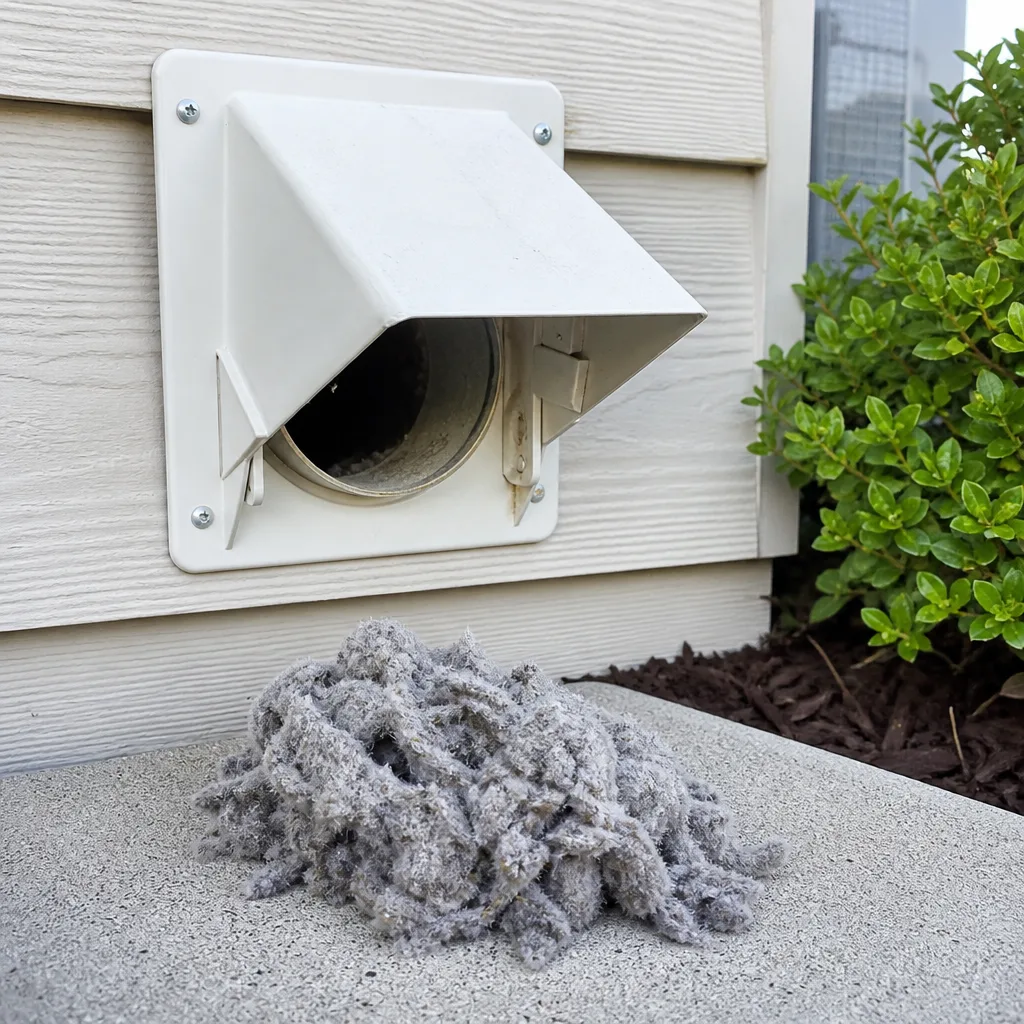
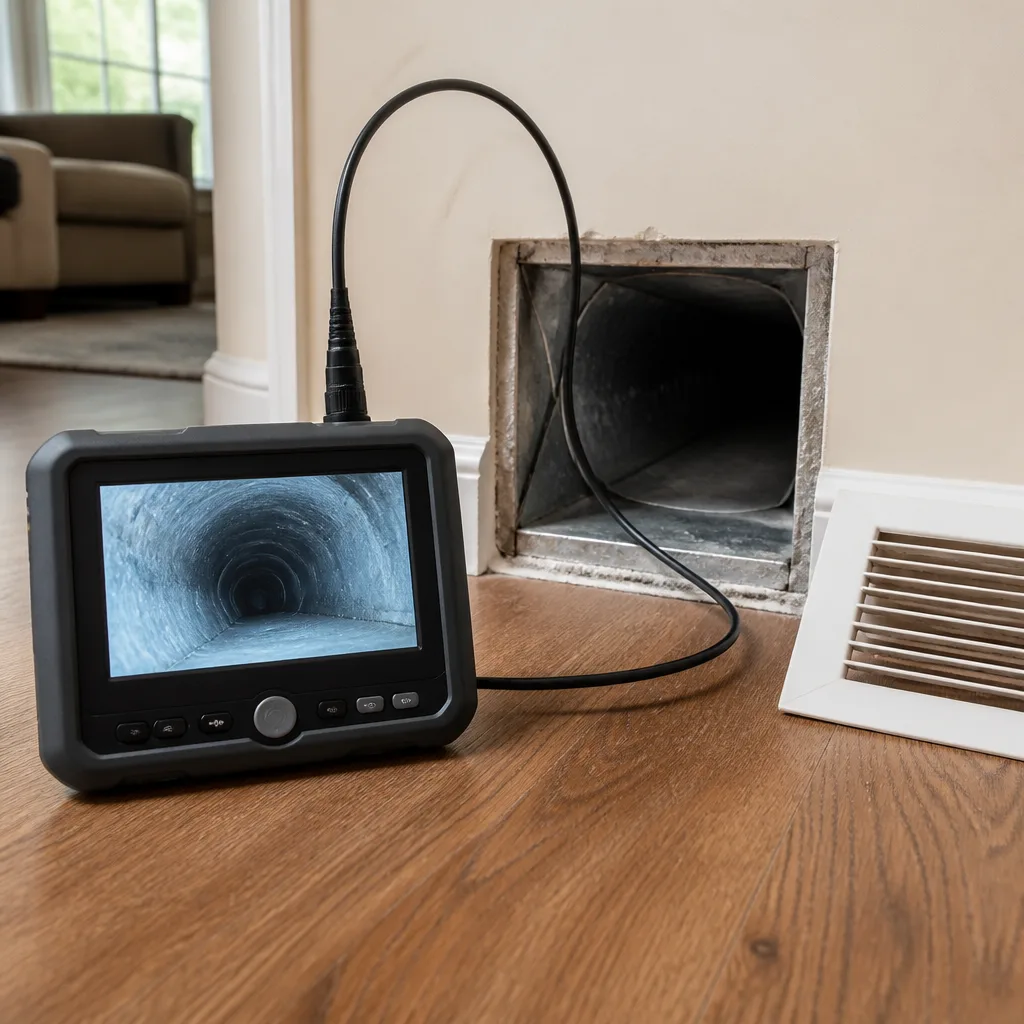
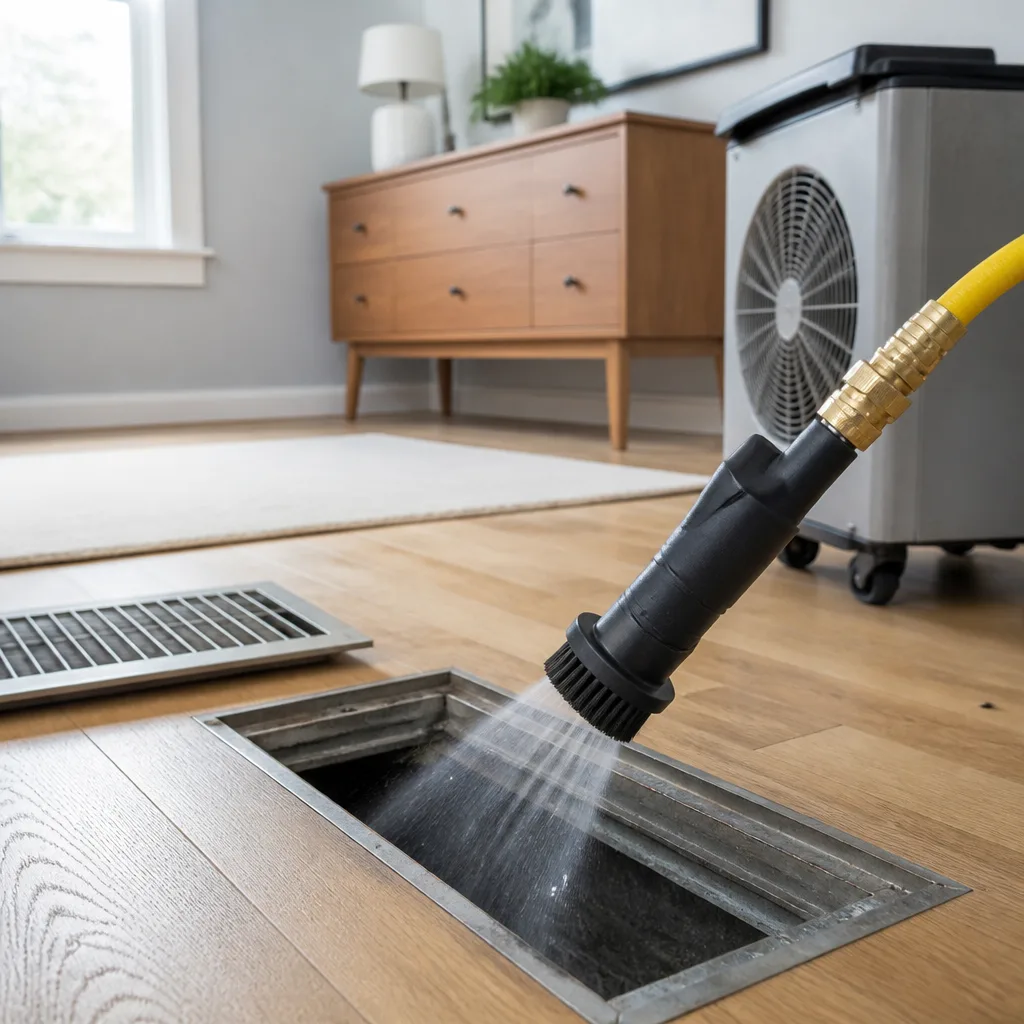
Whole-system duct and dryer vent check with before-and-after photos - you see exactly what came out of your vents
That "$99 whole-house special" is a bait ad - the real number appears once they are in your hallway, or the "clean" is a shop-vac at the register. We photograph the inside of your ducts before and after instead.
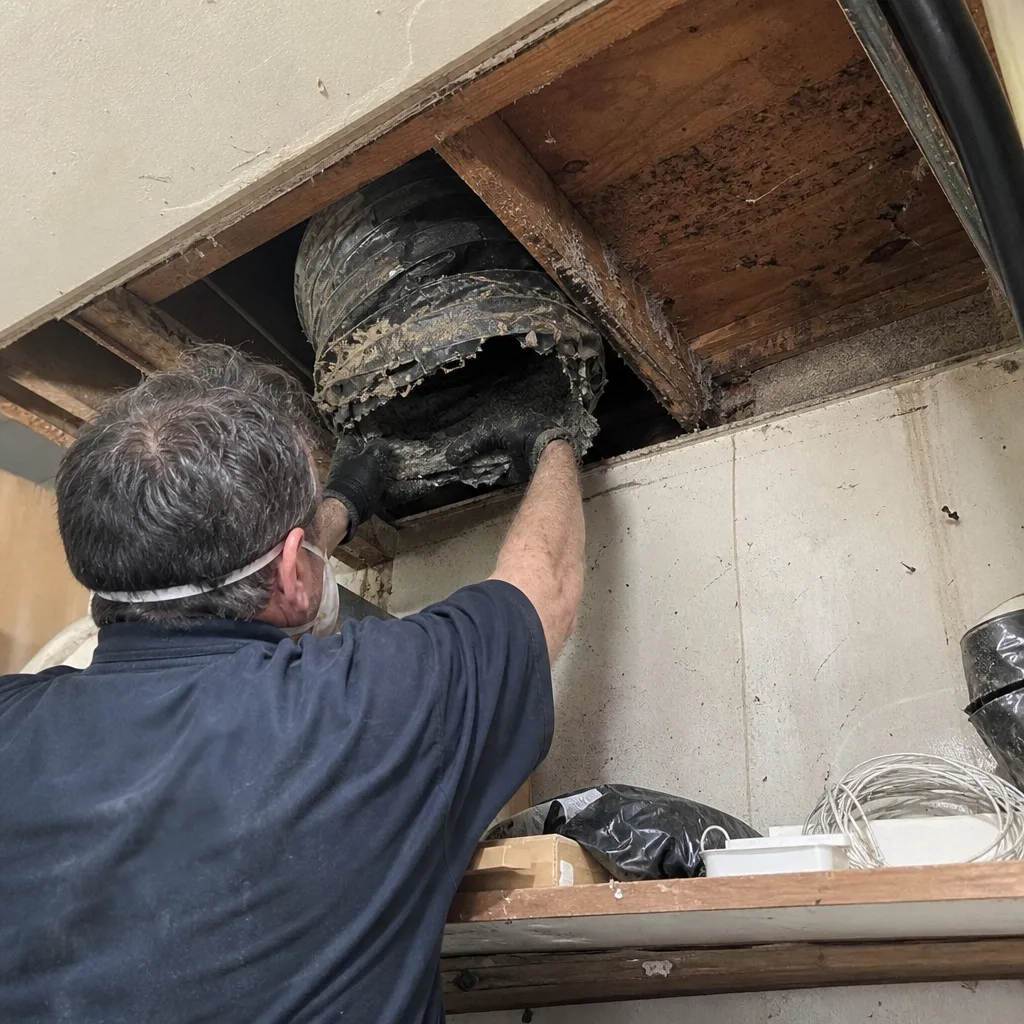 Before
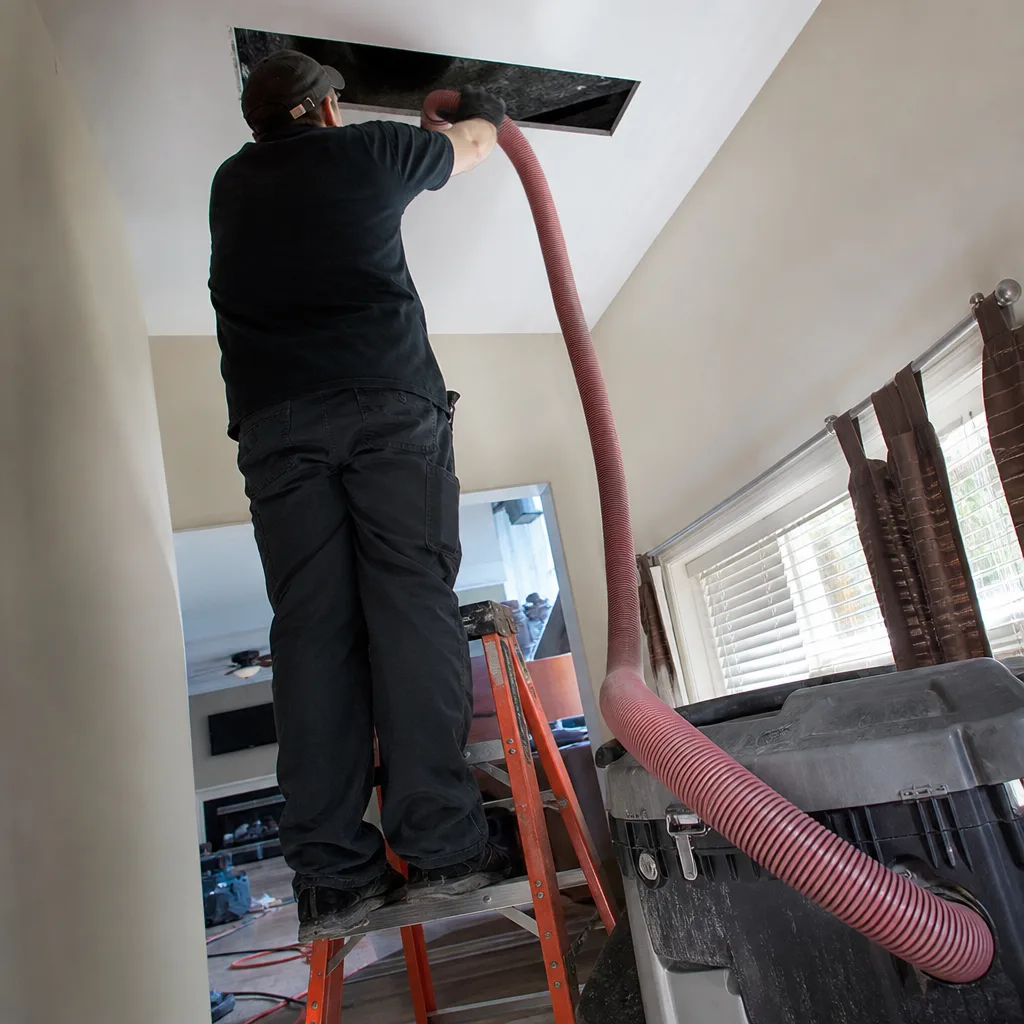 After
After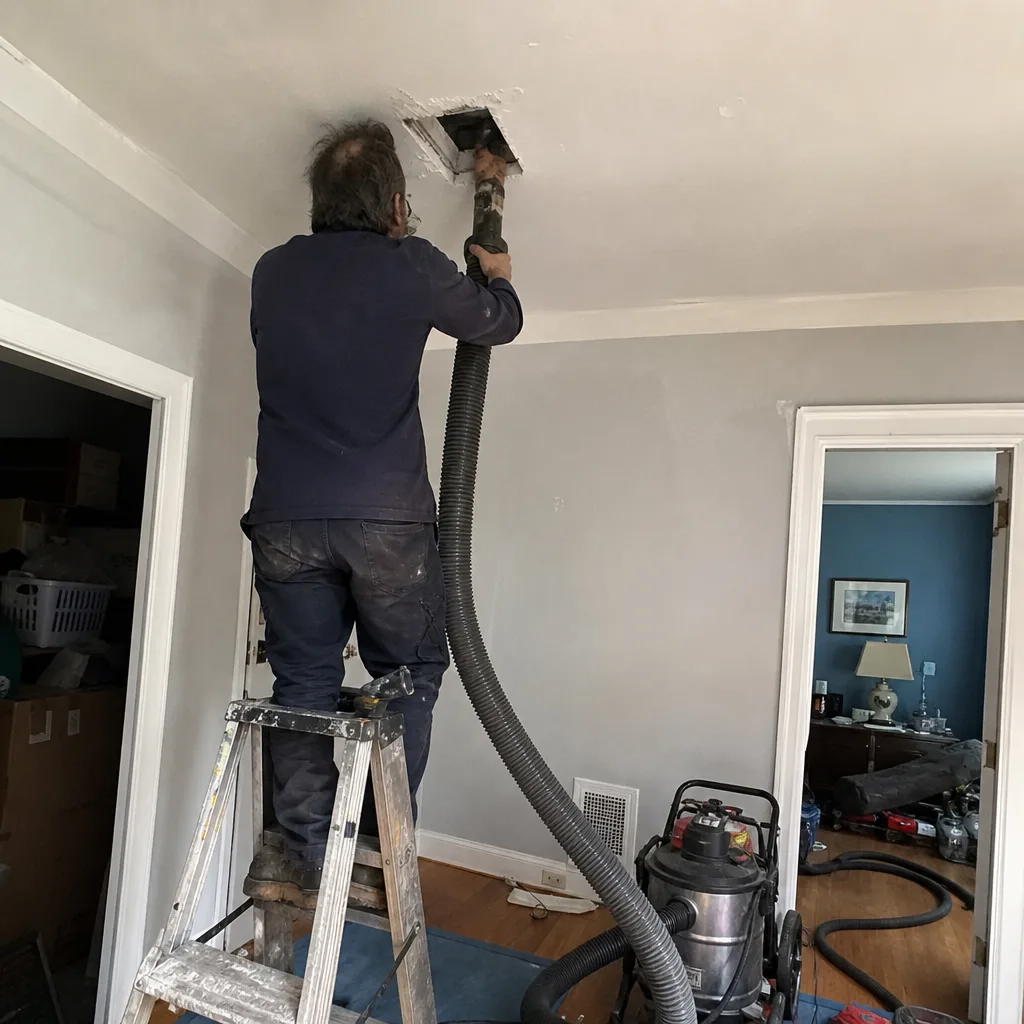 Before
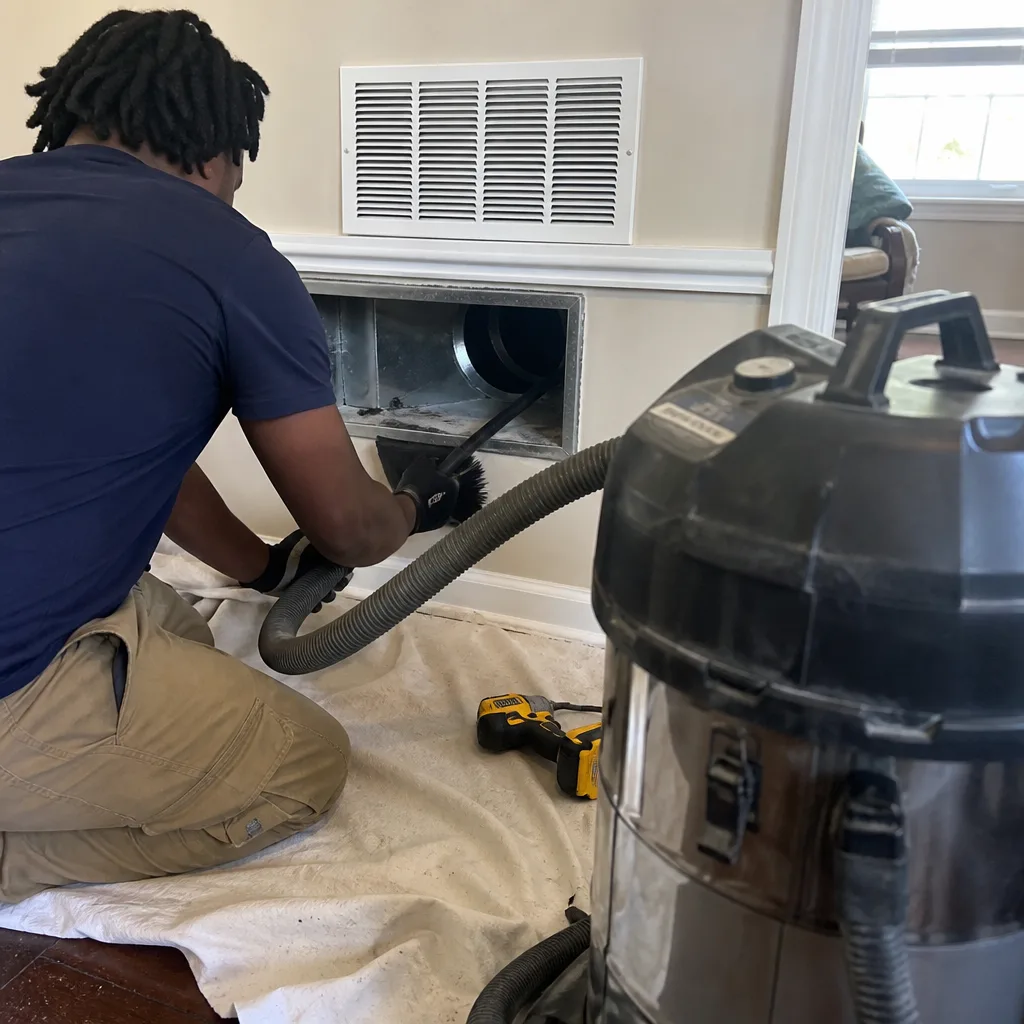 After
After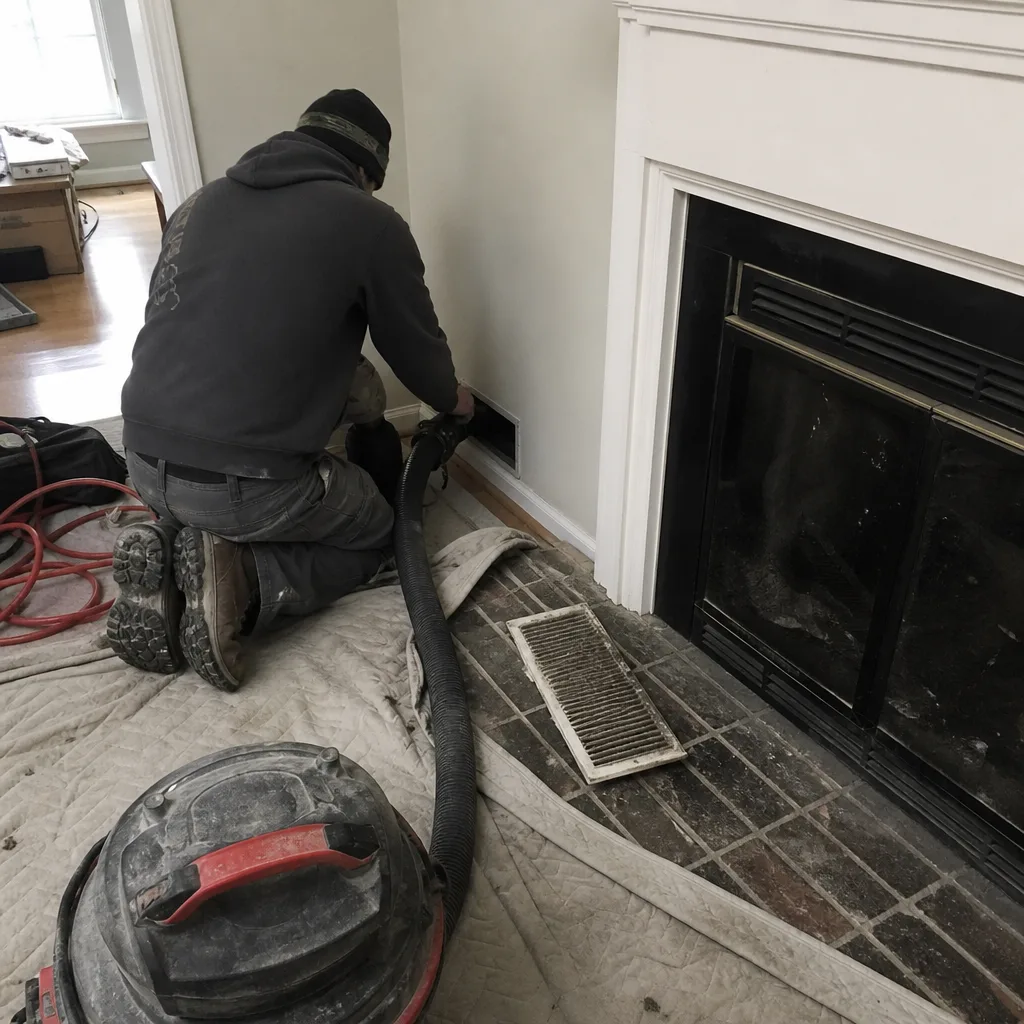 Before
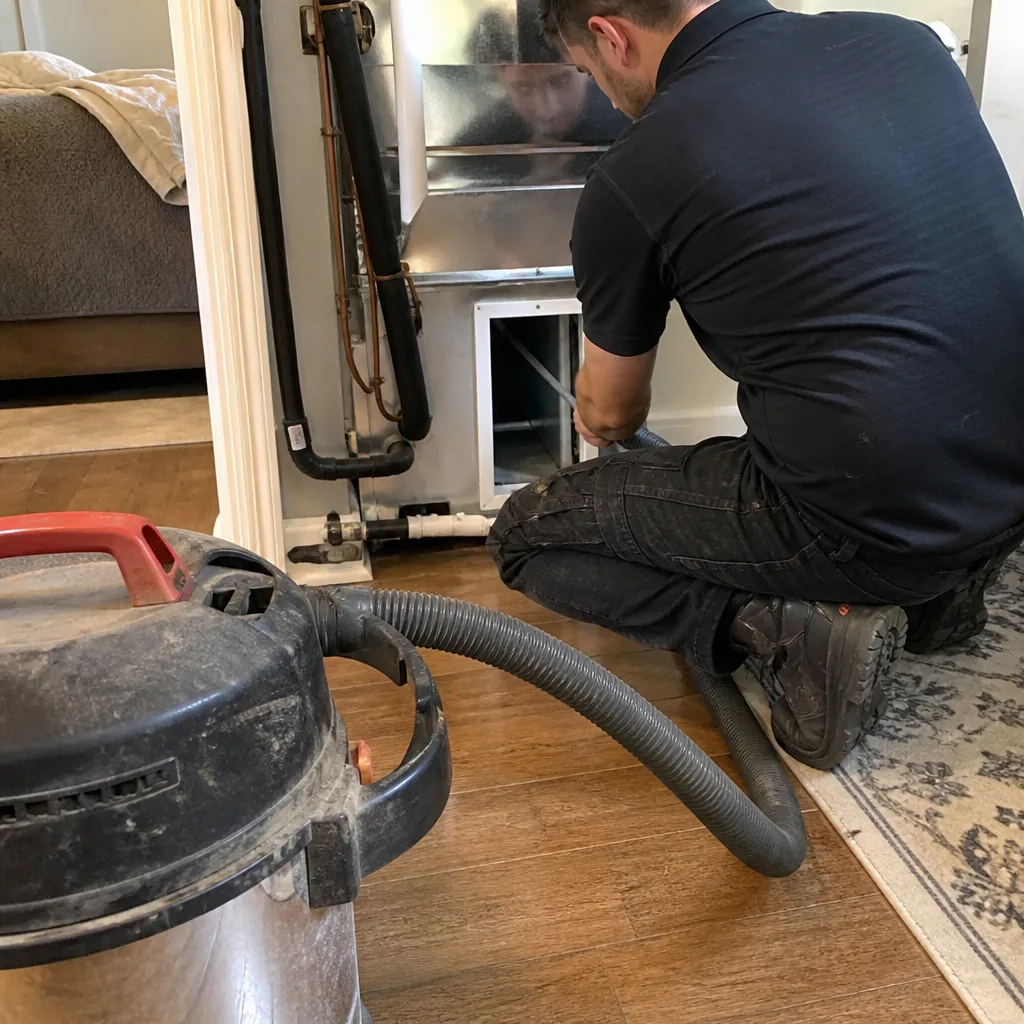 After
AfterHow to Hire a Air Duct Cleaning Contractor in Fairfax: A Step-by-Step Guide
Virginia does not license air duct cleaning as a standalone trade. The company that cleaned your neighbor’s ducts last month had the same legal standing to do so as someone who bought a shop vac yesterday. In Fairfax’s competitive home services market, where $79 coupon mailers arrive weekly and every Google result claims to be “certified,” the difference between a legitimate operator and a bait-and-switch scheme comes down to the questions you ask before booking, not the claims you read on a website. This guide gives you the specific script, the contract clauses, and the review-reading skills to separate trained technicians from unskilled operators.
Quick Answer
To hire a qualified air duct cleaning contractor in Fairfax, request a written quote with line-item pricing per HVAC system (not per vent), verify the company carries general liability and workers’ compensation insurance, ask for their negative-pressure extraction specification in inches of water column, and require before-and-after photo documentation of every duct run in the written scope. Avoid any contractor who quotes by the vent, pressures you to add services mid-job, or cannot produce a written callback guarantee with a specific time period attached.
Table of Contents
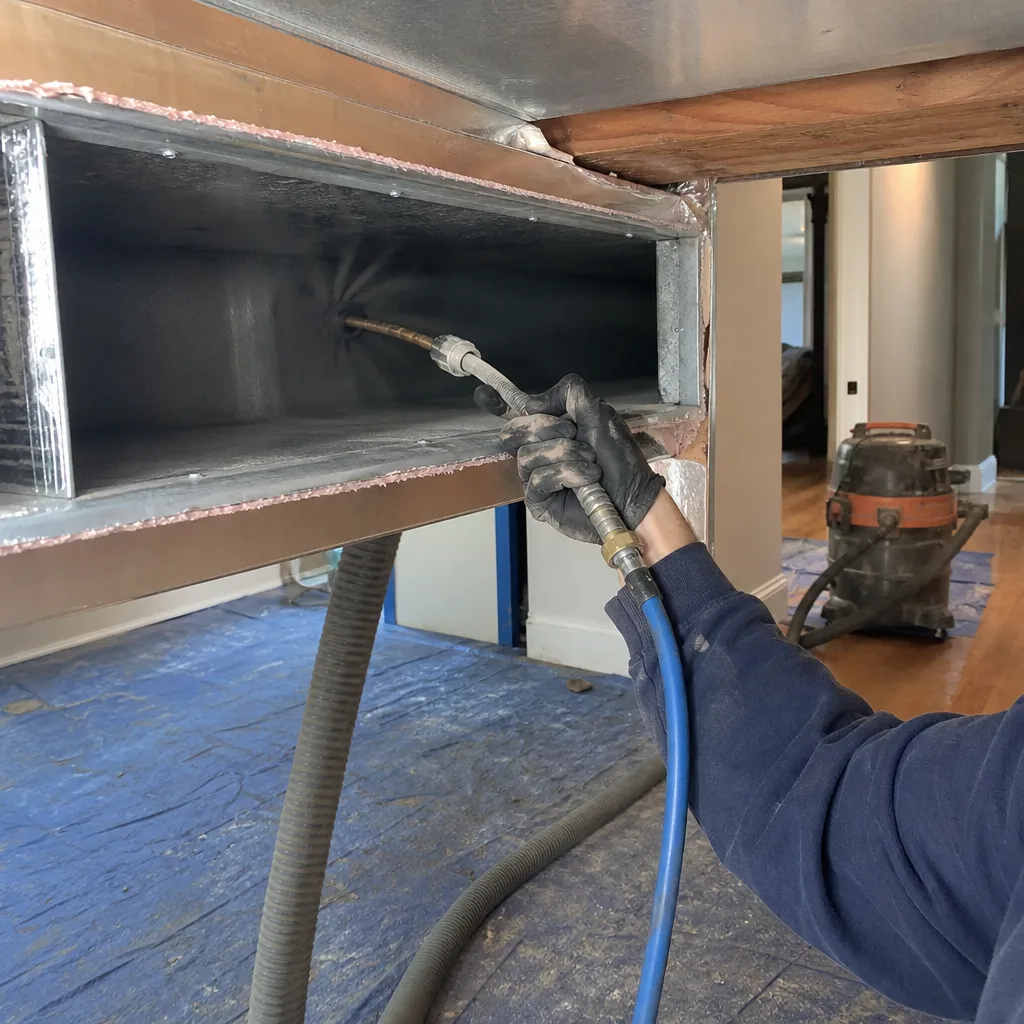
- Why Virginia’s Lack of Licensing Changes Everything
- The Seven-Question Phone Script That Filters Out Unqualified Operators
- What NADCA Membership Actually Verifies (And What It Doesn’t)
- How to Read a Written Quote: Line Items That Protect You
- Three Contract Clauses Every Fairfax Homeowner Should Require
- How to Read Google and Yelp Reviews for Duct Cleaners
- Fairfax-Specific Considerations: Climate, Codes, and Market Realities
- Common Mistakes to Avoid
- When to Call a Professional
- Frequently Asked Questions
- The Bottom Line
BeforeAfterWhy Virginia’s Lack of Licensing Changes Everything
In Virginia, the Department of Professional and Occupational Regulation licenses HVAC contractors who install, repair, or modify heating and cooling systems. But air duct cleaning, standing alone, requires no trade license, no continuing education, and no state examination. A person can form an LLC, print business cards, and begin offering “professional” duct cleaning the same afternoon.
This matters in Fairfax more than in many markets. Our housing stock includes 1970s colonials in Mantua, 1990s townhomes in Fair Lakes, and new construction in Mosaic District, each with different duct configurations and potential contamination profiles. An unqualified operator with a Rotobrush machine and no training can damage flex duct in a crawl space, fail to seal an access panel properly, or simply move debris around without extracting it, leaving the homeowner with a lighter wallet and the same particulate load.
The absence of state oversight shifts the burden of verification entirely to you, the homeowner. There is no state board to check, no license number to verify, no recourse through a regulatory body for substandard work. Your protections are contractual and procedural: the questions you ask, the written scope you demand, and the documentation you require.
We have arrived at jobs in Fairfax Station and Burke where the previous contractor’s “cleaning” consisted of brushing visible debris at register openings while never accessing the plenum, the central distribution box where supply and return trunks connect to the air handler. The homeowner paid $189 for what amounted to surface dusting. Without a written scope defining access points and extraction method, there was no basis for a refund or redo.
The sections that follow give you the specific tools to prevent this outcome.
The Seven-Question Phone Script That Filters Out Unqualified Operators
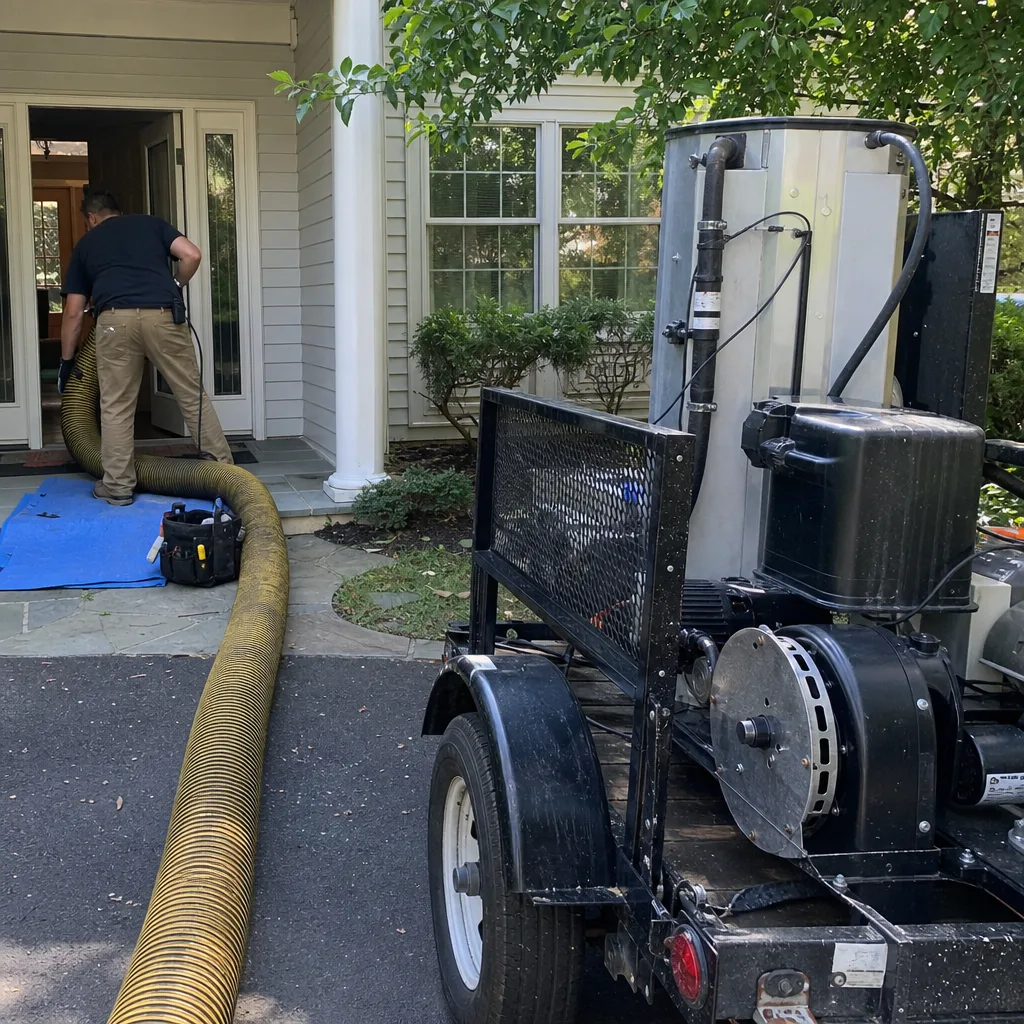
When you call a duct cleaning contractor, you have approximately three minutes to determine whether they operate a documented, accountable service or a dispatch operation that rents equipment by the week. Use this script verbatim. Write down the answers. A legitimate contractor will answer without hesitation; an unqualified operator will deflect, generalize, or become evasive.
- “What is your negative-pressure specification, measured in inches of water column?” Legitimate duct cleaning uses negative-pressure extraction, a vacuum system that creates suction throughout the duct network while agitation tools dislodge debris. The industry-recognized minimum is approximately 2,000 cubic feet per minute at -2 to -4 inches of water column. If the representative cannot state a number, or confuses “water column” with “CFM” (cubic feet per minute, a flow rate, not a pressure measurement), they do not understand their own equipment.
- “Will you provide a written quote before any work begins, with line-item pricing per system?” The answer must be yes, with specificity. “We’ll give you a price when we get there” is a disqualifying response. Per-vent pricing is also a red flag, discussed in the next section.
- “What does your written scope include for access points and documentation?” A legitimate scope specifies every duct run to be cleaned, the access panels to be cut (if necessary), the method of agitation (brush, whip, or compressed air), and the photographic documentation to be provided. Vague language like “complete system cleaning” without enumeration means nothing enforceable.
- “Are your technicians employees or subcontractors, and are they background-checked?” Subcontractor networks are common in coupon-model operations. The company taking your booking may not be the company arriving at your door. Background checking, uniform requirements, and name identification before arrival are practices associated with accountable operations.
- “What is your callback or redo policy, and is it provided in writing?” Verbal assurances are meaningless. The policy must specify the time period (30 days, 90 days, one year), the conditions triggering it, and the mechanism for invocation. CleanRun’s 365-Day Done Right Promise, backed in writing on every job under Haven Standard Clause 1, is one example of a specific, enforceable guarantee.
- “What professional-grade equipment do you use, and can I verify the manufacturer specifications independently?” Equipment from Abatement Technologies, Nikro, Rotobrush, and Guardsman are recognized in the trade. The representative should be able to name their vacuum system and agitation tools without prompting. “Commercial-grade equipment” without brand names is a non-answer.
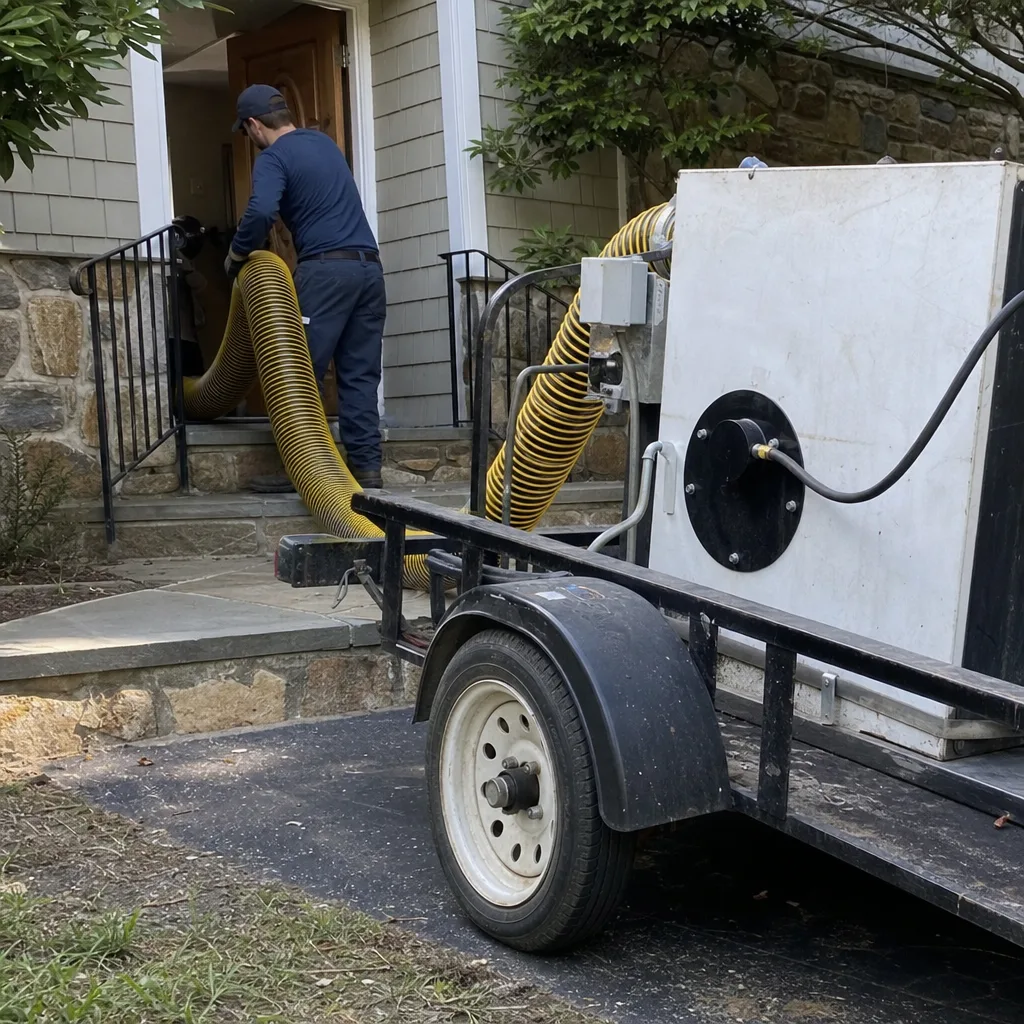
- “Will you photograph the inside of every duct run before and after, and deliver those photos to me as part of the job record?” This is perhaps the most discriminating question. Photo documentation requires time, equipment, and accountability. An operator who intends to do minimal work will resist this requirement because it creates an objective record of performance. CleanRun has delivered a Documented Photo Record on every job since 2013, including jobs in Fairfax, Oakton, and Vienna.
Score the answers. A contractor who answers all seven with specificity warrants further consideration. One who falters on three or more should be removed from consideration regardless of price.
What NADCA Membership Actually Verifies (And What It Doesn’t)
The National Air Duct Cleaners Association (NADCA) is frequently cited by contractors as a credential. Understanding what membership actually requires helps you use it appropriately in your evaluation.
NADCA offers two relevant designations: General Membership and the Air Systems Cleaning Specialist (ASCS) certification. General Membership requires the company to carry general liability insurance, have been in business at least one year, and sign a code of ethics. ASCS certification requires an individual to pass a written examination covering HVAC system design, cleaning methods, and industry standards.
What NADCA membership does verify: the company has insurance, has operated for at least twelve months, and has at least one employee who has passed a written test. It also indicates the company has some investment in industry participation and is not a fly-by-night operation.
What NADCA membership does not verify: the quality of equipment used on your specific job, the training of the technician who actually enters your home, the existence of a written callback guarantee, or the provision of photographic documentation. NADCA does not inspect jobs, audit customer complaints, or revoke membership for poor performance. It is a trade association, not a regulatory body.
In Fairfax, we have encountered NADCA-member companies whose field technicians could not explain negative-pressure extraction and whose “cleaning” left visible debris in return trunks. Membership is a floor, not a ceiling. It eliminates the most obviously unqualified operators but does not distinguish between competent and excellent performance. Use it as an initial screen, then apply the seven-question script and contract requirements below.
NADCA membership also does not address pricing integrity. A member company can still employ per-vent pricing, mid-job upselling, and undocumented work. The contractual protections in the next sections matter more than association logos.
How to Read a Written Quote: Line Items That Protect You
The written quote is your primary protection against bait-and-switch pricing, the dominant consumer complaint in duct cleaning. A legitimate quote from a Fairfax contractor should contain specific elements. Its absence of any element is a basis for rejection.
Required Elements of a Legitimate Written Quote
- Line-item pricing per HVAC system, not per vent or per room. Per-vent pricing is a known upsell structure. The contractor quotes $15 per vent, arrives to count 20 vents rather than the 12 you estimated, and the $180 quote becomes $300 before work begins. Worse, per-vent pricing incentivizes the contractor to clean only the vents, not the trunk lines and plenum where the majority of debris accumulates. A legitimate quote prices the complete system: “One complete air duct cleaning, single HVAC system, up to X supply runs and Y return runs.”
- Enumeration of access points. The quote should specify where technicians will access the ductwork: existing service openings, register removals, or new access panels to be cut and sealed. “Access as needed” is insufficient.
- Extraction method and equipment. The quote should state negative-pressure extraction and name the vacuum system or method. “Brushing and vacuuming” without specification could mean a shop vac and a hand brush.
- Documentation commitment. The quote should specify what photographic or video documentation will be provided, in what format, and when.
- Total price, inclusive of all labor and materials, with no open-ended items. The price should be a single number for the defined scope. “Plus materials as needed” or “additional charges may apply for excessive debris” create openings for invoice inflation.
- Expiration date and booking conditions. The quote should remain valid for a defined period (typically 30 days) and state any conditions affecting price (e.g., accessibility of the air handler).
Red Flags in Quote Structure
| Red Flag | Why It Matters |
|---|---|
| Per-vent or per-room pricing | Structurally designed for upselling; incentivizes incomplete work |
| “Call for quote” or “price upon inspection” | Prevents comparison shopping; enables high-pressure sales tactics |
| Teaser rates ($79, $99) with asterisks | Nearly always escalate; exclude necessary components |
| Vague scope language (“complete cleaning”) | Unenforceable; no basis for dispute if work is incomplete |
| Separate charges for “sanitizing” or “deodorizing” as default inclusions | Often unnecessary upsells; should be optional add-ons with clear EPA registration numbers for any chemical used |
At CleanRun Air Duct Cleaning Fairfax, every quote is delivered in writing before work begins under Haven Standard Clause 1: Written Price Before Any Work Starts. The quote specifies the system count, the access methodology, the equipment to be used, and the documentation deliverables. There is no “call for pricing” because the price is a concrete output of a defined scope, not a negotiation.
Three Contract Clauses Every Fairfax Homeowner Should Require
The written quote becomes enforceable when incorporated into a work agreement or contract. Before any technician touches your system, require these three clauses in writing. Not in marketing materials. In the document you sign or acknowledge.
Clause 1: Scope Definition with Access Point Enumeration
The contract must define the work by what will be accessed and cleaned, not by what will be “addressed” or “serviced.” Specific language: “Technician will clean all supply duct runs from the plenum to the registers, all return duct runs from the registers to the plenum, and the plenum itself, using negative-pressure extraction with [equipment name] and mechanical agitation. Access will be gained through [list: existing service panel at air handler, removal of X registers, cutting of Y access panels to be sealed post-cleaning with code-compliant materials].”
This specificity matters in Fairfax’s older housing stock. Homes in neighborhoods like Kings Park West or Greenbriar often have original ductwork with limited access. Without enumerated access points, a contractor can claim the plenum was “inaccessible” and leave it uncleaned while charging full price.
Clause 2: Before-and-After Documentation Requirement
The contract must require photographic documentation of the interior of every duct run, delivered to the customer as part of the standard job record. Not “available upon request.” Not “before photos only.” Every run, before and after, with timestamps or sequential numbering that demonstrates coverage.
This clause transforms duct cleaning from an opaque service into a verifiable deliverable. When CleanRun crews work in Fairfax, the photo record is included automatically, not as an upgrade. The customer receives images showing the condition at the first elbow, at mid-run, and at the register connection, both pre- and post-cleaning. This documentation, maintained since our first job in 2013, is what distinguishes real extraction from vacuum noise.
Clause 3: Written Callback or Redo Guarantee with Time Period
The contract must specify: under what conditions the customer can request a callback or redo; the time period during which this right exists; and the mechanism for invoking it (phone number, email, response time commitment). Vague language like “satisfaction guaranteed” is unenforceable without these specifics.
CleanRun’s 365-Day Done Right Promise, referenced in writing on every job, specifies that if the work is not right, we make it right, with a defined response protocol. This is not a policy subject to manager discretion; it is a contractual commitment under the H.A.V.E.N. Standard. Any contractor unwilling to put a specific callback guarantee in writing is signaling that they do not stand behind their work.
How to Read Google and Yelp Reviews for Duct Cleaners
Online reviews for duct cleaning require a specific reading protocol. The service is performed inside your home, largely out of sight, with results that are difficult for most homeowners to verify independently. This creates ideal conditions for review manipulation, both by companies planting positive reviews and by competitors posting negative ones.
Phrases That Signal Genuine Detailed Reviews
Authentic reviews from informed customers tend to include specific observations that would be difficult to fabricate without having observed the work:
- References to specific equipment: “They used a Nikro vacuum on a trailer outside” or “the Rotobrush was too large for our crawl space, so they switched to compressed air whips.”
- Mentions of documentation received: “We got photos of every duct run by email that evening” or “the before-and-after pictures showed the buildup at the elbow near the kitchen.”
- Descriptions of technician behavior: “He showed us the inside of the return trunk with his camera before starting” or “they laid down floor protection and wore shoe covers without being asked.”
- Specific pricing outcomes: “The quote was $485 for our two-system house, and the final invoice matched exactly” or “they honored the written estimate even though they found an extra return we hadn’t counted.”
- Negative specifics that indicate observation: “They couldn’t access the master bedroom duct because of a structural beam, and they explained why rather than pretending to clean it.”
Phrases That Signal Planted or Inauthentic Reviews
- Generic enthusiasm without specifics: “Amazing service, highly recommend, will definitely use again” with no mention of what was done, what it cost, or what equipment was used.
- Repeated phrases across multiple reviews: identical or near-identical wording in reviews posted within a short timeframe, particularly praise for “professionalism” and “courtesy” without operational detail.
- Reviews that mention price only as “reasonable” or “fair” without stating the actual amount. Legitimate reviewers who care about price usually state it.
- Reviews posted by accounts with only one review, or with multiple reviews for businesses in disparate locations or industries.
- Negative reviews that mention only “they were late” or “rude on the phone” without addressing the quality of the cleaning itself, particularly when posted in clusters around the same date.
Fairfax-Specific Review Context
In Fairfax, pay attention to whether reviews mention neighborhood-specific housing types. A review from someone in a 1970s colonial in Fairfax Station who describes cleaning of hard ductwork in a basement mechanical room is more likely authentic than a generic five-star review with no location or housing detail. Similarly, reviews from Mosaic District or Fair Lakes mentioning high-rise or townhome duct configurations suggest actual experience.
Cross-reference Google and Yelp reviews with the company’s responses. A contractor who responds to negative reviews with specific references to the job record (“We show that our technician photographed all 14 runs and the customer signed the completion acknowledgment”) demonstrates documentation practices that align with accountability. Defensive responses or claims that “we have no record of this customer” without further investigation suggest poor record-keeping.
Fairfax-Specific Considerations: Climate, Codes, and Market Realities
Fairfax’s environment and regulatory landscape create specific conditions that affect duct cleaning needs and contractor selection.
Climate and Seasonal Factors
Fairfax experiences humid subtropical summers with average July highs near 87°F and relative humidity frequently above 70%. This moisture load, combined with air conditioning use from May through September, creates conditions for microbial growth in ductwork, particularly in returns where condensation can accumulate. In our experience across Fairfax, homes without adequate return duct insulation, common in 1980s and 1990s construction in neighborhoods like Burke Centre and Kings Park, show higher incidence of debris adhering to duct walls due to moisture binding.
Winter heating, typically November through March, produces dry conditions that increase particulate circulation. Homes with heat pumps, common in Fairfax’s newer construction, may accumulate different debris profiles than those with gas furnaces, as heat pumps operate with lower supply air temperatures and less thermal drying of the duct interior.
These climate factors mean that “standard” cleaning protocols may need adjustment. A contractor who applies the same approach in Fairfax as in Phoenix or Minneapolis is not accounting for local conditions.
Local Code and Permit Considerations
Fairfax County requires permits for duct modification, repair, or replacement but not for cleaning alone. However, if cleaning reveals damage requiring duct sealing or repair, the contractor performing that work should be familiar with Fairfax County’s mechanical code requirements, including duct sealing standards and access panel construction. CleanRun’s duct repair and sealing services comply with these requirements, but cleaning-only contractors who discover damage may lack the licensing or knowledge to address it properly.
Homes in Fairfax City proper may fall under different permitting jurisdiction than those in unincorporated Fairfax County. A contractor working across both areas should know which authority has jurisdiction for your address.
Market Pricing Reality
The Fairfax market supports a wide price range for duct cleaning, from coupon offers below $100 to comprehensive services above $800 for multi-system homes. The legitimate price for a complete single-system cleaning with negative-pressure extraction, documented photography, and written guarantee typically falls between $350 and $650 in Fairfax, depending on system accessibility, home size, and contamination level. Prices significantly below this range indicate corner-cutting: inadequate vacuum power, no documentation, rushed labor, or intentional scope reduction.
The $79-$99 coupon model, prevalent in Fairfax’s direct mail marketing, relies on upselling to survive. The technician arrives, performs minimal work, then identifies “mold,” “excessive debris,” or “blocked returns” requiring additional charges that bring the final invoice to $400-$600. The initial quote was never intended to be the final price.
Neighborhood Housing Stock Variations
Fairfax’s housing diversity affects duct cleaning complexity:
- 1970s-1980s colonials (Mantua, Fairfax Station): Often have original hard ductwork with limited access panels. Cleaning requires cutting and properly sealing new access points. Flex duct additions in crawl spaces may be damaged by aggressive brushing.
- 1990s-2000s townhomes (Fair Lakes, Fair Oaks): Compact mechanical rooms, shared walls, and limited exterior access for trailer-mounted vacuum equipment. Technicians need portable or compact equipment configurations.
- New construction (Mosaic District, Vienna Metro corridor): Tighter ductwork with fewer leaks but potentially more construction debris if post-build cleaning was inadequate. Some builders include “duct cleaning” in closing packages that consist of register vacuuming only.
- High-rise and multi-family (Tysons-adjacent Fairfax): Shared HVAC infrastructure, access restrictions, and coordination with building management. Not all residential duct cleaners have experience with commercial-grade systems or building protocols.
Common Mistakes to Avoid
- Booking based on coupon price without verifying scope. The $79 offer excludes the plenum, trunk lines, or documentation. By the time you understand what was omitted, the technician is packing up and the upsell pitch has begun.
- Accepting verbal promises about equipment or methods. “We use commercial-grade HEPA vacuums” means nothing without brand names and specifications. Ask for the negative-pressure specification in inches of water column; a legitimate technician knows it.
- Failing to require photographic documentation. Without before-and-after images of every duct run, you have no objective evidence that cleaning occurred. In Fairfax’s competitive market, undocumented work is often incomplete work.
- Neglecting to verify insurance. Request a certificate of insurance naming general liability and workers’ compensation. Duct cleaning involves electrical equipment, sharp metal edges, and work in attics and crawl spaces. An uninsured contractor working in your home exposes you to liability.
- Assuming NADCA membership guarantees quality. As discussed above, membership verifies minimum standards, not performance. Use it as an initial screen, then apply the seven-question script and contract requirements.
- Ignoring the callback guarantee specifics. “Satisfaction guaranteed” with no time period, no conditions, and no mechanism is marketing language, not a contractual protection. Require specifics in writing.
- Scheduling during peak HVAC season without confirming equipment availability. In Fairfax’s July heat, some contractors overbook and send under-equipped crews. Confirm the specific equipment and technician assignment, not just the appointment slot.
When to Call a Professional
Call a qualified duct cleaning contractor when you observe visible debris at registers, experience reduced airflow from specific vents, notice musty odors when the HVAC system cycles, or find excessive dust accumulation on surfaces despite regular cleaning. After any renovation, construction, or pest infestation, duct inspection and cleaning should be considered. If your home was built between 2015 and 2020 in Fairfax’s rapid development corridors, post-construction debris may remain in the ductwork from incomplete builder cleaning.
CleanRun Air Duct Cleaning Fairfax offers free estimates in Fairfax and surrounding communities. Every estimate includes a written, line-item quote with no obligation. Call (571) 526-0015 to schedule. Our technicians are background-checked, uniformed, and identified by name before arrival, operating under Haven Standard Clause 3: Verified Crews. We bring professional-grade equipment from Abatement Technologies, Guardsman, and Rotobrush, and every job concludes with a Documented Photo Record delivered as a standard deliverable.
Frequently Asked Questions
A complete single-system duct cleaning in Fairfax typically costs between $350 and $650, depending on home size, system accessibility, and contamination level. Multi-system homes or those with complex duct configurations in neighborhoods like Fairfax Station or Mantua may range higher. Prices below $250 generally indicate incomplete scope, per-vent pricing structures, or inadequate equipment. Call (571) 526-0015 for a written estimate with exact pricing for your specific system.
Low quotes typically rely on one of three models: per-vent pricing that escalates at the door; scope exclusion that omits trunk lines and plenum; or inadequate equipment that moves debris without extracting it. The $79-$99 coupon model is structurally designed for upselling, with technicians trained in high-pressure sales rather than technical service. A written quote with line-item scope is the only protection against this practice.
Require photographic documentation of the interior of every duct run, before and after, with timestamps or sequential numbering. The photos should show identifiable features: elbows, junctions, register connections, not just generic duct walls. Without this documentation, you are relying entirely on the contractor’s representation. CleanRun includes a Documented Photo Record on every visit as a standard deliverable, not an upgrade.
For most Fairfax homes, every three to five years is adequate under normal conditions. Homes with pets, allergy-sensitive occupants, recent construction, or located near high-particulate environments (Route 50 corridor, construction zones) may benefit from more frequent service. The NADCA recommendation of “as needed” based on inspection is more accurate than rigid calendar scheduling. A documented photo record from your last cleaning provides the best basis for determining when the next is due.
No. Fairfax County does not require permits for duct cleaning alone. Permits are required for duct modification, repair, or replacement. If a cleaning contractor discovers damage and proposes repairs, verify they are familiar with Fairfax County mechanical code requirements or can coordinate with a properly licensed HVAC contractor. CleanRun performs duct repair and sealing in compliance with local codes.
Negative-pressure extraction is a vacuum system that creates suction throughout the duct network while mechanical agitation tools dislodge debris. The specification in inches of water column measures the suction force; insufficient suction allows debris to escape into the home during cleaning. The industry minimum is approximately -2 to -4 inches of water column at 2,000 CFM. A contractor who cannot state their specification does not control their process.
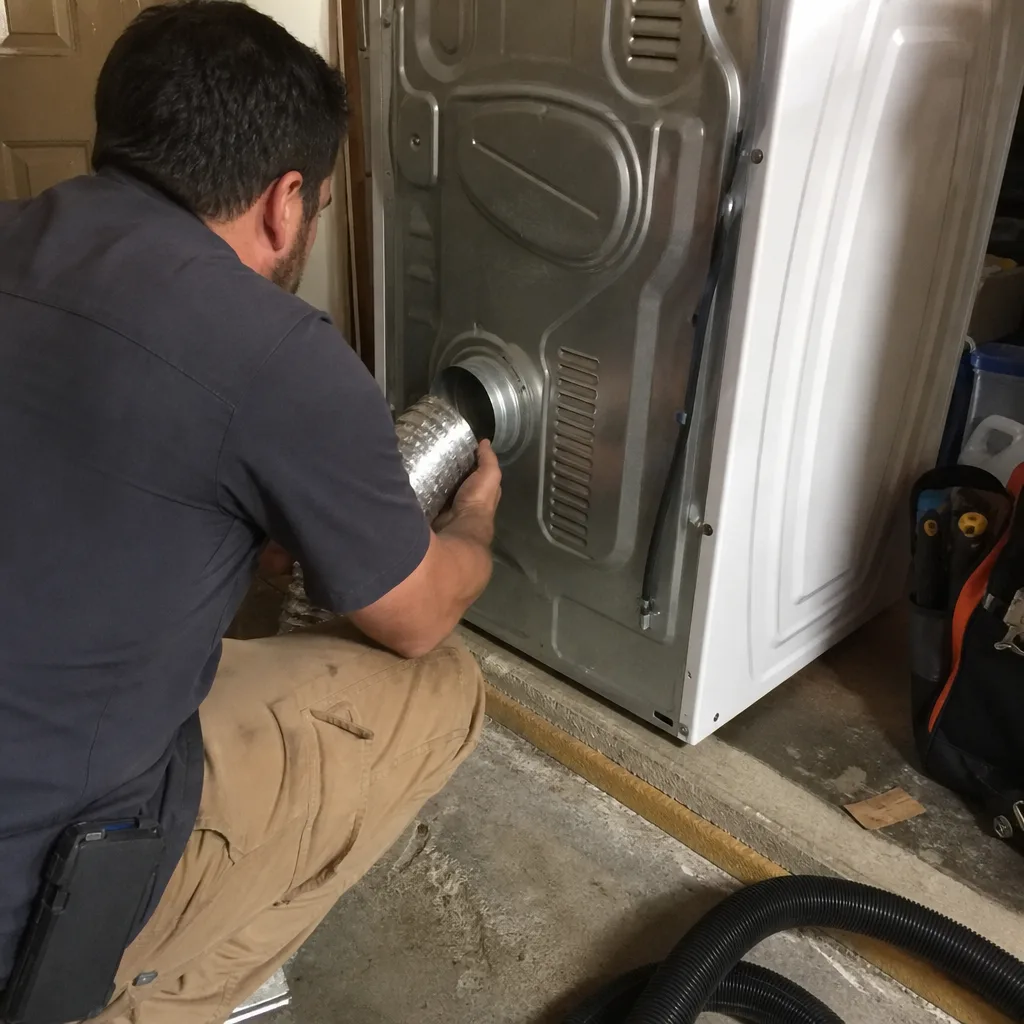
Often yes, if the company demonstrates competence in both. The skills and equipment overlap: negative-pressure extraction, rotary brushing, and documentation practices apply to both services. However, verify specific experience with dryer vent cleaning, which involves different fire safety considerations and code requirements. CleanRun offers both air duct cleaning and dryer vent cleaning in Fairfax, with documented procedures for each.
The Bottom Line
Hiring a duct cleaning contractor in Fairfax is an exercise in verification, not trust. Virginia’s lack of trade-specific licensing means any operator can enter the market, and the prevalence of coupon pricing models creates systematic incentives for incomplete work and invoice escalation. Protect yourself with a seven-question phone script that tests technical knowledge, a written quote with line-item scope and per-system pricing, three contract clauses that create enforceable accountability, and a critical reading of online reviews that distinguishes specific observation from generic praise. The contractors who survive this scrutiny, who answer directly, document thoroughly, and guarantee specifically, are the ones worth inviting into your home.
Written by Tomas Reyes, Owner at CleanRun Air Duct Cleaning Fairfax, serving Fairfax since 2013.